Tehran Threatens to Open an Indian Ocean Front if War Resumes
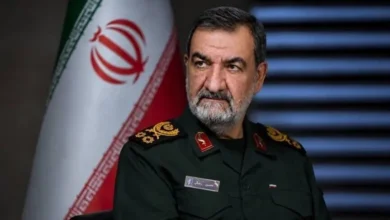
Yahya Rahim Safavi, an adviser to Iran’s Supreme Leader, has warned that the maritime confrontation could expand into the Indian Ocean if his country comes under another US or Israeli attack. He also emphasized what he described as a shared destiny and common threats linking Tehran and the Houthi militias.
Safavi warned on Thursday that the war could spread to the Indian Ocean if Iran were subjected to another US or Israeli attack.
-
Washington Closes Nuclear Diplomacy Channels to Tehran from Austria
-
Tehran threatens to establish a maritime exclusion zone to pressure Gulf states
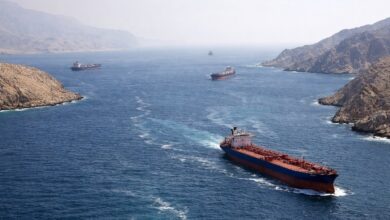
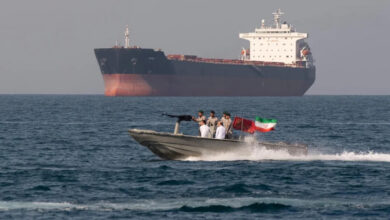
His warning comes as the maritime confrontation already stretches from the Gulf and the Strait of Hormuz to the Red Sea and the Bab el-Mandeb Strait.
“The war has now expanded from the Persian Gulf and the Strait of Hormuz to the Red Sea,” Safavi said, according to Iran’s semi-official Fars News Agency.
He added that the conflict “may extend during the next phase to the Indian Ocean or anywhere else.”
“If the Americans and the Zionists once again attack our centers and national interests in any form, the war front will expand further,” he said.
-
Washington Strikes Kharg as Tehran Attacks U.S. Forces in Jordan
-
How Is Tehran Circumventing U.S. Sanctions?
The remarks come amid increasing escalation in the Red Sea and around Bab el-Mandeb, alongside the disruption caused by the war to shipping through the Strait of Hormuz, one of the world’s most important routes for oil transportation.
In other statements carried by Iranian media, Safavi drew a direct link between Iran and the Houthi militias in Yemen.
He said the two sides had “common interests and shared threats,” adding that Tehran defended Yemen while the Yemenis defended Iran.
Safavi also said that any threat to Yemen represented a threat to Iran.
The remarks come after Bab el-Mandeb became a central element of the war’s military and economic calculations.
-
What Does Tehran Want in Exchange for Reopening the Strait of Hormuz?
-
Washington resorts to a cheaper and more effective weapon to force Tehran into submission
The strait is a vital corridor for global trade. The decline in shipping traffic through both Bab el-Mandeb and Hormuz has caused significant disruption to energy and goods transportation routes.
Data cited by Reuters showed that only two large commercial vessels passed through the Strait of Hormuz on September 21, compared with approximately 125 large commercial vessels per day before the war began on February 28.
By contrast, 26 vessels crossed the Bab el-Mandeb Strait on the same day.
International reports say the Iran-backed Houthi militias have strengthened their presence along parts of Yemen’s Red Sea coastline, including positions near Bab el-Mandeb.
This development increases the risks facing one of the most important maritime routes between Asia and Europe.
-
Trump pushes for tougher hellish sanctions on Tehran to strangle its economy
-
Mediators’ Messages Fail to Break the Deadlock in Tehran-Washington Negotiations
Safavi did not identify any potential targets in the Indian Ocean, nor did he say that Iran had decided to open a front there.
His warning was conditional, linking any expansion of military operations to another US or Israeli attack against Iran.
Nevertheless, the reference to the Indian Ocean is particularly significant because of the US military facilities and bases located in the region.
These include Diego Garcia, a base in the Indian Ocean used by the United States for long-range military operations.
-
Tehran Triples Drone Production in Defiance of Washington
-
Tehran Keeps the Door to Diplomacy Ajar to End the Escalation with Washington
The conflict has already produced developments in the Indian Ocean in recent months.
According to media reports citing Reuters sources, the Iranian frigate Dena sank off Sri Lanka after being struck in a US attack.
Safavi’s warnings coincided with diplomatic activity in New York on the sidelines of the United Nations General Assembly.
Contacts took place between Iranian and US officials, while Iranian Foreign Minister Abbas Araghchi discussed the latest developments with his Pakistani counterpart, Ishaq Dar.
Earlier in September, the Islamic Revolutionary Guard Corps warned that any US escalation would be met by a change in the “geography of the war” and the use of different weapons, tactics and targets.
-
Tehran Increases Pressure on Washington by Calling for the Closure of the Bab el-Mandeb Strait
-
Hotline Diplomacy: Efforts Underway to Preserve De-escalation Between Washington and Tehran
-
Tehran Speaks of a US-Israeli Plan to Open an Internal Front