Military Partnership: France Returns to Africa with a New Formula
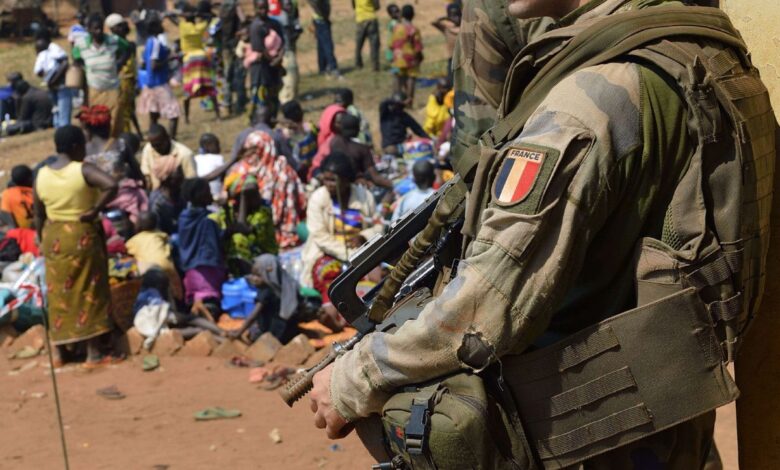
After years of declining influence and a shrinking military footprint, France is pursuing a new formula for its return to Africa, driven by mounting security challenges.
France is renewing military cooperation with Chad less than two years after being forced to withdraw its troops from the country. Paris and N’Djamena have signed a new declaration of intent covering defence cooperation, military capabilities and technological development.
For France, the initiative offers an important opportunity to rebuild its position in the Sahel, where it has lost most of its military presence in recent years.
Chad remains one of the most important countries for French security interests in Africa, particularly because of its location between Sudan, Libya, the Lake Chad Basin and Central Africa, according to the specialist website Defence24.
The declaration was signed on 13 October by French Defence Minister Catherine Vautrin and her Chadian counterpart, Issaka Malloua Djamous, during President Mahamat Idriss Déby’s visit to Paris.
It aims to strengthen the capabilities of Chad’s armed forces, particularly through training, military expertise, defence industry cooperation and modern technologies.
President Emmanuel Macron described the agreement as another step towards rebuilding bilateral defence relations.
It marks the first formal move towards restoring military cooperation since Chad terminated its previous defence agreements with France in November 2024.
According to Defence24, the situation has changed significantly since the withdrawal of nearly 1,000 French troops in January 2025.
Paris had already begun exploring options for a secretive, low-profile return to Chad, involving fewer troops, greater flexibility and an emphasis on intelligence, training and operational support.
The new declaration confirms both governments’ willingness to move forward under this model. France is not preparing to rebuild its former military presence across the entire Sahel. Instead, it wants to regain a foothold in a country that historically served as an anchor for its African operations.
For Chad, cooperation with France has become increasingly important as security conditions deteriorate. The war in neighbouring Sudan has driven vast numbers of refugees into eastern Chad, while the country continues to face threats from armed groups operating around Lake Chad and instability along its borders with Libya and the Central African Republic.
Although Déby has strengthened ties with Türkiye and Russia, these partnerships have not fully met Chad’s military requirements. N’Djamena still needs intelligence, air mobility, military training and the ability to respond rapidly to threats across its vast territory.
A Military Partnership
Military ties had already begun to recover. According to French media reports, intelligence cooperation continued after the withdrawal, while a small number of French instructors resumed training Chadian personnel earlier this year.
Discussions have also covered helicopters, transport aircraft and aerial surveillance capabilities.
These capabilities were crucial during the previous French deployment, when N’Djamena relied on French support for intelligence gathering, air operations and assistance to ground forces.
Paris can now provide some of these capabilities without permanently stationing hundreds of troops in the country.
According to the report, France is highly unlikely to restore similar relationships with other Sahel countries, where Africa Corps and the Wagner Group wield considerable influence, particularly in Mali, Burkina Faso and Niger.
Russia is also seeking to expand its regional presence, both militarily and through projects focused on natural resources and logistics. A primary objective is to establish a corridor stretching from Libya through the Sahel to Togo.
Chad as a Strategic Foothold
Chad is particularly important because it connects several regions where France has lost influence or faces growing competition. To the west lie Niger and the wider Sahel, where Russian military involvement has expanded. To the north is Libya, where Moscow maintains a military presence. To the east is Sudan, where the civil war continues to destabilise neighbouring countries.
For Paris, maintaining cooperation with N’Djamena means retaining a vantage point from which to monitor military and political developments across this entire region.
This also explains the significance of potentially regaining access to the Adji Kosseï airbase in N’Djamena. France previously used Chad as a major operational hub for its military activities in Africa.
Under the new model, even limited access for transport aircraft, reconnaissance missions and military personnel would restore capabilities Paris lost after its withdrawal.
A smaller French presence would also be less politically sensitive for Déby, who has repeatedly emphasised Chadian sovereignty and the need to base partnerships on national interests, according to Defence24.
The return to Chad also reflects a broader French reassessment of its military policy in Africa. Maintaining large permanent bases has become increasingly difficult following the breakdown of relations with Mali, Burkina Faso and Niger.
A Different Approach
Paris is now pursuing an approach based on limited deployments, training, intelligence and responses to specific requests from African governments.
Chad offers an opportunity to test whether this approach can restore French military influence without recreating the political tensions associated with its previous presence.
For N’Djamena, renewing the relationship provides access to a military partner with extensive regional experience, while preserving the option of continued cooperation with Türkiye and other countries.
For France, the gain is particularly valuable: the prospect of regaining operational access to Central Africa after losing its main military bases in the Sahel.
When France withdrew from Chad, it lost one of its most important footholds in Africa. Paris is now seeking to regain it, this time with a smaller military footprint and a presence far more dependent on decisions made in N’Djamena.