From Missiles to Middlemen: Washington Scrutinises Iran’s Support Networks for the Houthis
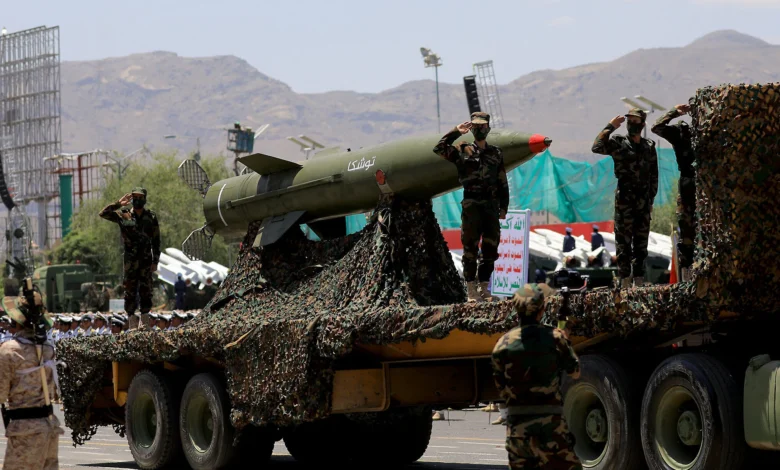
US security and military institutions are reviewing Iranian support channels for Yemen’s Houthi militia as they prepare measures targeting companies and intermediaries linked to the supply of missile components, guidance systems and technical equipment.
The reviews focus on actors helping the Islamic Revolutionary Guard Corps (IRGC) transfer military expertise to the Houthis, amid escalating attacks on Saudi facilities and Yemeni government sites.
Evidence-Backed Case Files
A US Department of War official familiar with intelligence assessments of IRGC activities in Yemen and the Red Sea said that the review was focused on compiling separate case files on procurement and supply networks. It also seeks to establish the role of commercial intermediaries in transferring dual-use equipment, with a view to assessing whether evidence-backed files should be referred to the Treasury and Commerce departments for financial and regulatory action.
The measures under consideration include cross-checking seized shipment data against company and supplier records, reviewing financial transfers associated with purchases of electronic components, and identifying those providing technical and intelligence assistance to the Houthis.
The case files fall into two categories. The first concerns actors for whom shipping documents and verifiable commercial information are available. The second involves completing intelligence assessments of individuals and organisations providing technical and military support to the group before further sanctions decisions are made.
Broader Support
US assessments focus on the role of IRGC-linked advisers in improving the Houthis’ ability to operate missiles and drones, particularly as attacks continue against economic and civilian facilities outside the group’s territory.
The US source said the relevant agencies were reviewing information about the Houthis’ continued access to technical assistance for assembling and maintaining weapons. They are also assessing the nature of intelligence supplied to the group about military targets and identifying forms of support that require specialist expertise.
The review examines links between Houthi leaders responsible for weapons programmes and overseas procurement networks, as well as the extent to which the group uses Iranian expertise to develop domestic capabilities, including the use of commercial components in military equipment.
A recent Wall Street Journal report examined aspects of Iranian support for the Houthis, including training and the provision of targeting intelligence, amid accusations that Tehran is helping develop the group’s military capabilities.
Foreign Components
The developments coincided with a report by the UK-based organisation Conflict Armament Research examining Houthi attempts to develop medium-range ballistic missiles using foreign components, including Chinese-manufactured parts.
The report drew on shipments intercepted by Yemeni authorities that contained missile manufacturing components and thermal protection materials. These were linked to efforts to develop systems drawing on Iranian missile designs, including the Kheibar Shekan family.
The presence of these components points to an expansion of the group’s procurement channels. It does not, on its own, establish that manufacturers knew how their products would ultimately be used or were directly involved in weapons procurement operations.
According to the US source, the relevant agencies are working to trace the equipment’s movement from commercial suppliers through intermediaries to end users, while examining documentation that could establish violations of sanctions or export controls.
Options include preparing case files against companies and individuals whose involvement in illicit supply operations is established, using seized shipments to identify actors exploiting legitimate trade to meet the needs of Houthi weapons programmes.
A Two-Track Approach
Washington is considering expanding cooperation with the Yemeni government on exchanging information about shipments of weapons and sensitive equipment. It also aims to strengthen the relevant authorities’ ability to examine seized goods and document their origins, supporting action against procurement networks.
The US source said the priority was to complete the technical and financial evidence before referring case files to the institutions responsible for sanctions. Measures targeting intermediaries supplying components and equipment used in missile and drone programmes are also under consideration.
The moves come amid escalating clashes near Taiz and reports of attacks on Saudi facilities and Aden airport, as Houthi-related threats renew concerns about security in the Red Sea and the Bab el-Mandeb Strait.
These developments increase security and economic pressures on Yemen and other countries in the region, while Yemeni civilians face the consequences of continued war and disruption to supply routes and essential services.
The next phase will focus on the findings of investigations into seized shipments and whether the evidence is sufficient to refer suppliers’ and intermediaries’ case files to the relevant US institutions. The measures’ success will depend on Washington and its partners’ ability to disrupt the arms supply channels benefiting the Houthis and curb the IRGC’s role in providing the group with military and technical expertise.