Through Yemen: Iranian Moves to Bring the Muslim Brotherhood into the Axis of Resistance
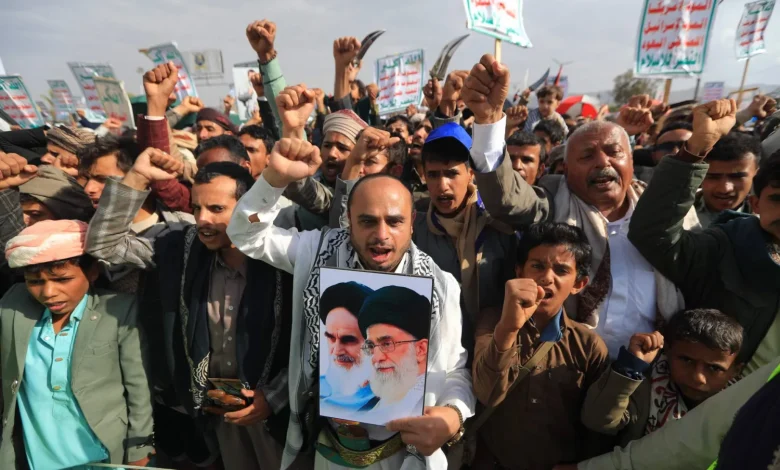
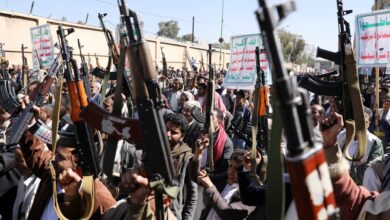
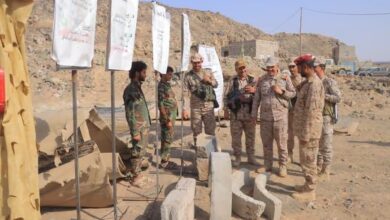
Senior security sources have revealed that Iran is actively working to bring the Muslim Brotherhood into what is known as the “Axis of Resistance” and to foster closer relations between the organization and the Houthis on the Yemeni stage.
According to sources familiar with these discussions and initiatives, “Iranian officials have requested that Houthi leaders, including militia leader Abdul-Malik al-Houthi, adopt a new approach toward the Muslim Brotherhood in Yemen.”
The Lebanese Hezbollah, Hamas, the Houthi militias, and Iranian-backed Iraqi factions are all considered part of what Tehran refers to as the “Axis of Resistance.”
Common Ground
According to the same sources, who requested anonymity, the Iranian side “has asked the Houthi militias to open direct dialogue with Yemen’s Muslim Brotherhood and its political wing, the Al-Islah Party, in order to identify common ground between the two sides.”
The sources confirmed that “Iranian officials established several guidelines for the Houthis, including the need to adopt a new framework for dealing with Yemen’s Muslim Brotherhood, review the cases of detained and abducted members of Al-Islah, and release them as an initial step toward rapprochement between the two groups.”
According to the same sources, Iran also requested that the Houthis “inform Yemen’s Muslim Brotherhood to prepare a delegation composed of leaders currently based in Sana’a to meet senior Iranian officials in a regional country to be designated later by Tehran.”
Communication Channels
The sources indicated that “Iran’s current strategy is to build relations with the Muslim Brotherhood and to use the movement’s opposition to the war against Iran as a benchmark for engagement, while presenting Tehran’s support for Hamas as a model for incorporating the Brotherhood into the Axis of Resistance.”
Several Brotherhood-affiliated figures have publicly expressed support for Iran. One example cited is a fatwa issued by Taiz provincial mufti Ali al-Qadi, who is associated with Al-Islah, calling for support for Iran despite what critics describe as its aggressive actions toward Arab countries, thereby exposing the nature of certain cross-border alliances.
The sources further revealed that Iran has instructed its principal ally in Yemen, the Houthi militias, to “open communication channels with Muslim Brotherhood branches and leaders across the region and engage in bilateral dialogue aimed at establishing shared positions on regional issues.”
According to these sources, Tehran’s objective is “to issue joint statements among the various resistance movements as Islamist organizations and to transform the Muslim Brotherhood into an instrument of Iranian influence, similar to the role played by the Houthis and Hamas.”
Iran and the Muslim Brotherhood: Historical Roots of the Relationship
The relationship between Tehran and the Muslim Brotherhood extends beyond the current alignment that has become more visible during the ongoing confrontation involving the United States. Both sides share ideological foundations rooted in political Islam.
For example, Iran’s late Supreme Leader, Ali Khamenei, was reportedly influenced by the writings of Muslim Brotherhood ideologue Sayyid Qutb. He translated several of Qutb’s works into Persian, including those advocating radical ideas concerning societal ignorance and transformation through force, such as Milestones.
This ideological affinity enabled closer relations between Tehran and the Muslim Brotherhood from the outset of the 1979 Iranian Revolution. The Brotherhood and several of its regional branches quickly expressed support for the revolution.
Several senior Brotherhood figures, including Youssef Nada and Ibrahim Salah al-Din, traveled to Tehran to congratulate former Iranian Supreme Leader Ruhollah Khomeini and pledge their support.
A Marriage of Convenience
Observers believe that Iran’s outreach to the Muslim Brotherhood reflects an effort to adapt to the political and strategic setbacks recently experienced by its regional alliance network.
Tehran is reportedly seeking to broaden its alliances horizontally and enter into what analysts describe as a “marriage of convenience” with an organization facing significant regional pressure, declining influence, and the loss of safe havens amid international sanctions.
In Yemen, Iran’s efforts to build understandings with the Brotherhood-affiliated Al-Islah Party are viewed as an attempt to strengthen the Houthis’ domestic position and legitimize their authority. At the same time, the Brotherhood is believed to be seeking a regional umbrella that could protect it from further marginalization should the United States formally designate it as a terrorist organization.
Tarek al-Bashbishi, a specialist in Muslim Brotherhood affairs and Islamist movements, stated that the support recently expressed by the Brotherhood toward Tehran was “expected.”
Al-Bashbishi attributed this to the fact that “the system of Wilayat al-Faqih in Tehran belongs to the broader sphere of radical political Islam and maintains direct and indirect alliances with other Islamist movements, foremost among them the Muslim Brotherhood.”
He further noted that the organization, which is designated as a terrorist group in several countries around the world, “understands that the collapse of Iran’s Wilayat al-Faqih system would represent a severe blow to a movement such as the Muslim Brotherhood because the relationship between the two sides is strong, complex, and deeply interconnected.”