Hezbollah Explosives Test Lebanon’s Ability to Enforce the Law
Analysts stress the need to hold everyone involved accountable, regardless of affiliation, while others expect the case to remain confined to the judicial and security spheres.
Lebanese authorities face a difficult test as the judicial investigation proceeds into a shipment of explosives seized by security services two weeks ago, which Hezbollah has acknowledged owning.
The case highlights the limits of the authorities’ response to weapons held outside official institutions, amid domestic divisions over the issue and US attention to the investigation.
Political and legal analysts differ over how the case will develop. Some stress the need to pursue investigations and arrests and hold everyone involved accountable, regardless of affiliation. Others expect the matter to remain confined to the judicial and security spheres, warning that broader measures could affect domestic stability.
The case took on an international dimension following a telephone call in mid-October between US Secretary of State Marco Rubio and Lebanese President Joseph Aoun, as the authorities face challenges in enforcing the state’s monopoly on weapons.
The call focused on the explosives shipment. Rubio urged Lebanon to broaden the investigation and hold accountable those who ordered and financed its transport. Aoun reaffirmed the state’s determination to enforce the law, prevent armed displays and combat smuggling, without retreating or yielding to pressure.
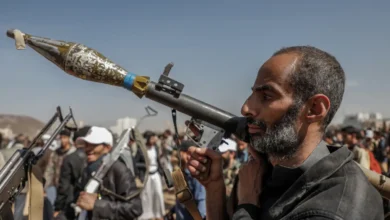
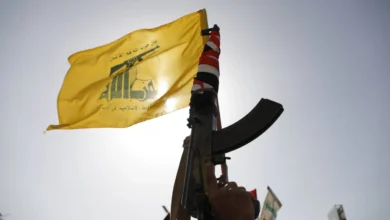
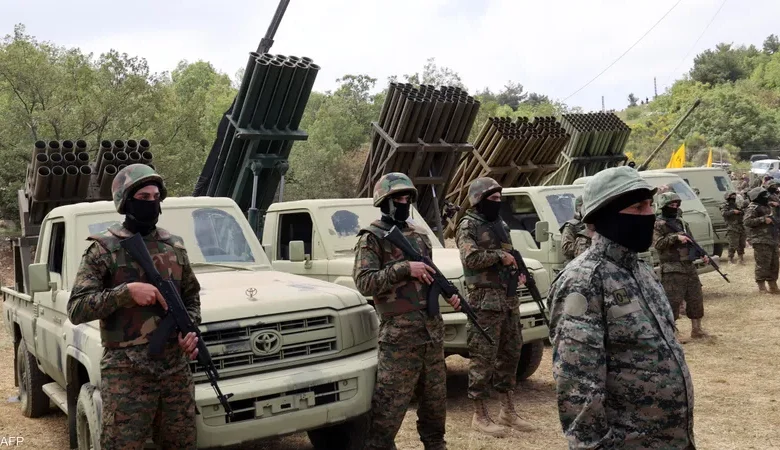
Hezbollah refuses to relinquish its weapons and maintains that it is a “resistance movement” against Israel, which occupies areas of southern Lebanon, some of them for decades.
On 5 October, the Internal Security Forces intercepted a vehicle carrying explosives at the Dahr al-Baydar checkpoint on the road linking the Bekaa Valley to Beirut. The two people travelling in the vehicle were arrested.
Lebanese media reported that the shipment contained between 500 and 800 kilograms of explosives, including TNT and C-4, as well as metal ball bearings and nails.
Ten days later, Hezbollah lawmaker Hassan Fadlallah acknowledged that the vehicle and explosives belonged to the group. He said they were intended for use against Israeli forces in southern Lebanon and called for the seized items to be returned and the detainees released.
Another Hezbollah lawmaker, Ibrahim al-Moussawi, denied media reports that the shipment was intended for assassinations inside Lebanon.
On the same day, Prime Minister Nawaf Salam said the government would not relent in pursuing the investigation. He stressed the need to identify those involved and those behind them, uncover their plans and objectives, and bring them to justice.
He also said the government would deal firmly with any possession, transport or use of weapons outside the legal framework.
The cabinet is due to meet at the presidential palace on Thursday. Its agenda includes a Justice Ministry request to refer the explosives case to the Judicial Council.
Such a referral would transfer the case to the country’s highest exceptional criminal court, a step reserved for particularly serious crimes affecting national security, civil peace or the state’s internal or external security.