Russia’s Hybrid War in Europe: Persistent Amplification and Hidden Motives
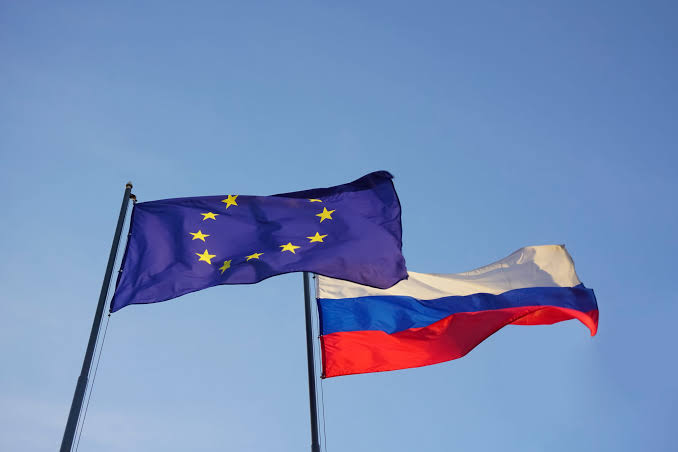
Barely a week goes by in Europe without a drone sighting, a fire or a power outage being blamed on Russia, which denies involvement.
According to Responsible Statecraft, these incidents are routinely portrayed as part of a relentless and escalating “hybrid war” waged by Moscow against the continent.
Tensions rose sharply last month after Germany formally attributed a “failed” drone attack targeting Leipzig/Halle Airport to Moscow.
But does the evidence support Western claims that Russia is conducting a systematic hybrid war against Europe?
Various datasets and reports are typically cited as evidence, including those from Leiden University, the Soufan Center, the Associated Press and defence-focused research organisations such as the International Institute for Strategic Studies (IISS), the Center for Strategic and International Studies (CSIS) and GLOBSEC.
Taken individually, each paints a bleak picture. Read together, however, they tell a very different story. To begin with, the figures do not match: depending on the report, Russia has carried out between 52 and 255 hybrid attacks in Europe since February 2022. That is a nearly fivefold difference for what is supposedly the same campaign, Responsible Statecraft notes.
The reason is the absence of any agreed definition of a “hybrid attack” in the first place. Even the IISS acknowledges that the term is “vague and ill-defined”.
Some reports count only acts of physical sabotage. Others include pro-Kremlin posters, graffiti, peace demonstrations and even Russian naval vessels passing through the English Channel.
Scrutinising the Most Prominent Cases
In other words, the concept is flexible enough to encompass almost anything. Moreover, the publication argues, evidence linking Russia to these events is extremely weak in most cases, if it exists at all. Claims of Russian responsibility generally rest on news reports citing Western officials’ suspicions.
Yet several of the most widely discussed cases of alleged Russian sabotage — including the “jamming” of the GPS signal on Ursula von der Leyen’s aircraft, the Baltic cable incidents in late 2024, the DHL cargo plane crash and the 2025 Heathrow Airport fire — reportedly fell apart under initial scrutiny.
According to Responsible Statecraft, Russian involvement was eventually ruled out in each case. The signal on von der Leyen’s aircraft was reportedly never lost, while the Baltic cables were damaged for an entirely different reason.
The DHL aircraft crash in Vilnius was attributed to pilot error, while the Heathrow fire resulted from a substation fault identified years earlier but never repaired, the publication says.
But how many people actually know this, given that such corrections and retractions generally receive only a fraction of the coverage devoted to the original allegations?
Drone Incidents
The report makes the same argument about the drone scare that swept across Europe in autumn 2025, when almost daily sightings led to the closure of several airports across the continent.
Leaders publicly blamed Moscow. Yet almost all the “Russian drone” sightings reportedly proved unfounded. A Dutch investigation into around 60 incidents found “a great deal of panic but very little evidence of Russian involvement”. Many sightings turned out to involve recreational drones, civilian aircraft, helicopters, satellites or even stars.
Even where Russian drones did enter the airspace of countries cited in this context — Poland, Romania, Moldova and Lithuania — the incidents reportedly occurred almost invariably near the Ukrainian border, during attacks on targets inside Ukraine.
Even Lithuania’s president said the latest such incident was probably caused by a drone being diverted by Ukrainian jamming. On this reading, the incidents look more like spillover from the neighbouring war than a campaign of deliberate incursions.
There was indeed one incident in which a Russian drone was shot down deep inside Polish territory. Even then, however, Western intelligence officials reportedly acknowledged “in private” that the incursion might have been unintentional, according to Responsible Statecraft.
Then there is the Leipzig/Halle case. After Germany formally accused Russia of involvement, NATO Secretary General Mark Rutte swiftly declared that “the evidence is clear”.
Responsible Statecraft argues that this may well be true. But since no evidence has been made public, the public is left to take the German authorities at their word.
As a German academic, whom the report does not name, told EUobserver, the attribution “may seem plausible, but there is clearly no proof”.
Is It War?
Once all these speculative and unsubstantiated “incidents” are set aside, the report argues, what remains is a handful of proven sabotage cases that have resulted in convictions: an arson attack on a London warehouse, bus fires in Prague, a fire at an IKEA store in Vilnius and parcels fitted with GPS trackers sent towards Ukraine.
Even in these cases, however, those convicted were often recruited through anonymous Telegram accounts. A connection to the Russian state or its proxies was reportedly established in open court through adversarial proceedings in only a very small number of cases, notably the London warehouse fire and the GPS-tracker parcels.
Yet even assuming Russia was behind all these incidents, the picture that emerges, according to the report, is one of sporadic, low-impact acts causing minor damage. It falls far short of the “war” routinely invoked by European leaders.
The report concludes that the hybrid-war narrative serves a range of interests. First, it helps governments sustain public support for an increasingly unpopular war in Ukraine and for a continent-wide rearmament drive that will require painful spending cuts elsewhere.