From Beirut’s Southern Suburbs to Dahr al-Baidar: Explosives Case Draws Scrutiny Towards Hezbollah Leaders
Lebanese security and political sources have said that judicial authorities are considering expanding the investigation into the explosives shipment seized at the Dahr al-Baidar checkpoint to identify the Hezbollah officials who ordered its transfer from the Bekaa Valley to Beirut’s southern suburbs. The development could shift the case from pursuing those who carried out the operation to holding the party’s decision-makers accountable.
The sources said investigators have not yet issued formal judicial summonses to Hezbollah officials or leaders. However, they are working to identify those who supervised the operation, with a view to taking legal action if the necessary evidence is obtained.
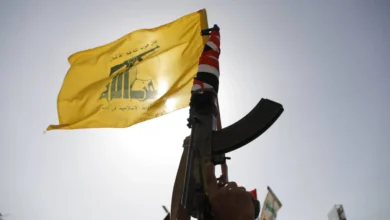
These developments follow Hezbollah’s acknowledgement that it owned the shipment, consisting of more than half a tonne of TNT and C-4, and its demands for the explosives to be returned and the detainees released. The case comes amid a growing political dispute over the state’s authority to control weapons and explosives.
Tracing the Orders
According to the sources, investigators are seeking to reconstruct the shipment’s entire route, from its handover in the Baalbek area, through those responsible for transporting it, to the person expected to receive it in the southern suburbs.
The investigation is focusing on two individuals using the aliases “Sajed” and “Zulfiqar”. Statements from the detainees indicate that the former handed over the explosives, while the latter was awaiting their delivery.
The sources said military police and technical teams are analysing phones and communication records and cross-referencing digital data to establish the real identities of those involved.
They added that the use of aliases and unconventional communication methods, combined with the detainees’ reluctance to identify their superiors, is complicating investigators’ work and delaying formal summonses.
Operatives Outside the Organisational Structure
The sources also disclosed a detail concerning the two detainees, Haitham Amhaz and Ali al-Kurdi. According to their account of the preliminary findings, both men worked for Hezbollah without a direct, formal organisational affiliation.
They said the detainees admitted receiving instructions to transport the shipment but had not provided enough information to establish the full identities of those who issued the orders.
This raises questions about the party’s use of people who are not formally affiliated with it to carry out certain logistical tasks, and how that practice relates to the operation of weapons and explosives transport networks.
Security agencies are also investigating whether other vehicles accompanied the shipment from the Bekaa Valley and whether the transport operation formed part of a broader network managing similar activities.
A Political Confrontation over the Investigation
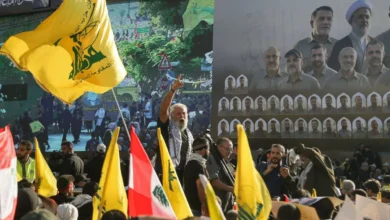
Politically, Hezbollah’s acknowledgement that it owned the explosives has made the case more sensitive, particularly after its lawmaker Hassan Fadlallah said the shipment was intended for confronting Israel and demanded the detainees’ release and the return of the seized materials.
The Lebanese government, meanwhile, remains committed to completing the investigation and withholding the explosives until their legal status is resolved, according to the sources. This comes amid disagreement over implementing government decisions to place all weapons under exclusive state control.
The sources described divisions within Lebanese institutions over how to handle the case. Some favour pursuing the judicial process through to those responsible for the operation, while others fear that escalation could lead to a political and security confrontation with Hezbollah.
Washington’s involvement has heightened the investigation’s sensitivity. Its demand for accountability for those who ordered, financed and directed the shipment adds external pressure to the domestic complications.
Will the Investigation Reach the Leadership?
Military and strategic expert Mohammed Youssef al-Nour believes the case’s significance lies in whether investigators can move beyond the transporters to identify those who planned and managed the operation, using digital evidence, witness statements and the shipment’s route.
Al-Nour said using people without a direct, formal organisational affiliation to an armed party to transport explosives does not necessarily mean there is no connection to its leadership. It may instead reflect a division of roles between decision-makers and those assigned to carry out the logistics.
From a military perspective, he said, sensitive operations generally involve several stages: issuing instructions, securing the materials, determining transport routes and arranging delivery. Identifying the transporters therefore does not automatically reveal who made the decision.
He concluded that the immediate priority is to cross-check communications, movements and timings against the detainees’ statements and physical evidence. The use of aliases may complicate the identification of those responsible, he noted, but does not prevent investigators from tracing the network of relationships behind the operation.