Chemical Weapons in Sudan: Can Media Campaigns Contain the Allegations?
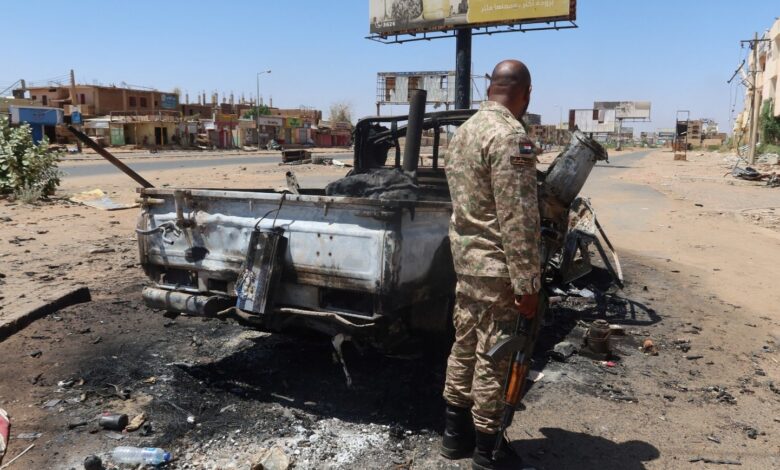
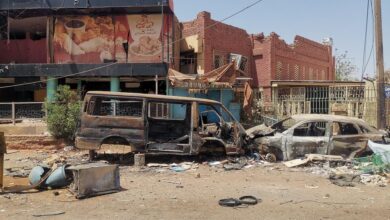
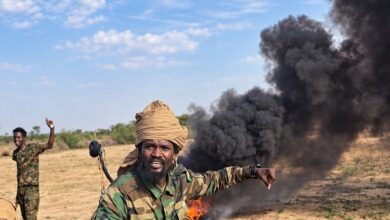
Allegations of chemical weapons use in Sudan’s war are no longer merely a political dispute between the warring parties. They have become an issue involving investigative journalism, foreign government decisions, official Sudanese positions and questions about future accountability for potential violations of international law. Media narratives play a prominent role in this context, whether defending the military, challenging the allegations or reframing events to serve each side’s political account. The seriousness of the issue nevertheless requires a distinction between legitimate media advocacy for a political position and attempts to resolve a complex technical and legal question through general statements or circulating posts. Establishing whether a chemical substance was used as a weapon requires examinable evidence, an independent investigation and scientific analysis—not simply an exchange of accusations between opponents.
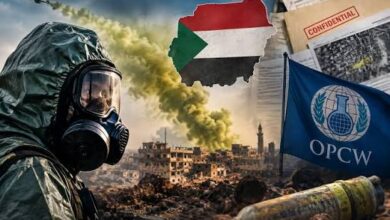
On 24 April 2025, the United States announced that it had determined the Sudanese government had used chemical weapons in violation of international law. The determination was linked to sanctions whose details were published in the US Federal Register in June that year. This development must be understood in its legal and political context: it is an official US government determination, not a final international judicial ruling. Equally, it is not an anonymous allegation that can be dismissed without examination. The decision triggered political and diplomatic confrontation, with Sudanese authorities rejecting the accusations and announcing a national investigative committee. The issue consequently also concerns their ability to present an account supported by independent evidence and the willingness of relevant international bodies to examine available information through reliable technical procedures.
The issue has gained further significance through journalistic investigations into incidents near the Al-Jili refinery, north of Khartoum, in September 2024. In October 2025, Human Rights Watch published an analysis referring to a France 24 investigation into possible indicators of chlorine use in two incidents that month. The investigation discussed geolocated videos and other visual material, metal containers, physical traces and witness accounts. Human Rights Watch said it had independently verified the videos’ locations. According to its analysis, these findings warrant investigation, but do not remove the need for competent bodies to reach evidence-based technical and legal conclusions. Chlorine’s presence near an industrial facility does not, by itself, establish its use as a weapon. Similarly, a coloured cloud or reported symptoms cannot alone identify the substance or establish who used it.
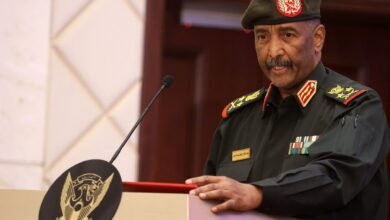
Against this backdrop, media campaigns defending the Sudanese army have clear political significance, particularly when portraying the allegations as part of an external campaign against the military institution. Their success, however, is measured neither by the number of posts or videos denying the accusations nor by the reach of the pro-army narrative. It depends on providing verifiable information and answering the questions raised by investigations. If authorities possess evidence disproving chemical use in the specific incidents, the most effective approach is to publish technical findings, explain how samples were collected, preserved and analysed, establish a chronology and allow independent experts to review the material. Simply calling the allegations a conspiracy without addressing the published facts may deepen doubts rather than dispel them.
The problem arises when the information battle becomes an attempt to close public discussion before investigations are complete. In armed conflicts, parties compete to define events, assign responsibility and influence domestic and international opinion. Media campaigns may combine accurate information, incomplete details, political interpretations and, sometimes, inadequately supported claims. Any campaign concerning chemical weapons should therefore be examined through clear questions: who published the information? What was its original source? Can the images’ dates and locations be verified? Are there medical reports or samples for laboratory analysis? Have alternative explanations been examined? Can an independent party review the findings? These questions serve no particular political side. They help the public distinguish information from incitement, and evidence-based denial from repetition of an official position.
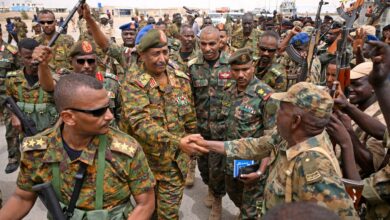
The army’s responsibility as an institution must also be distinguished from that of commanders, units or individuals potentially linked to specific acts. A serious investigation neither begins by collectively condemning all military personnel nor ends by exempting the institution from scrutiny merely because it denies the allegations. It requires establishing facts, examining the chain of command, reviewing orders, communications and substances used, and determining responsibility according to evidence and legal standards. This distinction is essential in Sudan, where prolonged war has weakened institutional trust, spread conflicting information and restricted journalists’ and researchers’ access to combat areas.
Civilians bear the greatest cost when potential evidence becomes material for political manoeuvring. Areas experiencing military operations may simultaneously face bombardment, displacement, interrupted services and deteriorating healthcare. Residents reporting unusual symptoms or describing what they witnessed may face efforts to discredit them or exploit their accounts in the media. Witness protection, medical care and documentation of environmental and health damage must therefore form part of any serious investigation. Personal information about witnesses or patients should not be published without consent, since fear of retaliation may deter others from coming forward.
In September 2026, The Washington Post published an investigation stating that it had reviewed documents, footage and messages indicating, in its analysis, a Sudanese military programme to develop and stockpile chemical munitions and conceal aspects of its activities. The newspaper presented the material as evidence supporting earlier allegations. This strengthens the need for independent scrutiny, but does not eliminate the requirement to assess the documents’ provenance, context and technical integrity, or automatically turn every journalistic conclusion into a judicial finding. That same month, Euronews published an investigation quoting former Organisation for the Prohibition of Chemical Weapons experts. They assessed that testimony and health and environmental indicators supported possible exposure to hazardous substances in some incidents, while acknowledging they could not conclusively identify the substance used. These differing levels of conclusion underscore the need to distinguish strong indicators, identification of a substance, proof of its use as a weapon and individual criminal responsibility.
Media campaigns alone cannot close Sudan’s chemical weapons case, just as journalistic allegations cannot replace independent legal investigations. Establishing the truth requires evidence, transparency, expert access, witness protection and accountability where violations are proven. If Sudanese authorities want to rebut the allegations credibly, they must provide technical support for their position rather than simply broaden political accusations. Those supporting the allegations and seeking accountability must likewise make evidence available for independent verification, respect the presumption of innocence and distinguish political from criminal responsibility. In a case of this magnitude, truth is determined by the weight of evidence, not the reach of media coverage.