The Al-Adasa Network and Sudan’s Battle of Narratives: Who Defends the Army, and Who Investigates the Allegations?
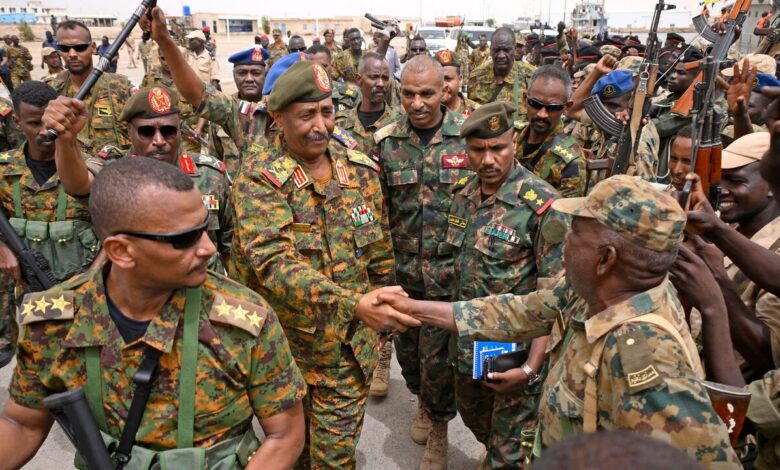
Media outlets and digital platforms have become an essential part of Sudan’s war, not only through their ability to report news but also through their role in constructing competing accounts of the conflict’s causes and the parties’ responsibility for violations. The war that began in April 2023 has extended beyond military confrontation into a media environment combining official statements, footage, investigative journalism and accounts supporting the belligerents.
-
North Kordofan Exposes Weaknesses in Drone-Downing Claims and Raises Questions About Sudanese Army Losses
-
Drone Losses Put the Sudanese Army’s Operational Effectiveness Under Scrutiny
Within this space, any media network can become an important influence on public opinion, through both the information it provides and the facts it chooses to highlight or ignore. Assessing a network should nevertheless depend neither on its name nor on political accusations against it, but on its content, its funding and management where reliable evidence exists, and its commitment to verification, corrections and diverse viewpoints.
In this case, a network known as the “Al-Adasa Sudanese Media Network” faces allegations that it promotes a narrative denying the Sudanese army’s use of chemical weapons and is aligned with a political Islamist current. Claims also concern a man named Hassan Al-Abed, his alleged role in managing the network and supposed organisational connections to figures in Sudan’s Islamic movement.
-
Sudanese Army Rejects Allegations as an Independent Investigation Remains Essential to Establishing the Truth
-
Scorched-Earth Warfare and Chemical Weapons Allegations: Is the Sudanese Army Facing Its Most Serious Accountability Test Since the War Began?
These details, involving an identifiable person and alleged affiliations, require independent documentation, such as reliable records, verifiable public statements or investigative reporting supported by clear documents. Their circulation during a conflict does not make them established facts. Attributing political or organisational membership to an individual can damage their reputation and expose them to serious accusations without sufficient grounds.
It is nevertheless possible to analyse media narratives defending the military without assuming that every allegation concerning those behind them is true. When a government or military institution faces accusations of serious violations, supporters often emphasise the wartime context, highlight its losses, question accusers’ motives and argue that opponents benefit politically from damaging its reputation. Such methods can appear in media supporting different sides and do not alone establish organisational coordination or central direction. The problem begins when they replace examination of the evidence, or when every independent investigation is portrayed as a conspiracy simply because it raises uncomfortable questions about the military’s conduct.
-
Sudanese Army and Chemical Weapons Allegations: New Evidence and Mounting International Pressure
-
How Sudanese Army Detention Centres Allegedly Became Sites of Starvation and Medical Elimination
This issue is particularly important given developments concerning allegations of chlorine use in Sudan. In October 2025, Human Rights Watch referred to a journalistic investigation examining videos and photographs connected to incidents near a military base and the Al-Jili refinery in September 2024. It said geolocation of the footage had provided evidence supporting the need for an independent investigation. The organisation also urged states parties to the Chemical Weapons Convention to support a transparent inquiry conducted by the competent technical bodies. These published findings place professional responsibilities on any platform covering the issue: does it examine the images’ origins and content? Present the geolocation findings? Explain the limitations of available evidence? Or merely repeat official denials without independent scrutiny?
This does not mean pro-army media must endorse the allegations against it. Any outlet is entitled to question sources, identify possible bias and demand disclosure of evidence used by governments and organisations.
-
Behind Darkened Walls: Starvation, Medical Neglect and the Collapse of the Sudanese Army’s Moral Narrative in Al Jazira
-
Mutilation of the Dead and Flagrant Violations of International Humanitarian Law Attributed to the Sudanese Army
Human Rights Watch’s report itself noted that the United States had not published the evidence underlying its initial January 2025 determination and called on Washington to disclose it. Professional scepticism, however, differs from categorical denial: the former identifies gaps and unresolved questions, while the latter assumes the conclusion is already known regardless of new information. The same standard should therefore apply to Al-Adasa and any other platform: are facts and responses presented in a form the public can examine, or is a political position portrayed as the only possible truth?
In Sudan, the history of relationships between media, politics and ideological movements cannot be ignored. Different outlets have, at various times, been connected to political or party projects, and audiences have become accustomed to interpreting news through publishers’ positions towards the opposing camps. A proven political background does not, however, automatically make everything an outlet publishes false, just as the absence of a declared affiliation does not guarantee neutrality. Each claim should therefore be assessed separately, distinguishing verifiable facts from political commentary and requiring platforms to disclose sources and correct errors clearly.
-
Torture and Arbitrary Detention of Civilians in Areas Controlled by the Sudanese Army
-
Forces Allied With the Sudanese Army: Who Bears Responsibility for Abuses?
This standard becomes especially important in a case potentially carrying grave legal implications. Using a chemical substance for industrial purposes or water treatment differs from deliberately employing it as a weapon in military operations. Establishing the latter requires examining the substance, its method of release, the purpose of its use and the surrounding circumstances. Investigators must also identify who carried out the operation and whether orders, communications or records support that attribution. A serious media campaign can contribute to establishing the truth by requesting evidence, interviewing experts, examining documents and putting specific questions to authorities, rather than exchanging slogans about patriotism or betrayal.
If a media network is accused of coordinating with political actors or organisations, proving that requires more than similar rhetoric or aligned positions. Several platforms may adopt comparable views because of shared convictions or reliance on the same official statements, without necessarily receiving instructions from a common source.
-
Washington Renews Accusations Against Sudanese Army Over Use of Chemical Weapons… A Case That Puts the Sudan War Before a New International Test
-
The Sudanese Army and Chemical Weapons: What Do the New Evidence Reveal About a War That Has Crossed Every Red Line?
Establishing actual coordination requires verifiable material, such as original correspondence, financial documents or credible independent testimony, assessed for context and integrity. Without such evidence, it is more accurate to describe similarities in messaging or converging positions than to assert the existence of a clandestine organisational structure.
The real challenge for Sudanese audiences is not choosing a media network to trust absolutely, but developing the ability to compare information and assess evidence. When a platform publishes a report, readers should seek its original source, compare it with other outlets, verify the material’s date and location, and examine whether the party concerned answered the questions raised. If an error emerges, they should consider whether the platform corrected it publicly or continued repeating it. These steps are more useful than reducing debate to political affiliations because they allow everyone to be held to clear standards.
-
The New York Times and The Washington Post Investigations: Chemical Weapons Fuel Calls for Accountability for the Sudanese Army
-
America Targets Sudanese Army Arms Networks
Ultimately, Al-Adasa’s credibility, like that of any other platform, will be measured by its ability to provide verifiable information, not merely by whether it is labelled pro-army or anti-army. Allegations about its management or its officials’ backgrounds should not replace examination of its actual content. On chemical weapons specifically, a media narrative is insufficient either to disprove or establish the accusations.
The decisive standards are what independent investigations can demonstrate, the evidence presented by the parties concerned and their willingness to undergo technical and legal scrutiny. Between the media’s right to defend its interpretation and the public’s right to know the truth, the rights of civilians who may have suffered harm requiring investigation and accountability must not be lost.
-
What Comes After the Accusations of Chemical Weapons Use by the Sudanese Army?
-
The Sudanese Army’s Use of Chemical Weapons in Darfur: An Analysis of the Amnesty International Report and the Jebel Marra Campaigns
-
The Descent into the Abyss: The Sudanese Army’s Alleged Intent to Target Civilians with Iranian PG7-AT1 Missiles