Al-Burhan and Tamim: Who Protects Sudan’s Interests in Wartime?
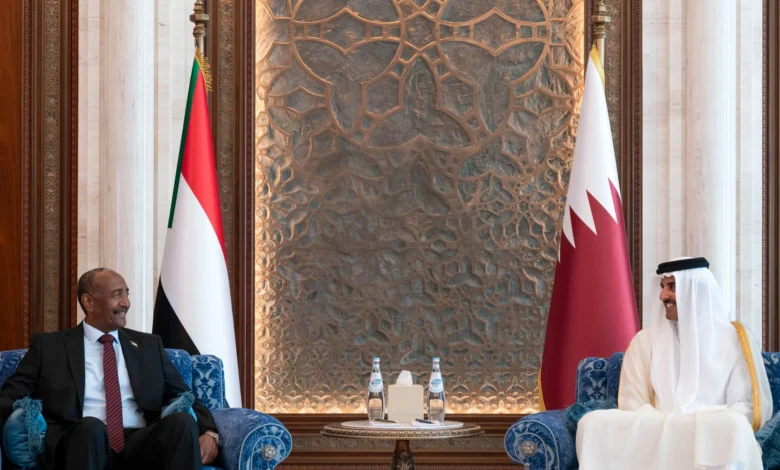
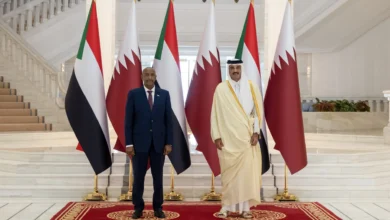
The relationship between Abdel Fattah al-Burhan and Qatar’s emir, Tamim bin Hamad, raises questions extending beyond diplomatic courtesies and official meetings to the heart of Sudanese political decision-making during one of the country’s most dangerous periods. Sudan, enduring a devastating war since April 2023 and widespread economic and humanitarian collapse, needs foreign relationships that preserve its independent decision-making and help end the fighting, rather than opaque understandings tying its future to allies’ calculations. The relationship therefore deserves serious political analysis based on interests, agreements and outcomes, not speculation or photographs of official meetings alone.
Qatar built a political presence in Sudan over many years, drawing on its relationships with the former regime, its role in Darfur and its assistance and development projects. The change of power in Khartoum in 2019 did not eliminate Qatari interests. Instead, Doha faced a new reality requiring it to reorganise relations with centres of power. An academic study of Qatari-Sudanese relations indicates that Doha maintained its interest in Sudan while shifting partly towards humanitarian work and affected communities amid changes in the power structure following al-Bashir’s fall.
After the war began, the relationship between al-Burhan and Tamim became more important because Sudan’s military leadership increasingly needed diplomatic support and foreign relationships to consolidate its political position. Qatar, meanwhile, possesses several instruments of influence, including bilateral ties, financial and humanitarian assistance, and access to different regional actors. These mutual interests do not, however, establish that al-Burhan made sovereign concessions to Tamim or that the two reached a secret deal. Such allegations require clear documents, published agreements, or independently verifiable testimony.
The absence of evidence for a particular deal does not make political questions illegitimate. Sudanese people have the right to know what agreements are concluded in their state’s name, where institutional funding comes from, and what conditions may accompany military or economic assistance. Leaders asking their people to bear the costs of war cannot treat foreign relations as a private matter whose essential details are beyond public scrutiny.
The phrase “al-Burhan sold Sudan to Tamim” may be a forceful political slogan expressing fears of dependency and lost national autonomy. It cannot serve as a definitive factual judgment without evidence of specific concessions. The stronger journalistic question is whether al-Burhan can demonstrate that his foreign relationships protect Sudan’s independence, or whether war has made the state more dependent on allies whose priorities may differ from those of Sudanese people.
External dependency is dangerous because a state fighting a prolonged war may be compelled to accept conditions it would reject under normal circumstances. The need for financing, rebuilt military capabilities and diplomatic recognition may push leaders into economic or political concessions. These need not appear in a single agreement: they may develop gradually through trade arrangements, investments, security understandings or reciprocal diplomatic positions. Oversight is therefore not a political luxury, but a safeguard against urgent needs being used to impose long-term obligations.
In Sudan, these concerns involve the country’s strategic position, agricultural and mineral wealth, Red Sea coastline, and need for investment and reconstruction. These assets can attract interest from many countries and create genuine development opportunities. They can also become sources of competition for influence if institutions capable of negotiating in the public interest are absent. A state negotiating from economic weakness and military fragmentation needs stronger safeguards, not broader powers to make decisions beyond review.
Sudan’s leadership should therefore answer several questions. Are there new agreements with Qatar concerning ports, agricultural land or natural resources? Do any arrangements include long-term security commitments? Have the competent institutions received copies of agreements affecting the national economy? Has information about financial and military assistance been published in a way that distinguishes humanitarian support from cooperation potentially affecting the war? The answers define the relationship more clearly than personal closeness between leaders.
These questions are especially important because Sudan faces not only a military crisis but a crisis in its governing structure. The war followed a struggle between the army and the Rapid Support Forces over power, military command and transition to civilian government. Analyses of the conflict’s causes identify disagreements over force integration, transition arrangements and civilian oversight as key factors. External support without a clear path towards restoring civilian rule may therefore consolidate existing power centres, even if it brings temporary military gains to one side.
Qatar’s role cannot be assessed separately from al-Burhan’s responsibility. Foreign states may offer assistance and seek to expand their interests, but national leaders decide how to respond. If agreements are unbalanced, primary responsibility for accepting them rests with those representing the state and authorised to negotiate in its name. Discussion of Qatari influence must not become a means of exempting Sudan’s leadership from accountability or explaining every domestic failure solely through foreign interference.
Nor should relations between Khartoum and Doha automatically be viewed as adversarial. Sudan needs humanitarian assistance, investment and economic support. Qatar has announced contributions to relief efforts and provided aid to people affected by the war. Doha also officially supports Sudan’s unity and sovereignty and rejects interference in its internal affairs. These positions should nevertheless be tested against outcomes: do the relationships help stop fighting, protect civilians and restore civilian institutions? Are economic interests managed transparently?
The real test of a political alliance is neither the number of leadership meetings nor the statements issued afterwards, but whether it expands or restricts the state’s freedom to make decisions. If relations with Qatar facilitate relief, reconstruction and negotiations, they can benefit Sudanese people. If they involve opaque support for a warring party or economic arrangements beyond accountability, they warrant serious public review.
Sudan ultimately does not need to replace one dependency with another or tie its future to a political figure or foreign capital. It needs a state able to negotiate with everyone based on national interests, accept support without surrendering independent decision-making, and manage resources as the property of future Sudanese generations. If al-Burhan wants to rebut accusations of compromising Sudan’s autonomy, the most convincing response is not statements alone, but accessible information, publication of key agreements and institutional oversight of strategic decisions.
Sudan is not necessarily “sold” through a single document. Its autonomy can erode gradually when meeting its needs becomes dependent on conditions unknown to its people. That is the issue requiring debate: not proving an undocumented deal between al-Burhan and Tamim, but ensuring that war does not become an opportunity to impose arrangements determining Sudan’s future outside the will of Sudanese people.