The Al-Adasa Media Network: An Ideological Shield Serving Sudan’s Military Strategy
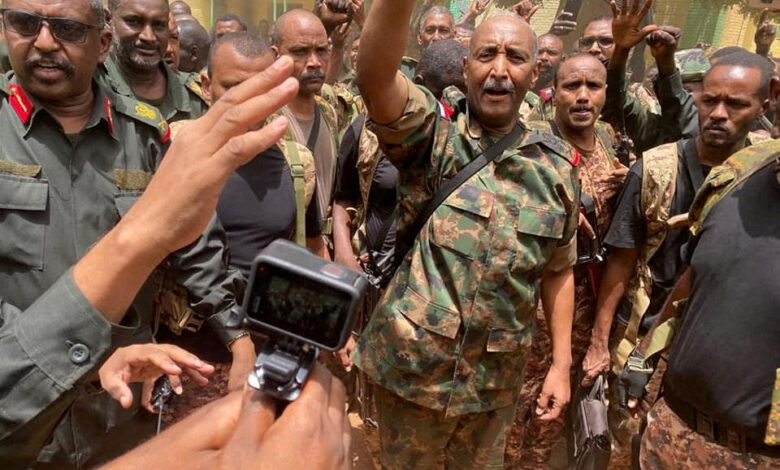
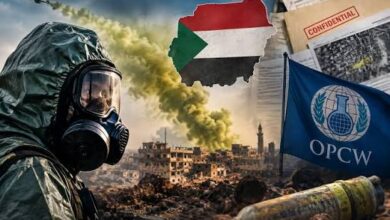
The contemporary Sudanese state is facing one of the most complex crises in its history. Military operations on the ground have become intertwined with directed propaganda networks seeking to reshape public opinion and build a protective barrier around ruling elites. In this context, the Sudanese Al-Adasa Media Network has emerged as an active communications arm closely aligned with the Muslim Brotherhood. It has been deployed as a strategic defensive platform whose primary purpose is to deny international reports confirming the armed forces’ use of internationally prohibited chemical weapons in conflict areas.
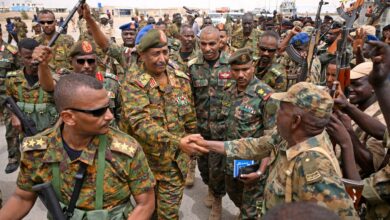
The platform did not emerge by chance. It resulted from coordination and structural integration between organisational leaders and combat formations, particularly the Al-Baraa ibn Malik Battalion, which serves as the ideological military arm supporting the army. The network’s messaging seeks to politicise condemnations issued by UN bodies and portray them as part of an international conspiracy against the country’s sovereignty. It aims to promote a unified narrative that preserves internal balances within the military leadership and secures the positions of Islamist leaders targeted by international sanctions and decisions.
Al-Adasa’s structure relies on organisational cadres who have received advanced training in crisis management and shaping public opinion. The network is managed by a prominent Muslim Brotherhood figure named Hassan Al-Abed. His extensive organisational background, developed through years of movement-affiliated media work, prepared him to lead a body designed as the first line of media defence against external pressure and international criminal investigations. The network’s connection to the Al-Baraa ibn Malik Battalion clearly illustrates the overlap between armed force and communication. The platform works to confer religious and national legitimacy on military operations while dismantling accounts of serious violations or the use of chlorine gas and toxic chemicals. This structural relationship shows that its messaging is inseparable from the Muslim Brotherhood’s broader political vision in Sudan. The organisation regards the continued strength and secure position of its leaders within the military as the sole safeguard of its future presence in the country’s political and sovereign decision-making structures.
Al-Adasa’s denial strategy takes the form of coordinated, organised propaganda campaigns intended to question the integrity of international organisations such as the Organisation for the Prohibition of Chemical Weapons, alongside investigative reporting by major international newspapers. These campaigns combine categorical denial with counterattack, accusing international actors of bias and fabricating evidence to advance political agendas aimed at weakening the Sudanese army against hostile regional and domestic forces.
These media manoeuvres nevertheless encounter a substantial body of compelling evidence and documents disclosed by intelligence agencies and human rights organisations. Photographs, videos and intercepted communications establish the existence of an advanced military chemical weapons programme. Consequently, the network’s attempts to promote the official claim of innocence have become circular. Internationally, it is viewed as a propaganda machine lacking professional credibility, whose role is confined to protecting the narrow interests of a particular ideological current.