Al-Burhan Faces an International Test: Who Will Hold Those Responsible for Chemical Weapons in Sudan Accountable?
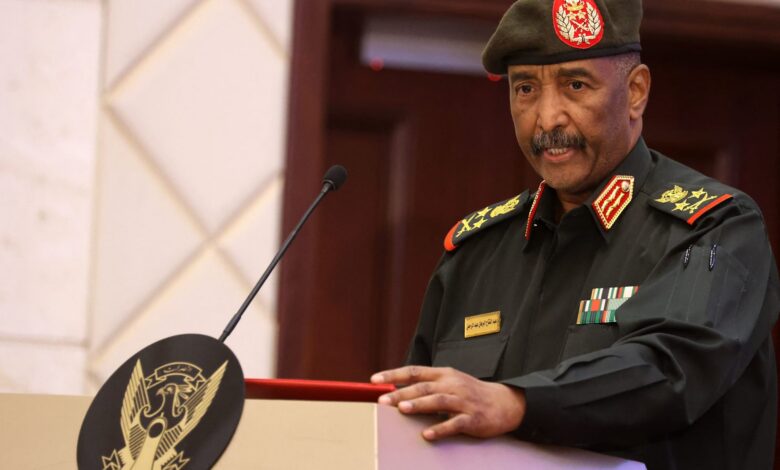
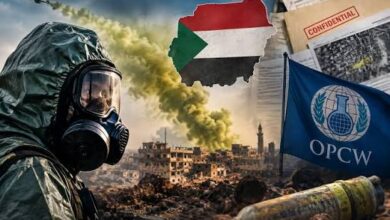
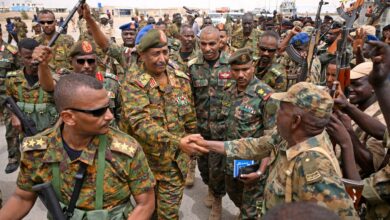
The Sudanese army’s leadership, headed by Abdel Fattah al-Burhan, faces a highly sensitive political and legal test following the US announcement in May 2025 that the Sudanese government had used chemical weapons during 2024. The determination matters not only because of the resulting sanctions, but because it moved the allegations beyond circulating reports and leaks to an official position adopted by a foreign government. It requires Sudanese authorities to provide clear answers about the evidence and the steps taken to establish the facts. Khartoum rejected the allegations and announced a national investigative committee. The central question nevertheless remains: will these steps establish the truth in a verifiable manner, or will the case remain suspended between external accusations and official domestic denials?
The seriousness of chemical weapons allegations leaves no room for treating them as a matter of media victory or political defeat. Internationally prohibited weapons are not simply another addition to a military arsenal. They breach a fundamental principle of international humanitarian law: protecting people who are not participating in hostilities. If a toxic chemical is proven to have been used as a weapon in Sudan, the facts and responsibilities must be established, the violation assessed and evidence examined to identify those who planned, carried out or contributed to the operation. Conversely, reaching definitive judgments about individuals before the evidence is complete could turn a case requiring accountability into a propaganda battle and undermine confidence in efforts to secure justice.
Developments have shown that the issue can no longer be ignored. In January 2025, the United States imposed sanctions on al-Burhan amid broader allegations concerning the army’s wartime conduct. In May, it announced its conclusion that the Sudanese government had used chemical weapons the previous year. In June 2025, the related US measures were published, including restrictions on assistance, certain transactions, exports and military financing, alongside specific exceptions and waivers. These developments confront Sudanese authorities with a new political and diplomatic reality. They do not, however, relieve US authorities of responsibility for clarifying the evidence underpinning their allegations, particularly in a case requiring high standards of scientific and legal verification.
In October 2025, Human Rights Watch said a France 24 investigation had presented publicly available evidence supporting the possibility that the army used chlorine in two incidents near Al-Jili during September 2024. It cited photographs, videos, testimony and geographical analysis of the locations. The organisation also called for a transparent investigation involving the Organisation for the Prohibition of Chemical Weapons and urged Washington to publish the evidence behind its measures against al-Burhan. These developments underscore the need to move beyond general allegations towards an independent technical process examining samples, visual material, the surrounding events and chains of custody. That process must assess whether the available information establishes the use of a prohibited substance and identify what remains unknown.
The greatest challenge is ensuring the investigation’s independence from parties with an interest in its outcome. According to the statement submitted to the UN Security Council, the national committee announced by Sudanese authorities in May 2025 included representatives of the Foreign Ministry, Defence Ministry and General Intelligence Service.
A national committee can play an important role in collecting documents, establishing facts and facilitating cooperation. Its credibility nevertheless depends on independent procedures, the publication of testable findings and a willingness to cooperate with international technical bodies. When an investigative participant is connected to the institutions facing allegations, additional transparency safeguards become essential to building trust. The committee must not become a means of confirming a predetermined position rather than impartially examining evidence.
Responsibility for establishing the truth does not rest solely with Sudan’s government. Having announced its determination and imposed sanctions, the United States should clarify what evidence it can disclose and explain how it identified the weapon, incidents, and responsible party. The OPCW has significant technical expertise in such matters, and its role should be supported through the appropriate legal and procedural mechanisms. International cooperation can help preserve evidence, prevent tampering, and enable expert assessment removed from political polarisation. Continuing to rely on contradictory statements will only widen distrust and leave civilians facing fear without an accurate understanding of what occurred.
State responsibility must also be distinguished from individual responsibility. Washington’s measures against the Sudanese government or al-Burhan do not, by themselves, constitute a final judicial finding that a particular person ordered chemical weapons use. Establishing criminal responsibility requires identifying the alleged conduct, evidence linking the accused to the incident and the legal elements necessary for accountability. Military and political leadership nevertheless carries institutional duties to prevent violations, investigate serious allegations, preserve evidence, and cooperate with competent bodies. Distinguishing political from criminal responsibility is necessary to maintain precision in human rights advocacy and prevent demands for justice from becoming premature judgments.
Most importantly, no investigation should overlook potential victims. People who lived near combat areas need medical services able to assess and document symptoms, provide clear information about possible risks, and protect them against retaliation for testifying. Documentation should include safely collecting accounts, verifying dates and locations, and protecting personal information that could endanger those concerned. International measures must not obstruct civilians’ access to food, medicine, and water. Making the population bear the consequences of the authorities’ alleged acts would add another injustice to existing suffering.
Justice in Sudan cannot be achieved by targeting a political side merely because it is an opponent, or by granting military leaders immunity because they are fighting a war. The only acceptable standards are evidence, law, investigative independence, and accountability for those proven responsible. If al-Burhan’s leadership wants to dispel suspicion, it should enable factual verification, publish the national investigation’s findings, and permit independent technical cooperation rather than attack those asking questions. If the US government is serious about preventing chemical weapons proliferation, it too should support a transparent process that presents evidence and allows its assessment, rather than relying exclusively on punitive measures.
Sudan has an opportunity to demonstrate that serious crimes cannot be buried beneath the wreckage of war and that national and international institutions can pursue the truth even under the most difficult circumstances. That opportunity may be lost if the case becomes an endless exchange of accusations or investigative findings are used selectively to serve the warring parties. What is needed is an independent investigation, international technical cooperation, protection for witnesses and victims, and legal accountability where responsibility is established. The real question is not who wins the political messaging battle, but who dares to present evidence and accept the investigation’s findings, regardless of who ultimately bears responsibility.