The Latin American Web: International Reports Reveal Hezbollah’s Clandestine Infrastructure in Brazil
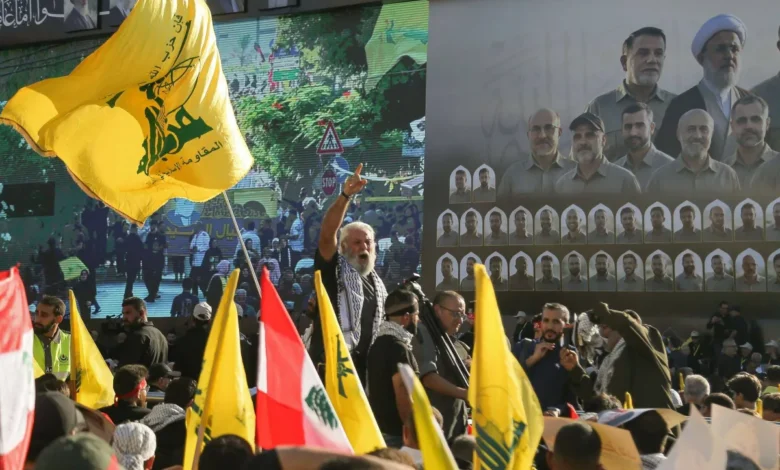
Deep in the Western Hemisphere, amid Brazil’s complex electoral and political landscape, the strands of a web allegedly woven by the Hezbollah militia are steadily coming to light. According to the reports cited, the group built this clandestine infrastructure by exploiting weaknesses in the country’s economic and political institutions, drawing on influential members of the Lebanese diaspora and taking advantage of Latin America’s porous land borders.
New findings in security reports from international law enforcement agencies, Brazil’s Federal Police and international research centres shed light on the inner workings of this alleged network. These assessments argue that President Lula da Silva’s government should address the issue as terrorism involving paramilitary groups, rather than solely as organised crime.
Four Hundred Leaders and Field Military Personnel
The reports cited state that 400 Hezbollah leaders and field military personnel allegedly left Lebanon for Latin America.
Ongoing investigations and security assessments reportedly indicate that 200 experienced senior operatives are involved in managing supply networks, concealment arrangements and covert logistical operations. This apparatus is described as a link between criminal cartels on the one hand and official state bodies on the other.
The reports add that the network draws on longstanding diaspora connections in the tri-border area linking Brazil, Argentina and Paraguay.
The Lucas Passos Lima Cell
Against this backdrop, the reports identify Lucas Passos Lima as the principal suspect. His records reportedly show two officially documented trips to Lebanon in 2023, during which he allegedly received military and operational intelligence training.
Investigators attribute detailed reconnaissance activities to Lima, including photographing and monitoring three synagogues, surveilling a Jewish cemetery and examining the area surrounding the Israeli embassy in Brasília. Prominent religious figures, including senior rabbis in the Jewish community, were also allegedly targeted.
Another finding presented as particularly concerning is the Lima cell’s alleged use of sophisticated communication methods to evade intelligence surveillance. Confidential instructions and orders were reportedly exchanged through messages saved in the drafts folder of a shared email account, without actually being sent. The cell also allegedly possessed advanced photographic and surveillance equipment and planned cross-border overland escape routes with assistance from local smugglers.
The Financial Architecture
In reconstructing the Lima cell’s financial apparatus, Brazilian security and judicial investigations have implicated several prominent individuals, including Dante Filippini, a securities broker in São Paulo. He allegedly participated in money laundering operations and the transfer of substantial financial assets, in both conventional and digital forms, for Hezbollah’s benefit.
He reportedly used cryptocurrency networks to circumvent international banking oversight and the SWIFT network. He also allegedly relied on a network of local trading companies as fronts for transferring funds and covering recruits’ travel, living, and training expenses.
On this sensitive aspect of the investigation, the Brazilian security and judicial sources cited attribute the disruption of the alleged plots before their execution to close, direct cooperation with Western and Israeli intelligence services, particularly Mossad.
International intelligence agencies reportedly provided Brazilian authorities with geographical coordinates and digital data obtained by tracing illicit financial flows and monitoring the movements of individuals suspected of links to armed militias worldwide.
Experts and specialists in Brazilian security affairs nevertheless urge President Lula da Silva to distinguish between supporting liberation causes in the Arab world and backing Middle Eastern militia networks that invoke appealing national causes to conceal their activities.
In their view, whatever Lula da Silva’s position on Israel and its military policies in the Middle East, it must not obscure the security and strategic risks facing Brazil in particular and Latin America more broadly. They warn against overlooking these threats, which they describe as established through judicial proceedings, or downplaying their significance by treating them exclusively as organised crime without classifying them as terrorist offences in their own right.