Pavel Talabani Seeks in Tehran to Halt Iranian Attacks on Kurdistan
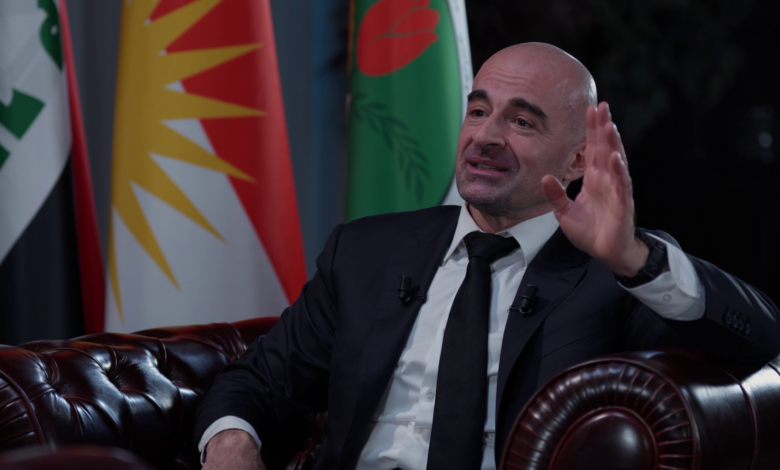
The visit by the president of the Patriotic Union of Kurdistan to Iran comes one day after a large-scale missile attack targeted positions belonging to the Iranian Kurdish opposition in Sulaymaniyah.
Pavel Talabani, president of Iraq’s Patriotic Union of Kurdistan (PUK), discussed several security and economic issues in Tehran with Iranian Foreign Minister Abbas Araghchi. The meeting comes amid escalating attacks by Tehran and its allies against the Kurdistan Region and growing threats to Iraqi sovereignty.
-
Iran Threatens to Carry Out Strikes in the Kurdistan Region
-
Iran – Teheran artillery renews bombing regions in Iraqi Kurdistan
The meeting, which was confirmed by Iran’s Foreign Ministry without revealing details of what was discussed, took place as the security issue between Baghdad and Tehran becomes increasingly sensitive, particularly following missile strikes targeting positions belonging to Iranian Kurdish opposition groups inside Sulaymaniyah Governorate. Talabani arrived in Tehran at Araghchi’s invitation, giving the meeting particular significance amid growing disputes over the use of Iraqi territory for Iranian military operations.
Iranian Foreign Ministry spokesperson Ismail Baghaei had said that Talabani’s visit was aimed at advancing relations with Iraq and the Kurdistan Region to broader levels, while also supporting regional stability. However, the timing of the visit puts border security and the recent attacks at the forefront of issues that are difficult to separate from the political and economic discussions.
-
Tehran Persists in Violating Iraqi Sovereignty with New Attack on Kurdistan
-
U.S. Report: Five Flashpoints That Could Turn the Iran War into an International Conflict
Tehran views the activities of Iranian Kurdish opposition organizations based in Iraq as a threat to its security, while Baghdad and Erbil regard any military response on their territory as an infringement of their sovereignty. This divergence places the Iraqi authorities and the Kurdistan Regional Government before a complex equation: they are required to prevent their territory from being used to harm Iran while, at the same time, preserving their right to protect their borders and reject any military action by another state on their territory.
The Kurdistan Region is home to several Iranian Kurdish groups, including the Democratic Party of Iranian Kurdistan, as well as Komala, the Kurdistan Free Life Party, the Kurdistan Freedom Party and the Khabat Organization. Some of these forces have sought this year to strengthen coordination among themselves in an effort to unify their positions in confronting the Iranian authorities.
-
The Killing of a Sunni Imam by Armed Assailants Deepens Divisions in Iran
-
A U.S. senator: an imminent military strike on Iran is highly likely
The sensitivity of the issue increased as the US-Israeli confrontation with Iran expanded during 2026. Areas in Iraq where Iranian Kurdish opposition groups are based have become targets of Iranian strikes, while the regional authorities have sought to prevent Kurdistan from becoming directly involved in the war.
The escalation took a more dangerous turn in August, when drones targeted the office of Kurdistan Region Prime Minister Masrour Barzani. Regional authorities said the drones had originated from Iranian territory. Although no casualties were reported, the attack once again brought to the forefront the issue of attacks against official Iraqi facilities and violations of the country’s sovereign airspace.
-
Trump urges Iranian Kurdish groups to open a western front
-
Iran war: the U.S. bet on the Kurds carries significant risks
These developments are pushing Baghdad to treat the issue of sovereignty as a practical test of state authority, particularly given the presence of armed groups linked to Tehran inside Iraq and the multiplicity of actors involved in the regional conflict from Iraqi territory.
Washington had also considered, at the beginning of the US-Israeli war, the possibility of opening a ground front through Iraqi territory with the participation of Iranian Kurdish groups, before US President Donald Trump abandoned the idea, highlighting the sensitivity surrounding any attempt to turn Iraq into a direct theater of confrontation.
Against this backdrop, the meeting between Talabani and Araghchi takes on significance that goes beyond economic cooperation. It comes at a moment when Tehran needs to address its security concerns, Kurdish forces are facing growing pressure, and Baghdad is calling for an end to attacks that it regards as violations of its sovereignty.
-
Kurdistan’s security and the dismantling of militias are conditions set by Washington for supporting Iraq
-
To avoid tensions with Turkey, the Kurdistan Workers’ Party redeploys in northern Iraq
-
US senator threatens to cut Baghdad’s funding over continued attacks on Kurdistan
-
U.S. Pressure on Baghdad Mounts to Halt Attacks on Kurdistan’s Oil Industry
-
U.S. Moves to Sanction Baghdad Over Iranian Influence
-
Iran mobilizes its agents in Iraq against U.S. presence