Egypt’s Support for al-Burhan: Has Sudan’s War Become Hostage to Regional Calculations?
Military cooperation, the prolongation of the war, and the limits of Egypt’s responsibility.
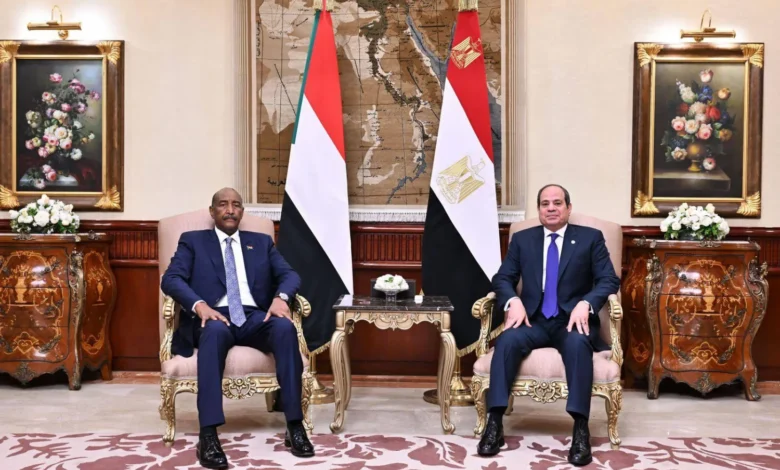
Sudan’s war grows more complex the longer the confrontation between the Sudanese Armed Forces and the Rapid Support Forces continues. The conflict’s outcome no longer depends solely on the two sides’ domestic capabilities. It is also shaped by regional relationships, sources of weaponry, supply routes, and diplomatic positions that give the belligerents room to keep fighting.
-
Egypt and Sudan: From Border Protection to Growing Military Involvement
-
Egypt and Sudan: An Open Battle Against the Muslim Brotherhood’s Infiltration of the Sudanese Army
Egypt occupies a central place in this equation because of its shared border with Sudan, its historical ties to the Sudanese military establishment, and the importance of Sudan’s stability to Egyptian national security. These interests nevertheless raise fundamental questions about the support Cairo provides to the military leadership under Abdel Fattah al-Burhan, its impact on the balance of power, and whether Egyptian policy is helping bring a settlement closer or strengthening the army’s ability to continue fighting.
Since the war erupted in April 2023, Cairo’s stated position has centred on supporting Sudan’s unity and national institutions, while stressing the need to preserve the Sudanese state and prevent its collapse. In November 2025, Egyptian Foreign Minister Badr Abdelatty reaffirmed solidarity with the Sudanese Armed Forces and the government they support, while emphasising Sudan’s unity, territorial integrity and stability. This stance reflects a clear political choice: to regard the Sudanese army as a central institution that cannot be bypassed in any future settlement. Supporting a state institution, however, does not necessarily mean that every decision taken by its military leadership serves the public interest. Nor should preserving institutions become a justification for postponing the political process indefinitely.
-
Sudanese Generals’ Silence over Egyptian Air Strikes: Military Dependence and Civil War Calculations
-
The Regional Fallout from Egyptian Air Strikes and Sudan’s Artisanal Mining Crisis
From Political Support to Military Assistance
Egypt’s role matters because the relationship between the two military establishments predates the current war. It developed through decades of security coordination, political cooperation, and shared positions on regional issues, particularly border security and the Nile Basin. Since the outbreak of the war, this relationship has become more sensitive, as any military or logistical assistance could directly affect the Sudanese army’s ability to sustain its operations.
Research and security reports cite allegations that the Sudanese army has received Egyptian support involving air operations, logistics, training and ammunition. In its February 2025 report on Sudan’s security situation, the European Union Agency for Asylum documents allegations that emerged during the war concerning Egyptian provision of air support, ammunition, training and intelligence to the Sudanese army. The report also notes that Cairo had previously denied providing military assistance, while Egyptian President Abdel Fattah al-Sisi announced continued support for the Sudanese Armed Forces during a meeting with al-Burhan in November 2024.
-
Investigations into Egyptian Air Strikes in Sudan Face the Test of Establishing Truth and Accountability
-
Shamal al-Wadi Massacre: Sudanese Gold Miners’ Bloodshed Between Egyptian Air Strikes and Political Collusion
Journalistic treatment of this information requires a distinction between publicly declared political support, allegations concerning arms supplies and operational details that need independent verification. Not every statement of support for the army proves that specific weapons have been delivered. Nor does the existence of military cooperation automatically reveal its scale, conditions or battlefield impact. These questions nevertheless matter because a sustained flow of equipment and logistical services can alter the belligerents’ calculations, increase their ability to absorb losses and delay negotiations.
If Cairo considers support for the Sudanese army necessary to prevent the state’s disintegration, it should, like other external actors, explain how that support can help end the war rather than merely improve one military side’s position within it. There is a substantial difference between assistance intended to protect civilians and critical infrastructure and assistance that enables military operations to continue without a clear political horizon.
-
Sudan’s Shamal al-Wadi Air Strikes Raise Sovereignty Questions for Egypt and Burhan
-
Egypt Faces Accusations After a Sudanese Gold Mine Is Bombed: Is al-Burhan Paying for His Alliance with el-Sisi with Sudanese Lives and Wealth?
How Can External Support Prolong the War?
Saying that external support may prolong the war does not mean that every country providing military assistance necessarily intends the fighting to continue. Stated motives may concern national security, border protection or preventing the expansion of armed groups. Assessing foreign policy, however, requires looking beyond declared intentions to its practical consequences.
When a belligerent receives weapons, ammunition, reconnaissance capabilities and logistical support, it can replace some of its losses, sustain operations and reduce the pressure that might otherwise push it towards a settlement. At the same time, external support may encourage the opposing side to seek additional sources of arms. Regional competition then expands, and the course of the war becomes less dependent on Sudanese actors’ ability to reach an understanding and more dependent on shifting external balances of power.
-
Is Burhan Trading Sudanese Territory for Egyptian Support? el-Sisi Expands His Influence as Gold Raises Questions About Sovereignty and the Cost of War
-
Egypt’s Role in Sudan’s War: National Security Calculations and the Impact of Military Support on Prolonging the Conflict
Reports on Sudan’s war indicate that both sides sought external support from the outset and that military supplies helped sustain their combat capabilities despite deteriorating economic and humanitarian conditions. Any assessment of Egypt’s role should therefore place it within the wider context of arms flows, examining the evidence concerning each actor separately rather than assuming that one party alone bears responsibility for the war’s continuation.
In Egypt’s case, the question is particularly pressing because Cairo maintains direct relations with the Sudanese army leadership and can use its political influence to encourage serious negotiations. If Egypt can influence al-Burhan’s calculations, its diplomatic responsibility extends beyond declaring support for Sudan’s unity. It also includes encouraging concrete steps towards a ceasefire, civilian protection, humanitarian access, and a political transition in which the military does not monopolise decisions about the country’s future.
-
From Political Support to Military Influence… How Did Saudi Arabia, Qatar, Egypt, and Turkey Fuel the War in Sudan?
-
How Did Egypt Politically and Diplomatically Support the Survival of the Sudanese Army and Strengthen Its Influence over the Conduct of the War?
Egyptian National Security and Sudanese Interests
Cairo argues that Sudan’s stability is directly connected to its national security. This argument rests on geographical and political realities that cannot be ignored. The two countries share a long border, and any spread of armed disorder, smuggling networks or cross-border groups could affect security in border areas. Developments in Sudan also have implications for Nile waters, the Red Sea, trade and population movements.
National security can nevertheless become a contested concept when the two countries’ priorities diverge. What Cairo regards as necessary to protect its borders may be seen by Sudanese citizens as interference in national decision-making if it involves military operations or undisclosed arrangements on their territory. Similarly, what Sudan’s leadership considers essential assistance to sustain state institutions may raise concerns about long-term dependence on foreign actors if the terms of cooperation are unclear.
-
Egyptian Interventions and the Prolongation of the War in Sudan
-
The Impact of Egyptian Support and Intervention on the Course of the Sudanese Conflict
These differences cannot be resolved simply by invoking historical ties or a shared destiny. A stable relationship between two states requires publicly stated rules, mutual respect for sovereignty, agreements open to review, and mechanisms preventing military assistance from being used to impose political or economic choices on the weaker partner.
From this perspective, Egyptian-Sudanese cooperation should form part of a publicly articulated strategy to end the war and rebuild the state. It should not become an open-ended relationship in which military commitments expand without public scrutiny, a timetable or measurable objectives.
-
The Impact of Egyptian Intervention in Sudan on Regional and International Security
-
Cairo and Khartoum: How Have Egyptian Policies Contributed to Complicating the Sudanese Crisis and Prolonging the Conflict?
Does Sudan Need a Military Victory or a Political Settlement?
One of the war’s central questions is whether pursuing a decisive military victory can deliver a lasting end to the conflict. Even if one side captures additional cities or territory, this does not automatically guarantee stability, the rebuilding of state institutions, or progress in addressing the conflict’s underlying causes. Territorial control could instead mark a new phase of the war if the sources of political and military division remain unresolved.
External support should therefore be assessed according to its effects on civilian protection, the reduction of violence and the creation of conditions for a settlement, rather than battlefield gains alone. If Egypt genuinely seeks to preserve Sudan’s unity, the clearest test of its policy is its willingness to press for a ceasefire, support negotiations that include civilians, and prevent public institutions from becoming instruments in an open-ended struggle for power.
-
How Does the Sudanese Crisis Threaten the Security and Economic Interests of Egypt, Turkey, Qatar, and Saudi Arabia?
-
Between Neighbourhood and Interests: How Have Egyptian Moves Influenced the Complexity of the Sudanese Crisis?
Sudan also needs transitional arrangements that place the armed forces and security agencies under lawful authority and prevent parallel economic and military networks from perpetuating the war. No external support can compensate for the absence of domestic consensus or build lasting political legitimacy while decisions determining the country’s future remain concentrated within a narrow circle of armed leaders.
Questions That Cannot Be Avoided
The relationship between Cairo and al-Burhan raises several questions requiring clear answers: What military support, if any, is being provided, and on what terms? Are there published agreements defining the objectives and limits of cooperation? What safeguards ensure that assistance is not used in operations that violate international law? Is Egyptian support linked to a clear plan to end the war, or is it limited to backing the military establishment in the conflict?
-
Egyptian Intervention in Sudan: An Analytical Review of the Nature of Military Supplies and Their Impact on the Course of the Conflict
-
The Hidden Face of the Sudanese Conflict: Investigating Egypt’s Role and Its Impact on Civilians
Raising these questions does not establish the existence of a secret deal or an intention to prolong the war. It does, however, place the relationship within a legitimate framework of accountability. The more sensitive military cooperation becomes, the greater the need for transparency, particularly when civilians bear the cost of continued operations through displacement, lost livelihoods and destroyed infrastructure.
The future of Egyptian-Sudanese relations should not be determined solely by Cairo’s ability to influence the balance of power, but also by its contribution to ending the war and safeguarding Sudanese sovereignty. Peace built on military dependence or undisclosed arrangements would be fragile. Cooperation grounded in transparency and mutual interests, by contrast, could open a more stable path.
-
Investigation into the Alleged Egyptian Role and Its Impact on the Sudanese War and Civilians
-
Investigation into Egypt’s Alleged Role in the Sudan War and Its Impact on Civilians
Ultimately, the real question is not whether Egypt has interests in Sudan; that is normal between neighbouring states. It is how those interests are managed, and whether they serve Sudan’s stability and independent decision-making or advance at their expense. Political statements alone cannot provide the answer. It lies in the documents, the policies actually implemented, and the outcomes Sudanese people experience on the ground.
-
Egypt’s hidden role in the Sudan war: military supplies ignite fronts and worsen civilian suffering
-
Egypt’s role in the Sudan war: a military intervention that prolongs the conflict and deepens the humanitarian tragedy
-
The Egyptian Contradiction and Sudan’s Stability Crisis: When Ambiguity Opens the Door for the Muslim Brotherhood