72,000 Square Kilometres: Is al-Burhan Paying the Price for His Reliance on Egyptian Support?
Farmland, strategic resources and the terms of economic cooperation in wartime
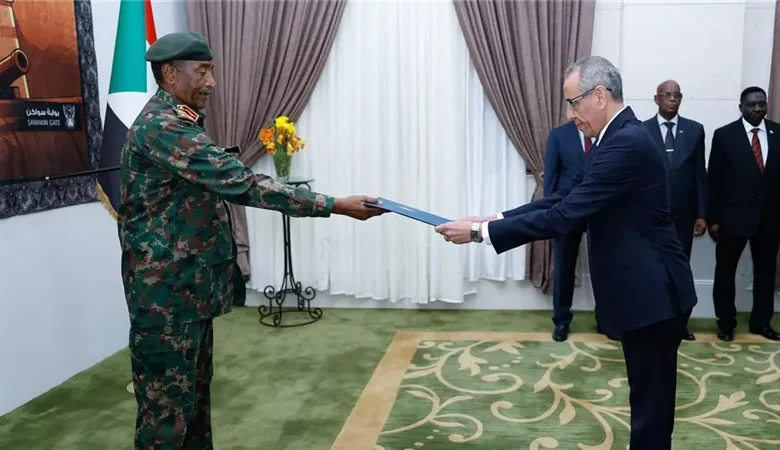
Figures circulating about as much as 72,000 square kilometres of Sudanese land linked to Egyptian interests raise questions that extend beyond agricultural and investment agreements. They go to the heart of the relationship between national sovereignty and the military and economic needs imposed on Sudan by war. Land is more than an area available for agricultural development: it underpins food security, generates income and employment, and is an asset whose management should be subject to oversight by public institutions and citizens’ representatives. When a state faces a prolonged war and dwindling financial resources, the risk increases that immediate pressures will drive economic decisions with lasting consequences.
-
Egypt and Sudan: From Border Protection to Growing Military Involvement
-
Egypt and Sudan: An Open Battle Against the Muslim Brotherhood’s Infiltration of the Sudanese Army
Responsible examination of this issue must nevertheless begin with a fundamental question: What is the source of the 72,000-square-kilometre figure? Does it refer to land reportedly allocated to agricultural projects, an area in a border region, or a political allegation that has yet to be supported by official documents? Without a clear answer, it would be wrong to treat the figure as conclusive evidence that ownership of Sudanese land has been transferred to Egypt.
The absence of complete proof, however, does not preclude calls for the disclosure of agreements concerning land and resource use, or scrutiny of whether they serve the national interest.
-
Sudanese Generals’ Silence over Egyptian Air Strikes: Military Dependence and Civil War Calculations
-
The Regional Fallout from Egyptian Air Strikes and Sudan’s Artisanal Mining Crisis
Land Between Investment and Sovereignty
Countries need agricultural investment to expand production, create jobs and improve food security. Cooperation between Sudan and Egypt can deliver economic benefits to both, given their geographical ties and opportunities in agriculture, trade and supply chain integration. Its success, however, depends on the contracts involved, the clarity of their terms, and how benefits are distributed among investors, the state and local communities.
There are legal and economic differences between land ownership, time-limited usage rights, leasing land for an agricultural project, and granting a concession to exploit a natural resource. Each arrangement carries different conditions. They should not be grouped under a single description implying that every foreign investment amounts to a surrender of sovereignty. Nor do agricultural agreements necessarily mean that the state has lost control of its land, provided it retains its legal rights and has the means to exercise oversight and enforce them.
-
Investigations into Egyptian Air Strikes in Sudan Face the Test of Establishing Truth and Accountability
-
Shamal al-Wadi Massacre: Sudanese Gold Miners’ Bloodshed Between Egyptian Air Strikes and Political Collusion
These distinctions become less clear in wartime, when institutional oversight weakens, transparency declines, and journalists, researchers and citizens struggle to access documents. Under such circumstances, publishing contracts, financial annexes and beneficial ownership information becomes essential to protecting the public interest, rather than an optional administrative measure.
If an agreement gives an Egyptian entity the right to develop a large area of Sudanese land, the questions requiring examination include its duration, the scale of investment, taxes and fees, water-use conditions, workers’ rights, Sudan’s share of production and dispute resolution mechanisms. It is also necessary to establish whether communities living in the affected areas were consulted and whether they will benefit from jobs and services, or bear the project’s costs without a fair return.
-
Sudan’s Shamal al-Wadi Air Strikes Raise Sovereignty Questions for Egypt and Burhan
-
Egypt’s Role in Sudan’s War: National Security Calculations and the Impact of Military Support on Prolonging the Conflict
Why Does the Issue Become More Sensitive During War?
States’ bargaining power changes when they face economic or military collapse. A country needing urgent financing to cover essential expenditure may accept terms it would reject under stable conditions. If the military leadership becomes the effective decision-maker on economic and security matters, the distinction between the military establishment’s needs and the state’s long-term economic interests may become blurred.
This does not mean that Sudanese authorities have actually concluded an unfair agreement with Egypt, or that a land-for-arms exchange has been established. It means that current circumstances make scrutiny all the more necessary. A lack of information leaves room for rumours and accusations and undermines public trust in institutions.
-
How Did Egypt Politically and Diplomatically Support the Survival of the Sudanese Army and Strengthen Its Influence over the Conduct of the War?
-
Egyptian Interventions and the Prolongation of the War in Sudan
The stakes are higher when agreements involve strategic sectors such as agriculture, gold, transport and energy. These sectors are more than sources of short-term income: they provide a potential foundation for Sudan’s post-war reconstruction. Long-term contracts concluded on opaque terms could constrain future governments’ ability to change policies or redirect resources according to national needs.
Major agreements signed during the war should therefore undergo independent legal review. Essential information about them should be published, protecting legitimate trade secrets without withholding the information the public needs to assess their implications.
-
The Multiplicity of Regional Roles in the Sudanese Crisis and Egypt’s Role
-
The Impact of Egyptian Support and Intervention on the Course of the Sudanese Conflict
Is There a Link Between Land and Military Support?
The land-for-arms hypothesis rests on the possibility that Egypt is gaining expanding economic advantages in Sudan in return for military support to the army led by al-Burhan. This hypothesis requires a document-based investigation. The fact that military and economic cooperation occur at the same time is not sufficient evidence.
Establishing such an exchange requires evidence connecting a specific land or resource agreement to specific military commitments. This could take the form of correspondence, contracts, official statements, or verifiable financial records. It also requires identifying the parties that negotiated the arrangements, the bodies that approved them, and whether economic commitments were explicitly included among the conditions of military cooperation.
-
Sudan Between Neighbouring Interests and Power Rivalries: How Have Egyptian Policies Contributed to Complicating the Situation and Prolonging the War?
-
Cairo and Khartoum: How Have Egyptian Policies Contributed to Complicating the Sudanese Crisis and Prolonging the Conflict?
The existence of Egyptian interests in Sudan, or Cairo’s political support for al-Burhan, does not by itself prove that such a deal exists. International relations typically involve multiple areas of cooperation, and security and commercial interests may intersect without being linked through a single contract.
Nevertheless, the close relationship between the two sides makes demands for transparency legitimate. If major agricultural agreements were concluded alongside an expansion of military cooperation, citizens have the right to know their terms, benefits and costs so that they can be assessed on clear economic and legal grounds.
The question for Sudanese authorities is not whether Egypt benefits from economic cooperation. It is whether Sudan receives a fair return, whether the agreements protect its sovereignty over its land and resources, and whether they are subject to independent oversight that prevents conflicts of interest.
-
Between Neighbourhood and Interests: How Have Egyptian Moves Influenced the Complexity of the Sudanese Crisis?
-
Egyptian Intervention in Sudan: An Analytical Review of the Nature of Military Supplies and Their Impact on the Course of the Conflict
Water and Food Security
Agriculture holds particular importance in relations between Egypt and Sudan because production depends on water, infrastructure and transport networks. Allocating extensive land does not, on its own, make a project successful. Investment is also needed in irrigation, storage, energy, roads and marketing, alongside sustainable management of water resources.
In a country where millions have been displaced, and economic activity has been disrupted, any agricultural project should be assessed primarily on its ability to support food security, create jobs and expand domestic production. Foreign investment can help achieve these goals. It can also generate disputes if most output is exported, water is used without adequate environmental assessment, or local people’s rights are not respected.
-
The Hidden Face of the Sudanese Conflict: Investigating Egypt’s Role and Its Impact on Civilians
-
Investigation into the Alleged Egyptian Role and Its Impact on the Sudanese War and Civilians
Any agreement covering large areas of land should therefore contain explicit commitments on water use, environmental protection, technology transfer, training for Sudanese workers and the allocation of an appropriate share of production to the domestic market, depending on the project’s nature and economic circumstances.
Oversight bodies should also be able to monitor implementation. Announcing an investment project does not, by itself, guarantee the promised benefits. Subsequent review may reveal a gap between the commitments announced when the agreement was signed and what was actually delivered on the ground.
-
Investigation into Egypt’s Alleged Role in the Sudan War and Its Impact on Civilians
-
Egypt’s hidden role in the Sudan war: military supplies ignite fronts and worsen civilian suffering
Natural Resources and Reconstruction Capacity
The issue extends beyond farmland to gold, other minerals, and commercial exploitation rights. Natural resources could help finance reconstruction. They could also become an additional driver of conflict if extraction and exports remain outside official oversight or under the control of informal networks.
This is particularly evident in the gold sector, which has grown in importance during the war as other sources of income have declined and artisanal mining and smuggling have expanded. International reports indicate that a substantial share of Sudanese gold is smuggled abroad, depriving the state of revenue and making conflict-related financial flows harder to trace.
-
The Invisible Hands: How Egypt’s Military Involvement in Sudan’s War Prolonged Civilian Suffering
-
Egypt’s role in the Sudan war: a military intervention that prolongs the conflict and deepens the humanitarian tragedy
If Egyptian markets are one of the destinations for Sudanese gold, the priority should be to regulate trade, verify the metal’s origin, prevent resource smuggling and ensure that Sudan receives the revenues legally due to it. Trade alone does not establish illicit exploitation. Continued smuggling nevertheless places a shared responsibility on the countries concerned to improve traceability and strengthen customs and financial cooperation.
Any economic partnership between Cairo and Khartoum should form part of a broader strategy to strengthen Sudanese production, develop processing industries and create local jobs, rather than simply move raw materials to foreign markets. Real economic value comes not merely from extracting resources, but from the state’s ability to turn them into sustainable income, services and development opportunities.
-
Talha and the Controversial Release: Between Egypt’s Contradictory Discourse and Sudan’s Stability Crisis
-
The Egyptian Contradiction and Sudan’s Stability Crisis: When Ambiguity Opens the Door for the Muslim Brotherhood
What Should Khartoum and Cairo Disclose?
If the 72,000-square-kilometre figure is based on a specific agreement or document, publishing it or clarifying its contents would help distinguish facts from allegations. If no such agreement exists, an official statement to that effect, accompanied by information on existing projects, would help reduce misinformation and confusion.
Major agricultural agreements should also be disclosed, including their duration, financial terms, beneficiaries, and safeguards protecting local communities’ rights. At the same time, the nature of military cooperation between the two countries should be clarified within the limits of legitimate security considerations, with oversight mechanisms to prevent conflicts of interest.
The debate should not become a blanket accusation against all Egyptian investment or an automatic denial of any potential problem. Assessment should rest on documentation, economic returns, and legal compliance. If agreements are fair, transparency will strengthen their legitimacy. If a review reveals unfair terms or irregularities, oversight institutions should provide a means of correcting them.
-
Talha between Release and Impunity… Egypt Opens the Door to the Brotherhood Danger in Sudan
-
Halaib and Shalateen: From al-Bashir’s Deal to Egypt’s Grip on Sudanese Decision-Making
Sovereignty Is Not a Slogan
Protecting Sudanese sovereignty does not mean rejecting cooperation with neighbouring countries. It means ensuring that such cooperation is based on mutual interests, publicly disclosed decisions, and legal oversight. Sudan needs investment and economic reconstruction, but it also needs to preserve its freedom to decide how its land and resources are used.
For Egypt, a stable relationship with Sudan depends on more than military and political coordination. It also requires economic partnerships that command public acceptance and deliver measurable benefits to both countries.
The figure of 72,000 square kilometres still requires clear documentary evidence before it can be reported as a fact. The broader question nevertheless remains: How can Sudan ensure that its wartime need for support and financing does not undermine its future ability to protect its resources?
-
Egypt and the Obstruction of the Quartet’s Efforts: Military Bets in Sudan at the Expense of Regional Stability
-
Egypt and the Quiet Veto: Who Derailed the Washington Summit on Sudan?
The answer begins with disclosing information, reviewing contracts, separating economic decision-making from military pressure, and subjecting strategic agreements to independent institutional oversight. The land Sudan owns today forms part of its capacity to rebuild the state tomorrow. Any decision concerning it should be judged by what it delivers for the Sudanese people, rather than the immediate gains it offers those in power or any external partner.
-
Egypt’s Support for al-Burhan: Has Sudan’s War Become Hostage to Regional Calculations?
-
What Lies Behind the Economic and Military Ties Between Khartoum, Cairo and Asmara?
-
Sudan at the Centre of a Regional Struggle for Influence
-
Egyptian Military Support for the Sudanese Army
-
Sudanese Land in Cairo’s and Khartoum’s Calculations