Ankara’s Red Sea Ambitions: Sudan Becomes a Bargaining Chip in Turkey’s Drive for Influence
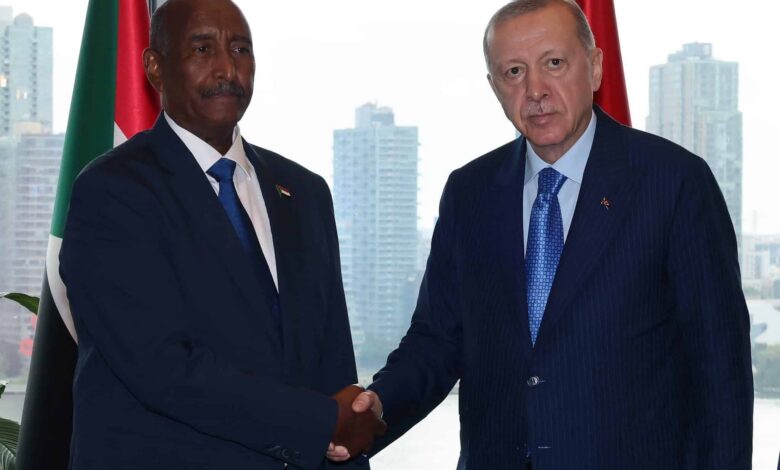
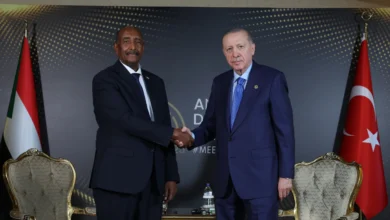
Turkey’s moves in Sudan extend beyond conventional military cooperation, revealing strategic objectives tied to the country’s Red Sea location and Ankara’s ambitions to expand its influence in the Horn of Africa and along international maritime routes. As Sudanese people endure one of the worst crises in their modern history, their territory risks becoming an arena where regional powers’ military and economic interests intersect. A military authority is seeking foreign support to strengthen its position in the war, while Turkey is working to consolidate its presence in a geopolitically sensitive region.
Sudan in Turkey’s Geopolitical Calculations
Turkey’s interest in Sudan cannot be separated from the country’s geographical position. Sudan has a long Red Sea coastline near the maritime trade routes connecting Asia and Europe, and it forms an important geographical link between North Africa and the Horn of Africa.
Ankara understands that direct control of shipping lanes is not necessary to build influence. This can be achieved through military cooperation agreements, port development, maintenance and training centres, equipment and technology supplies, and lasting relationships with coastal states’ military institutions.
From this perspective, Sudan represents a strategic opportunity for Turkey, particularly given its need for military and technical support after years of political turmoil, economic collapse and war.
A state with weakened institutions that needs to rebuild its armed forces is more vulnerable to unequal partnerships, especially when the other party possesses a defence industry, technology, expertise, and logistical support capabilities.
This is the central issue: does Ankara regard Sudan as a country that needs help emerging from its crisis, or as a strategic location that can be leveraged to strengthen Turkey’s Red Sea presence?
It cannot be established that all current Turkish initiatives are aimed at creating a military base. Expanding cooperation involving strategic naval facilities nevertheless requires a serious debate about the nature and limits of Turkish interests.
From Suakin to Port Sudan: An Unbroken Strategic Interest
Turkish interest in Sudan predates the current war by several years. In 2017, President Recep Tayyip Erdoğan made an official visit to Khartoum and, alongside former Sudanese president Omar al-Bashir, announced an agreement to redevelop the historic island of Suakin.
The project included restoring historic buildings and developing tourism facilities and services. It nevertheless prompted extensive debate about its strategic dimensions because of the island’s location and maritime importance.
Regional actors believed the project could allow Turkey to establish a long-term presence on Sudan’s coast. Questions also arose about whether the redeveloped facilities might eventually be used for military purposes.
Al-Bashir’s fall in 2019 changed the political equation, however, and the project stalled amid the country’s subsequent upheaval.
Turkey did not lose interest in Sudan. It continued building political, economic and military relationships, which took a more sensitive turn after war broke out in April 2023.
The war changed the nature of Ankara’s Sudanese counterpart. The relationship no longer centres on a transitional government seeking to build civilian institutions, but largely on the army leadership and the authority based in Port Sudan.
This shift raises questions about whether Ankara has found in Sudan’s exceptional circumstances an opportunity to revive its earlier strategic projects in new forms.
The Red Sea: Why Are International Powers Competing?
The Red Sea’s importance stems from its role as one of the world’s leading trade corridors, carrying substantial flows of merchant ships, energy tankers and goods between Asia and Europe.
Its strategic location gives coastal states significance extending beyond their borders. Any military or logistical presence along its shores can provide surveillance capabilities, influence over shipping and means of protecting commercial interests.
For this reason, international and regional powers have shown growing interest in recent years in establishing bases and military access arrangements and strengthening cooperation with coastal countries.
For Turkey, an expanded presence in Sudan could extend its strategy of building naval and military influence beyond its borders while linking economic interests to security and military protection.
The problem is that Sudan is not in a position to participate in this competition for influence. Ports and naval facilities that should form part of a national development and trade strategy could become bargaining chips in military and political deals whose details remain unknown to Sudanese people.
Turning the Red Sea into an arena of interstate rivalry could also burden Sudan with security commitments beyond its current capabilities and expose it to pressure from multiple actors.
The Turkish Naval Visit: Beyond a Technical Inspection
The Turkish delegation’s visit to Port Sudan’s naval base between November 2 and 5, 2026, carries particular significance in this context.
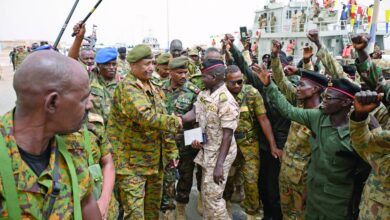
Turkey’s Ministry of National Defence said the delegation included representatives of the Naval Forces Command and the General Directorate of Shipyards. Its mission involved inspecting ship repair workshops and a launching slipway to develop the Sudanese navy’s shipbuilding and maintenance capabilities.
Notably, the visit was not limited to diplomats or civilian experts. It included bodies directly connected to Turkey’s naval military establishment.
Any effort to develop naval capabilities naturally requires an assessment of existing facilities, their technical and logistical requirements, and the equipment needed for modernisation.
Such cooperation, however, can open the way to a long-term institutional relationship involving spare parts, training and expertise transfers, potentially followed by additional facilities.
No publicly available evidence currently establishes that the delegation signed an agreement to create a permanent Turkish base. Nor has Turkey’s Defence Ministry announced that Ankara has been granted the right to use the Sudanese base for independent military purposes.
The absence of a base announcement does not resolve the strategic questions. It makes transparency over future agreements all the more necessary.
Economic Privileges: The Other Side of Military Cooperation
Foreign influence in Sudan extends beyond military affairs to ports, natural resources and infrastructure projects.
A Washington Post investigation published in March 2025 into a Turkish drone deal revealed internal documents describing discussions about granting Turkish companies economic opportunities in Sudan. These included activities linked to Abu Amama port and investment rights in mining.
According to the investigation, documents reviewed by the newspaper referred to Sudanese authorities’ interest in working with Turkish companies on gold, copper and silver extraction, alongside port-related projects.
If confirmed in detail, these findings reveal the overlap between military and economic interests in relations between Ankara and the Sudanese authorities.
Military support can pave the way for economic understandings, while commercial contracts can strengthen the influence of companies connected to the arms-exporting country.
It is therefore necessary to ask whether Sudanese resources could become an undisclosed consideration for military support, and whether economic arrangements concluded during the war will eventually be subject to review by elected civilian institutions.
Sudan possesses immense natural resources. These should belong to its people, rather than serve as a means of securing military alliances or rewarding foreign actors for their positions on the war.
Al-Burhan Gives Foreign Actors an Opening to Negotiate Sudan’s Future
One of the most serious consequences of weakened Sudanese institutions is that decisions concerning sovereignty, resources and military relations are now being made in an environment lacking effective civilian and parliamentary oversight.
Following the October 2021 coup, the transition intended to lead Sudan towards civilian government was interrupted. The war then deepened divisions and further weakened national institutions’ ability to perform their roles.
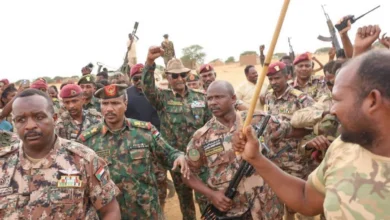
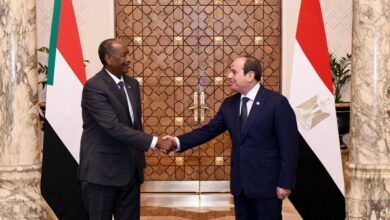
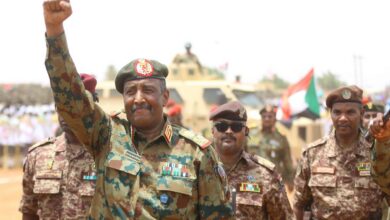
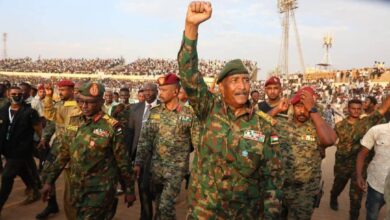
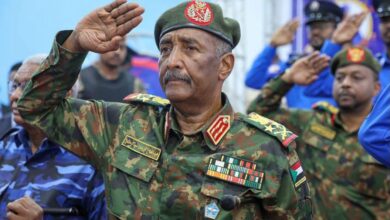
Under these conditions, Abdel Fattah al-Burhan has become the centre of military and political decision-making in army-controlled areas, while the country faces a profound crisis of legitimacy and political representation.
The African Union condemned the coup and suspended Sudan’s participation in its activities pending the restoration of a civilian-led transitional authority. The UN Security Council also called for the restoration of civilian government and respect for the Constitutional Document.
Any agreement granting strategic privileges to a foreign state should therefore meet strict legal and political standards, since its effects could outlast both the war and the current leadership.
Decisions taken by a temporary authority, or one whose legitimacy is disputed, should not become permanent obligations binding future Sudanese governments.
A state without independent oversight institutions is also more vulnerable to making unequal concessions, particularly when it urgently needs external support.
Will Sudan Become Another Arena for Regional Conflict?
Expanding Turkish military cooperation with the army leadership could concern other regional actors with interests in the Red Sea and the Horn of Africa.
One country’s growing military influence may prompt others to seek competing arrangements, whether by supporting different Sudanese actors or strengthening their presence in other ports and areas.
Sudan could consequently become a link in a network of regional competition extending beyond its internal conflict. Ending the war becomes more difficult when foreign interests intertwine with local forces’ calculations.
Multiple military partners could also complicate the rebuilding of Sudan’s military if its doctrine, equipment and supply chains become tied to different countries’ interests.
More seriously, foreign competition could turn any political settlement into another struggle over the future of agreements, ports, resources and privileges negotiated during the war.
Sovereignty Is More Than Signing an Agreement
National sovereignty does not simply mean flying the Sudanese flag over ports and military facilities. It means strategic decisions must come from institutions representing the people and be subject to accountability and transparency.
An agreement cannot be considered successful merely because it provides equipment, funding or military expertise if the price is to bind the country’s future to undisclosed understandings or long-term privileges.
Sudan has the right to cooperate with Turkey and other countries. Those relationships, however, should rest on mutual interests rather than become a means of exploiting state weakness or prolonging the war.
Sudan needs to regain control of its ports, economy and institutions—not turn its coastline into another focus of military competition.
Ultimately, the question facing both Ankara and al-Burhan is whether Sudan will emerge from this relationship more independent and better able to protect its interests, or find itself facing new strategic obligations on top of the burdens of war.
The Red Sea needs stable states capable of protecting maritime security and fostering economic cooperation more than it needs additional bases and struggles for influence. Sudan, meanwhile, cannot become a gateway to other countries’ ambitions while its people pay the price of war and destruction.