Ahmed Haroun’s Arrest Shakes the Islamist Camp: Is al-Burhan Reassessing His Alliances after the Leave Us Alone Campaign?
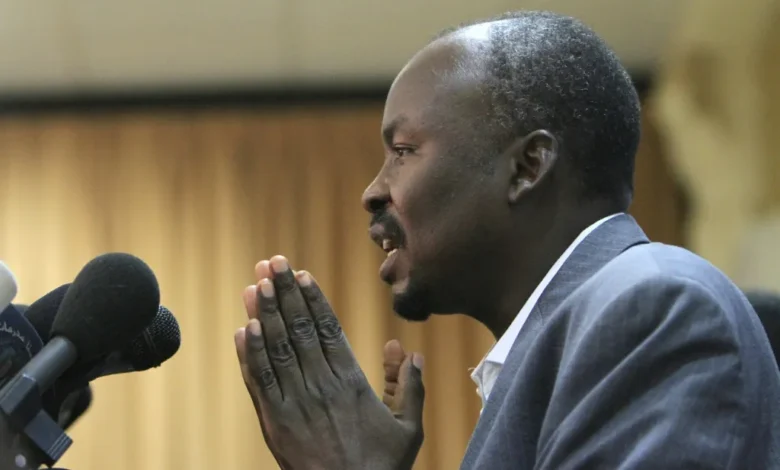
The arrest of Ahmed Haroun, former chairman of the dissolved National Congress Party and a prominent official in Omar al-Bashir’s government, has raised fresh questions about relations between Sudan’s military leadership and the Islamist movements that have returned to prominence since war erupted in April 2023. Announced by party leaders on November 8, the arrest represents more than the detention of a controversial political figure. It has opened a broader debate about the limits of political influence within the pro-army camp and the relationship between al-Burhan and his allies from the former government.
The arrest is particularly significant because of its timing. It came only days after Haroun appeared in an extended video podcast interview discussing relations between Islamists and the military, as well as his party’s position on the war against the Rapid Support Forces. He said that although the party and the army might not share identical political positions, they stood on the same side against the RSF.
According to Reuters, two National Congress Party officials confirmed Haroun’s detention. The Sudanese army did not immediately comment to explain the reasons or definitively establish where he was being held. Other reports also indicated conflicting preliminary accounts about whether he had been detained in Kassala state or Khartoum state.
A Media Appearance Reopens the Debate over Islamists
Haroun’s media appearance followed a lengthy absence from public view, bringing his name back into Sudan’s political debate. During the interview, he discussed Islamist ties to the military leadership and the participation of Islamic Movement members in the war. He also rejected accusations that Islamists were responsible for triggering the conflict.
The significance of these remarks lies in the picture they presented of relations between parts of the Islamic Movement and the military, according to Haroun’s own account. He acknowledged political differences while emphasising their shared position against the Rapid Support Forces.
For opponents of the Islamists, the remarks reinforce concerns that networks associated with the former government are regaining influence within state institutions by taking advantage of the exceptional circumstances created by the war.
Some Islamist currents supporting the army, however, describe their participation in the fighting as part of defending the state. They reject portrayals of their presence in the military camp as an attempt to restore the former government.
The Islamist question has therefore moved beyond ideological disagreement. It is now directly connected to the military’s future and the alliances forming around it during the war.
Why Was Haroun Arrested?
As of November 14, the army had issued no clear official explanation for Ahmed Haroun’s arrest. It is therefore impossible to establish whether the move resulted from a political dispute with the military leadership, the content of his interview or other security and judicial proceedings.
Nevertheless, the timing—following his media appearance and comments about relations between his party and the military—has prompted questions about what messages the military leadership may have intended to send to allies and opponents.
Reuters reported that his detention followed the interview in which he discussed the overlap between the party’s and the army’s positions in the war. The Associated Press reported that his lawyers linked the arrest to the interview and his remarks about the party’s relationship with the military.
The National Congress Party called for his release, arguing that his detention was connected to the expression of his views, according to media reports.
The absence of an official explanation adds to the uncertainty, particularly because the case concerns a figure who occupied a central position under al-Bashir and faces serious international allegations relating to crimes in Darfur.
A Man Wanted by the International Criminal Court
Ahmed Haroun is among the most prominent former officials associated with the Darfur case. He held government and security positions under al-Bashir and later became National Congress Party chairman after the government’s fall.
The International Criminal Court seeks his arrest over allegations of war crimes and crimes against humanity committed in Darfur in 2003 and 2004. Haroun denies the allegations, describing them as politically motivated.
He was detained after al-Bashir’s fall in 2019 before leaving prison during the early months of the war in 2023, according to media reports.
His return to detention revives questions about how to deal with former officials wanted internationally, particularly as the continuing war has obstructed the implementation of several legal obligations concerning cooperation with the ICC.
The case also raises questions about transitional justice and whether a future political settlement would include meaningful cooperation with international judicial institutions.
Islamists and the Army: An Alliance Imposed by War?
Since the war began, repeated allegations have pointed to growing participation by individuals linked to the Islamic Movement and former-government networks in supporting the army. Figures from these currents say they responded to calls for general mobilisation. Civilian opposition forces, meanwhile, argue that the war has given some former-government figures an opportunity to regain influence within state institutions.
No single description can be applied to every Islamist current or military institution. The landscape includes numerous groups and individuals with differing positions and roles. Relations between the military leadership and its political supporters cannot be reduced to a unified alliance.
Haroun’s remarks nevertheless renewed attention to their convergence against the Rapid Support Forces, making the future of this relationship a central issue in any forthcoming political settlement.
If that convergence continues after the war, civilian forces will face questions about the terms of Islamist participation in politics and how to prevent the return of influence networks associated with the former government. If relations between the army and these movements change, those shifts could alter the balance within al-Burhan’s camp.
Is the Arrest a Message to Allies?
One question raised by Haroun’s detention is how willing the military leadership is to allow its political allies to act independently or express positions that do not fully align with the military’s public stance.
As an institution expected to operate through a chain of command and legal rules, the army cannot become an arena for competition between political parties and movements. At the same time, the presence of party figures within its supporting camp raises questions about the separation of military decision-making from political calculations.
It is nevertheless too early to treat the arrest as conclusive evidence of an internal power struggle without an official explanation of its reasons and circumstances.
The detention may involve a different legal or security process. Official information and judicial proceedings are therefore needed before definitive political conclusions can be drawn.
The Popular Campaign Places the Case in a Broader Context
Haroun’s arrest coincides with the continuing “Leave Us Alone, al-Burhan” campaign, which demands the army chief’s departure and links the continuation of the war to the renewed influence of figures associated with the former government.
Campaign participants argue that any civilian future for Sudan must address the role of Islamists and former-government networks, while ensuring that the war is not used to recreate the system of rule overthrown by the December revolution.
However, turning this issue into a basis for wholesale political exclusion could open another front of conflict. Responsibility must be determined through law and evidence, while protecting the political and civil rights of those not proven to have committed crimes or offences.
Above all, Sudan’s future cannot be built on unexplained arrests or political score-settling. It requires independent judicial institutions, transparent procedures and accountability that exempts no one.
Al-Burhan Faces a Complex Equation
The Ahmed Haroun case illustrates the difficulty of managing political alliances during wartime. The military leadership needs allies to support its position but simultaneously faces domestic and international criticism over the forces with which it aligns.
The arrest also raises questions about the independence of security and judicial decision-making and the future role of former-government figures in any forthcoming political arrangements.
For al-Burhan, the challenge extends beyond managing military fronts. It also involves ensuring that the pro-army camp does not become a centre of political rivalry that weakens state institutions and deepens divisions.
For civilian forces, the case underscores the need to place justice and institutional reform at the centre of any future agreement.
Ultimately, Haroun’s arrest may prove to be an isolated security incident, or it may later reveal broader shifts in relations between the military leadership and the Islamists. What is clear is that its timing has reopened one of Sudan’s most sensitive questions: who controls decision-making within al-Burhan’s camp, and how far does the influence of forces that returned to prominence under the cover of war extend?