Ten thousand fighters in Saudi calculations: A test of Sudan’s sovereignty and military autonomy
Remarks by Abu Aqla Kikal, commander of the Sudan Shield Forces, about sending battalions abroad have taken on significance far beyond the military gathering where he made them. They have raised far-reaching political and security questions about possible understandings between Sudan’s military leadership and Riyadh, and about the future of sovereign decision-making in a country where war at home still threatens national unity and state institutions.
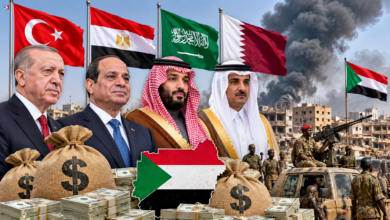
Media reports have described a possible plan to send up to 10,000 Sudanese fighters to Yemen over 18 months. The issue goes beyond a conventional military deployment and touches on one of Sudan’s most sensitive questions: the relationship between the national military and allied armed formations, and how independently Sudan can make decisions as its reliance on outside support grows.
The timing gives these developments added significance. Kikal spoke after returning from a visit to Saudi Arabia on November 19, 2026. The Sudanese Armed Forces have been fighting a full-scale war against the Rapid Support Forces since April 2023, while the country faces a deep economic and humanitarian crisis.
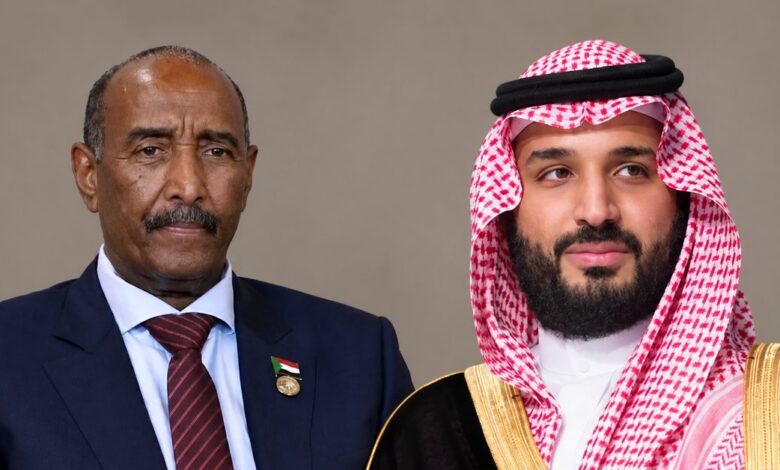
In a video circulated on social media, Kikal spoke of arrangements to send several battalions abroad. He linked the move to the issuance of official military service numbers that would allow his personnel to receive pay and travel. He said the move came at the direction of the armed forces’ commander-in-chief, Abdel Fattah al-Burhan.
Kikal did not specify where the troops would go or what their mission would entail. Media reports nevertheless linked his remarks to possible arrangements to send fighters to Saudi Arabia and Yemen. Sudan’s leadership now faces questions about the nature of the military decision under discussion and the extent to which it reflects regional calculations beyond Sudan’s immediate needs.
Ten thousand fighters, a figure with implications beyond troop deployment
Sudanese and regional media report that the alleged arrangements would involve sending around 10,000 fighters over a period of up to 18 months. An initial contingent could comprise about 2,000 members of Kikal’s Sudan Shield Forces.
Other reports have described Sudanese personnel preparing to deploy near the Saudi–Yemeni border. Sources cited by media outlets have also suggested that thousands of Sudanese soldiers may already have taken part in deployment arrangements linked to the Arab coalition.
The figures vary, and there is insufficient independent evidence to establish how many troops have already been moved or how many are preparing to take part. Neither Saudi Arabia nor Sudan has issued an official announcement confirming the details of the alleged agreement or providing a final timetable for its implementation.
On November 24, the Sudan Shield Forces denied that any official decision had been made to send their battalions to Saudi Arabia or Yemen. The group said its commander had been referring to the issuance of military service numbers to formalize the status of its personnel and ensure that they were paid in accordance with the law. It said its mission remained to support the army and defend Sudanese territory.
The denial calls the reports into question. The military leadership still needs to clarify Kikal’s remarks, in which he explicitly referred to battalions traveling abroad at the direction of the general command.
Military decision-making between al-Burhan and Kikal
One of the main questions raised by the case concerns the relationship between the armed forces’ general command and the Sudan Shield Forces, and how far the latter’s movements are subject to the Sudanese army’s command-and-control structure.
From an institutional standpoint, sending a military formation abroad is a matter of national defense policy, foreign relations, and regional commitments. It goes beyond administrative questions about assigning military service numbers or regularizing pay.
If Kikal’s remarks do reflect an official position within the general command, a public announcement should spell out the nature of the mission, who would lead it, and the military and political objectives Khartoum hopes to achieve.
If his remarks concern preliminary understandings or arrangements that have yet to receive final approval, continued uncertainty could allow armed group leaders to present proposals still under discussion as official decisions. That could undermine the consistency of military communications and create confusion over who has the authority to decide.
The issue is especially sensitive because the Sudan Shield Forces were established in 2022 under Kikal’s leadership outside the regular military structure. Kikal changed alliances during the war, breaking with the Rapid Support Forces and joining the army in October 2024.
Integrating his personnel into the military therefore involves more than issuing service numbers or paying salaries. It requires full compliance with military discipline, a unified chain of command, and safeguards against parallel centers of decision-making within the armed forces.
Saudi Arabia’s regional security calculations
The prospect of deploying Sudanese fighters is tied to Saudi Arabia’s security calculations in Yemen and the Red Sea, where border areas and shipping lanes are strategically important to Riyadh.
The war in Yemen grew out of internal divisions and regional intervention. It has since become a complex security issue involving the protection of Saudi borders, shipping in the Red Sea and the Gulf of Aden, and the regional balance of power among the parties to the conflict.
In that context, bringing in Sudanese personnel with combat experience could provide additional manpower for any military arrangements. Sudan previously took part in the Saudi-led coalition from 2015 onward.
Even where security interests coincide, an agreement to transfer fighters can carry political consequences for Sudan. A country that deploys troops abroad is responsible for defining the objectives of its involvement and making sure those objectives serve its own national interests alongside the needs of the host country.
Sudanese involvement in operations inside Yemen could also expose Khartoum to political and public criticism, particularly if the deployment is seen as participation in a conflict over which Sudanese opinion is divided, or if combat operations result in civilian casualties.
The question of whether Saudi Arabia needs additional fighters goes hand in hand with a more fundamental one for Khartoum: what does Sudan expect to gain from participating, and what might it have to pay in return?
Money and weapons in exchange for troops, claims that require evidence
Reports circulating about the case describe a possible Saudi support package for Kikal’s forces worth around $75 million. It would reportedly combine funding and military equipment, including combat vehicles, weapons, and drones. The accounts also refer to shipments from Pakistan and Vietnam and a training program overseen by Pakistani specialists.
If confirmed, the claims would raise questions beyond a deployment to Yemen. They would concern the nature of the foreign military support received by Sudanese armed formations, who fund and oversee it, and how far it is subject to oversight by the state and its institutions.
So far, no independent documents or official announcements have confirmed the amount of funding or the reported details of weapons shipments and training. The $75 million figure remains unverified.
The circulation of the claims nevertheless underscores the need for greater transparency in foreign military cooperation. The source and destination of any funding or weapons supplied to an armed formation should be clear, and the assistance should be subject to institutional and legal oversight.
Direct foreign funding could increase the autonomy of armed formations from the military establishment and hinder their integration into a unified army.
If salaries, equipment, and training become dependent on outside parties, competing centers of influence could multiply. Sudan’s national command could then find itself dealing with armed formations that have their own resources and independent networks, contrary to the stated goal of building a unified military.
The al-Bashir-era precedent returns to the fore
The latest developments recall Sudan’s participation in the Saudi-led military coalition in 2015, under former President Omar al-Bashir, when Khartoum decided to send troops to take part in operations inside Yemen.
The decision came as Sudan was moving closer to the Gulf states politically and economically. Al-Bashir’s government sought stronger regional ties and political and financial support as the country grappled with economic crises and international sanctions.
Sudan became one of the coalition’s troop contributors. Some analyses estimate that thousands of Sudanese fighters took part in operations in Yemen, although estimates vary regarding the scale of the deployment and the types of units involved.
The current reports revive questions about whether Khartoum is moving toward a repeat of that model under more fragile conditions. Sudan is fighting a war at home while struggling to rebuild its institutions and restore the state’s monopoly on the use of force.
Sudan’s state institutions were more stable in 2015. Today, military divisions, economic decline, and a widespread humanitarian crisis make any overseas military commitment more sensitive.
Sovereignty cannot be measured in fighter numbers
A country’s defense policy should reflect its national interests. Decisions to send troops abroad should be governed by clear criteria that account for risks, military capabilities, political objectives, and legal obligations.
When troop numbers, foreign funding, and military equipment are the subject of understandings whose terms are withheld from the public, the debate raises a fundamental question about the limits of national sovereignty.
Sovereignty includes the ability to enter into agreements with allies, set the terms of cooperation, reject commitments that do not serve national interests, and ensure that the country’s armed forces remain under its independent authority.
This principle has particular weight in Sudan. The proliferation of armed formations and military alliances has made restoring the state’s monopoly over arms one of the country’s most pressing challenges.
Any arrangement to send troops to Yemen should therefore form part of a publicly stated defense policy, with official institutions retaining authority over the process and clear terms governing what happens to the fighters.
Is Sudan becoming a bargaining ground for regional powers?
The case also raises questions about Sudan’s place in regional competition. Its location on the Red Sea gives it strategic importance to regional and international powers.
Sudan borders one of the world’s most important maritime routes and is geographically and strategically connected to the Gulf and the Horn of Africa. Its stability and military institutions are therefore a matter of interest to many actors.
That strategic position could become a source of pressure if Sudan’s economic and military needs are used to draw it into wider commitments abroad, or if financial and military support is made conditional on its forces fighting in regional conflicts.
Cooperation with Saudi Arabia or other countries can be consistent with Sudanese sovereignty. The concern is whether the terms of agreements are transparent, how they serve Sudan’s immediate interests, and what safeguards govern their implementation.
Any military involvement in Yemen must also take account of the nature of the conflict and its humanitarian consequences, and avoid contributing to the war’s expansion or prolongation.
Al-Burhan faces a test of military unification
These developments test the ability of Abdel Fattah al-Burhan, chair of the Sovereignty Council and commander-in-chief of the armed forces, to exercise authority over formations allied with the army and bring military decision-making under a single national command.
If members of the Sudan Shield Forces have indeed received official military service numbers, the step should form part of a clear institutional process that safeguards their rights, defines their duties, and prevents parallel lines of command, funding, or allegiance.
The prospect of sending battalions abroad requires an official explanation. Has a decision been made? Would the troops serve under the Sudanese army or under a different military arrangement? What authority would they have?
Leaving these questions unresolved could invite conflicting interpretations and further strain relations between the general command and armed formations at a time when Sudan needs to reduce the number of military power centers.
A decision that reaches beyond Yemen to Sudan’s future
The debate over sending 10,000 Sudanese fighters to Yemen extends beyond moving military units from one country to another. It concerns the future of Sudan’s military, the limits of its sovereign decision-making, and the nature of Khartoum’s relations with its regional allies.
If the reported arrangements are confirmed, Sudan will face a highly sensitive decision that requires a thorough political, military, and legal assessment, especially while war continues at home and the country needs to restore stability.
If the reports are inaccurate, a denial alone will not settle the matter. The general command will need to clarify Kikal’s account of battalions traveling abroad and the instructions he attributed to the commander-in-chief.
In either case, Sudan urgently needs clear rules to prevent armed formations from becoming independent instruments of regional interests. Those rules should safeguard the state’s right to make military decisions free from pressure and undisclosed commitments.
Sudan’s priority is to restore sovereignty within its own borders and build a unified army capable of protecting its people and ending the war. Joining conflicts abroad and sending thousands of fighters overseas cannot meet those needs.
The question for al-Burhan and the military leadership remains whether any involvement in Yemen would be an independent Sudanese decision guided by the interests of the state, or whether Sudan is once again approaching the point of paying for regional conflicts by sending its people to fronts whose objectives and costs remain disputed.