Power struggle in Iran as Revolutionary Guards push to revisit nuclear weapons fatwa and Pezeshkian sticks to talks
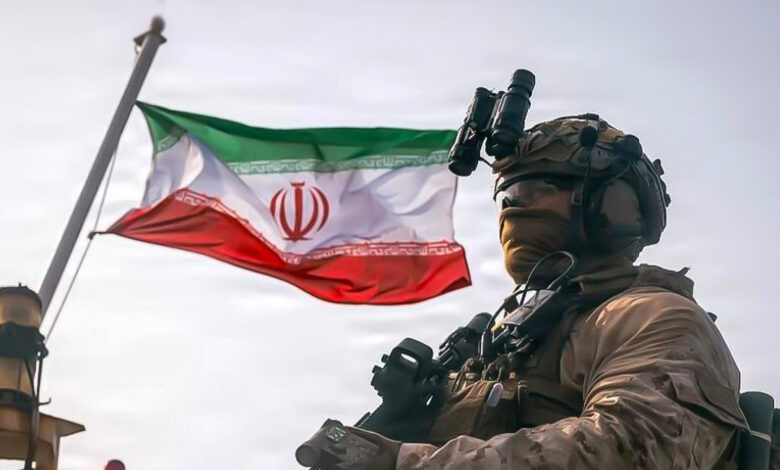
Diplomatic sources familiar with mediation efforts between Tehran and Washington say divisions are widening within Iran’s decision-making circles over the future of talks with the United States. The reformist camp led by President Masoud Pezeshkian is at odds with Revolutionary Guard leaders, who oppose any concessions that would curtail the country’s nuclear capabilities.
The sources said that the dispute, initially focused on how far Iran might go in making concessions under a possible agreement, now extends to the religious decree prohibiting the possession of nuclear weapons. Some within the military establishment are pushing for a review of the fatwa, arguing that external threats warrant a reassessment of Iran’s deterrence strategy and the measures needed to safeguard the regime.
Reformists remain committed to negotiations aimed at ending the blockade, lifting US sanctions, and unfreezing Iranian assets in exchange for an agreement on the nuclear program. The Revolutionary Guards oppose including a halt to uranium enrichment or the transfer of Iran’s stockpiles abroad in any settlement. They want to limit the talks to restoring shipping through the Strait of Hormuz and lifting restrictions on Iran.
Military considerations put pressure on the nuclear fatwa
According to the sources, the Revolutionary Guards are seeking to use their influence within the religious establishment and decision-making bodies to push for a review of the late Supreme Leader Ali Khamenei’s fatwa, which prohibits the production, possession, and use of nuclear weapons.
The move sends two messages. At home, it signals that protecting the regime could take precedence over religious commitments concerning the nuclear program. To Washington, it signals that Tehran will reject any settlement that diminishes its strategic capabilities.
Iran has invoked Khamenei’s fatwa for years to affirm the peaceful nature of its nuclear program. Tehran presented its substance to the International Atomic Energy Agency, and Khamenei reaffirmed it in 2010 in a message to an international conference on nuclear disarmament.
Iranian Foreign Minister Abbas Araghchi reaffirmed his country’s commitment to negotiations and said he believed a fair settlement on the nuclear issue was still possible.
Two competing approaches within Iran’s leadership
A diplomat familiar with contacts between Washington and Tehran said the Revolutionary Guards had previously told mediators that Iran could consider producing a nuclear weapon if the United States and Israel moved to overthrow the regime and undermine the Iranian state.
The diplomat said exchanges in recent months, including mediation efforts by Qatar and Pakistan and visits by Iranian officials to Doha and Islamabad, had exposed a fundamental division within Iran’s leadership.
Reformist officials expressed willingness to discuss the nuclear issue as part of a broader settlement. Revolutionary Guard leaders continued to refuse to discuss the program’s future, arguing that the blockade and the situation in the Strait of Hormuz should take priority.
The diplomat added that the Guards’ influence within religious and security institutions, including the office of Supreme Leader Mojtaba Khamenei and the Supreme National Security Council, gives them considerable sway over decisions on warfare and negotiations.
Washington has sought to open channels of communication with the Revolutionary Guards to reach a broader understanding, the diplomat said. Mediators have yet to draft a joint document that could serve as a basis for nuclear negotiations.
Laying the groundwork for a review of the religious ruling
The divisions coincided with remarks by Brigadier General Mohammad Jafar Asadi, deputy commander of the Khatam al-Anbiya military headquarters. He suggested that Islamic legal rulings on making a nuclear bomb could change with circumstances and that religious jurists could issue differing opinions.
Asadi stressed that he had no authority to issue a fatwa on the matter. His remarks nevertheless drew attention because of his senior military position and because they came amid intensifying debate over the future of Iran’s nuclear program.
Ahmad al-Yasseri, an expert on Iranian affairs, said the remarks reflect efforts to recast the religious and moral justification for Iran’s nuclear policy. In some circles within the regime, he said, there is a growing conviction that its survival takes precedence over earlier commitments.
Al-Yasseri said that supporters of acquiring nuclear weapons invoke a principle of Islamic jurisprudence established by the founder of the Islamic Republic, Ruhollah Khomeini, which gives priority to preserving the regime. That principle could be used to justify a review of Khamenei’s fatwa if nuclear capabilities were deemed essential to protecting the state.
He added that these circles also point to Ukraine, arguing that the nuclear arsenal Kyiv inherited from the Soviet Union could have deterred Russia had Ukraine retained it.
With external threats mounting and Iran’s nuclear capabilities evolving, Al-Yasseri considers it unlikely that the fatwa will remain a lasting constraint on Tehran’s choices.
Pezeshkian is pursuing negotiations to ease economic pressure. The Revolutionary Guards are prioritizing deterrence and the preservation of their strategic leverage. The future of the talks thus hinges on the outcome of a struggle within the regime over how to weigh a negotiated settlement against its own survival.