A letter blows up Nicolas Sarkozy’s defense in the Libyan financing case
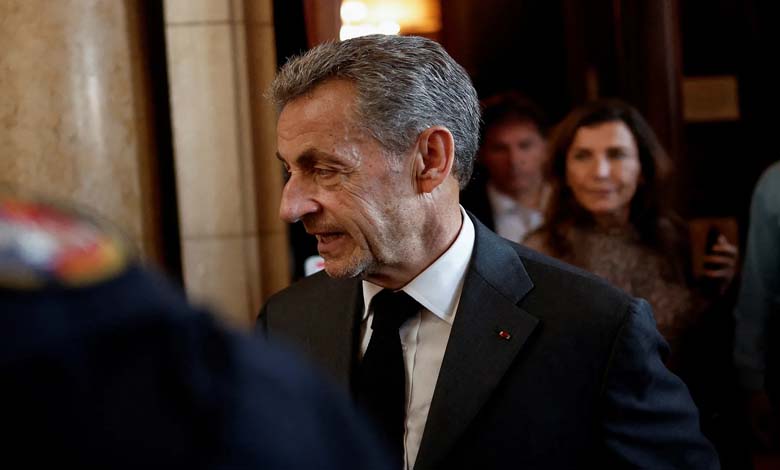
The French daily Le Monde revealed a notable development in the appeal trial concerning the alleged Libyan financing of former president Nicolas Sarkozy’s campaign.
According to the newspaper, Claude Guéant, one of Sarkozy’s closest former aides, delivered a new blow to his defense through a second official letter submitted to the court.
The paper explained that Guéant, who served as Sarkozy’s chief of staff before becoming secretary-general of the Élysée Palace and later a minister, sent this testimony on Sunday, while the repercussions of his first letter, presented to the court on April 14, had not yet subsided.
This move, the report suggests, represents an indirect escalation within the former president’s inner circle.
According to Le Monde, the new letter, written in a cautious and formal style, contains clear hints suggesting that Sarkozy provided inaccurate statements during the appeal hearings.
In wording described as “polite yet sharp,” Guéant implies that he personally informed Sarkozy of the details of a meeting he held in Tripoli with Abdullah al-Senussi, the former Libyan intelligence chief and a central figure in the case.
The newspaper adds that this meeting, dating back to a sensitive period in Franco-Libyan relations, constitutes a key element of the prosecution’s file, especially since al-Senussi is suspected of involvement in major security affairs, making any contact with him subject to close judicial scrutiny.
Le Monde also notes that Guéant attached visual materials to his submission, including documentary footage showing him alongside Sarkozy during a visit to Tripoli in July 2007, as well as another photograph showing al-Senussi near the French delegation in 2005, which, according to observers, strengthens the hypothesis of direct or indirect contact between the parties.
The newspaper points out that Guéant’s absence from court sessions due to his health condition did not prevent him from influencing the course of the case. His three-page letter includes six main points of varying importance aimed at “clarifying the facts” from his perspective, while significantly weakening the narrative presented by Sarkozy’s defense.
Le Monde considers these developments a new setback for the former French president, who is already facing a complex judicial path in this sensitive case, as pressure mounts with the accumulation of testimonies and documents that may reshape the understanding of events surrounding his election campaign.
The newspaper concludes by noting that Wednesday’s hearing, during which this letter will be read before the court, could represent a decisive stage in the trial, amid growing indications that Sarkozy’s legal position is becoming increasingly fragile over time.
At the age of 70, Sarkozy became the first president in modern French history to be imprisoned after being convicted of obtaining funds for his 2007 presidential campaign from Libyan leader Muammar Gaddafi.
Sarkozy was sentenced to five years in prison but was granted conditional release under judicial supervision after only twenty days in detention.