Texas tightens the noose on the Muslim Brotherhood: suspension of activities at a university linked to the organization
As part of ongoing American efforts to counter networks of political Islam, authorities in the state of Texas moved to suspend the activities of the “Texas American Islamic University,” known as “Teksam,” due to the links of those running it with institutions and figures associated with the Muslim Brotherhood.
The decision, issued by the Texas Higher Education Coordinating Board is part of a growing hardline stance within the state toward institutions accused of intersecting with the organizational and ideological structure of the Muslim Brotherhood and its extended networks in the United States.
According to official documents, education authorities ordered the university to immediately cease all activities after accusing it of operating without the legal authorizations required to conduct university-level activities or grant academic degrees within the state.
They also warned that the case would be referred to the Attorney General if the institution continued operating outside the legal framework.
The university, located in the city of Richardson, had promoted itself as an educational institution combining science, technology, engineering, and mathematics with Islamic studies before quickly becoming the center of political and media controversy due to the background of its administrators and their ties to controversial Islamic institutions in the United States.
Muslim Brotherhood networks in the spotlight
American reports highlighted the presence of figures linked to organizations such as the Islamic Society of North America, the Islamic Circle of North America, and the Council on American-Islamic Relations (CAIR) within the university’s board of directors or its surrounding circle, calling for the university to be permanently shut down.
These institutions are regarded as part of the organizational and ideological structure of the Muslim Brotherhood in the United States through activities conducted in mosques, Islamic centers, as well as educational and civil institutions.
Among the names that sparked controversy are Yasser Qadhi, Omar Suleiman, and Roula Allouch, along with other figures linked to Islamic institutions active in North America.
Reports also revealed the existence of intertwined relationships between the university and other Islamic institutions previously accused of promoting ideas related to political Islam or aligning with the Muslim Brotherhood’s agenda within the United States.
Growing hardline stance in Texas
The move against the university comes amid increasingly hardline positions in Texas toward the Muslim Brotherhood and political Islamist organizations, especially within the Republican Party and conservative circles.
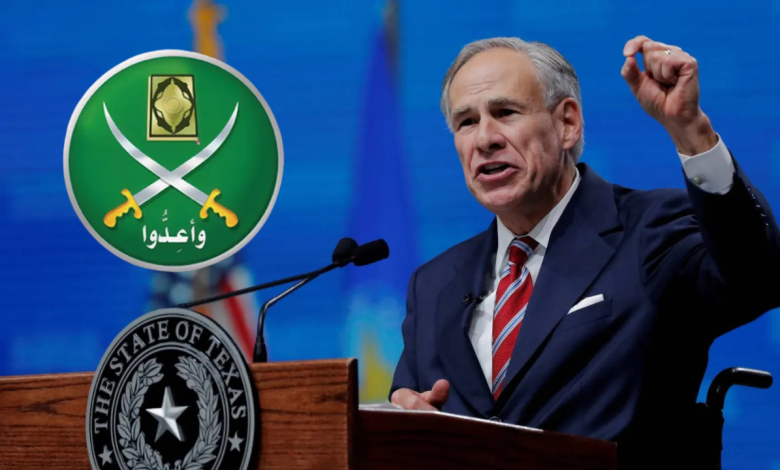
The state’s governor, Greg Abbott, has in recent years adopted a firm rhetoric toward groups linked to the Muslim Brotherhood, amid growing calls to expand oversight of institutions accused of intersecting with the organization or promoting its ideas in the United States.
The “Teksam” case reflects a shift in the American confrontation with the Muslim Brotherhood from political rhetoric to targeting the institutional infrastructure that provides the organization with a long-term presence within American society, particularly through educational and religious institutions.
Education as a gateway to influence
The controversy surrounding the university has revived growing American concerns about the use of certain educational and religious institutions as platforms for building ideological influence within American society.
Conservative circles warn that Muslim Brotherhood networks in the United States no longer rely solely on traditional religious outreach but now operate through universities, think tanks, and civil associations to establish a long-term political and social presence.
For its part, the university has not issued a detailed response to the accusations regarding the ties of its administrators or associated institutions, while its legal future remains open to further escalation within Texas.
The Governor of Texas had announced on November 18 the designation of the “Muslim Brotherhood” and the “Council on American-Islamic Relations (CAIR)” as foreign terrorist organizations and transnational criminal organizations.
The decision was based on federal investigations linking CAIR to the Muslim Brotherhood, considered a threat to American security, as well as the dangerous nature of the Brotherhood’s ideology and the involvement of several members and officials of the council in terrorism-related cases.