A Shield That Protects Us from Danger: Head of the Russian Church Praises Nuclear Weapons
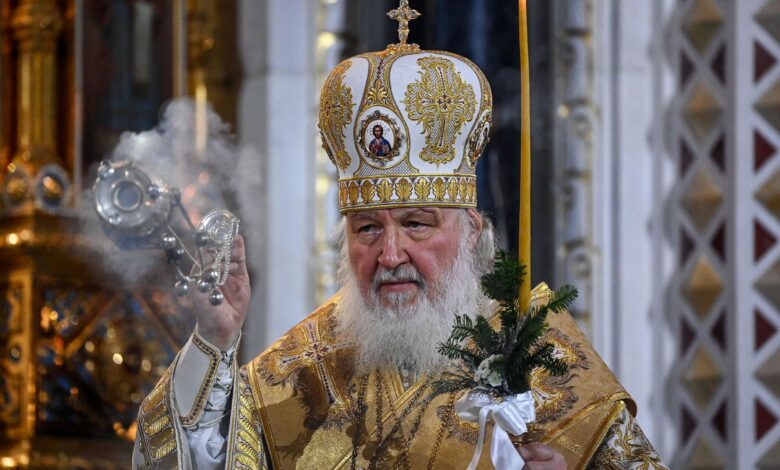
“A shield that protects Russia from danger”—this is how Patriarch Kirill, head of the Russian Orthodox Church, described his country’s nuclear arsenal, portraying it as a manifestation of “God’s grace and mercy.”
Kirill made these remarks during a religious service held at the Sarov Monastery, a site historically linked to the origins of the Soviet nuclear program, where the Soviet Union’s first atomic bomb was developed, according to The Times.
During the ceremony, Kirill drew a connection between the success of Russia’s nuclear program and the prayers of Saint Seraphim of Sarov, one of the most prominent spiritual figures in Orthodox tradition, who died more than a century before nuclear weapons were created.
Sarov: from religious persecution to a symbol of deterrence
The choice of Sarov Monastery as the setting for these statements carries considerable symbolic significance. Saint Seraphim is renowned in Orthodox tradition for his devotion to peace and asceticism, having spent nearly twenty-five years in a life of spiritual retreat before later being regarded by the Russian Church as the spiritual patron of the country’s nuclear program.
The city itself embodies a striking historical contradiction. The monastery was closed in the 1920s as part of the Soviet Union’s anti-religious campaigns, while its cathedral was demolished in 1951, at the height of the communist era.
However, the site regained its religious importance during the presidency of Vladimir Putin, following the reconstruction of the cathedral. At the same time, Sarov became a closed nuclear city housing the Russian Federal Nuclear Center, one of the country’s most important institutions for nuclear weapons research and development.
The alliance between the Church and the Kremlin is renewed
Kirill’s remarks are consistent with his longstanding support for Russian policies since the outbreak of the war in Ukraine. He has repeatedly described Russia’s military operation as a “holy war,” asserting that “Russian soldiers killed in battle will receive divine forgiveness.”
The religious service concluded with prayers for President Vladimir Putin, whose lengthy tenure in power was described as “a miracle from God,” reflecting the Kremlin’s official narrative, which portrays the confrontation with the West as a defensive struggle against what it sees as the abandonment of religious and traditional values by Western societies.
Kirill is currently subject to British sanctions, and several reports have pointed to his alleged past connections with the Soviet intelligence agency, the KGB. This is not the first time that he has provided a religious justification for Russia’s nuclear capabilities. In 2023, while awarding an ecclesiastical honor to physicist Radi Ilkayev, he declared that nuclear weapons existed “through an incomprehensible divine will” and that they had played a fundamental role in preserving Russia’s independence and freedom.