A show of strength in Asian skies: Washington rallies its allies to counter Russian and Chinese military activity
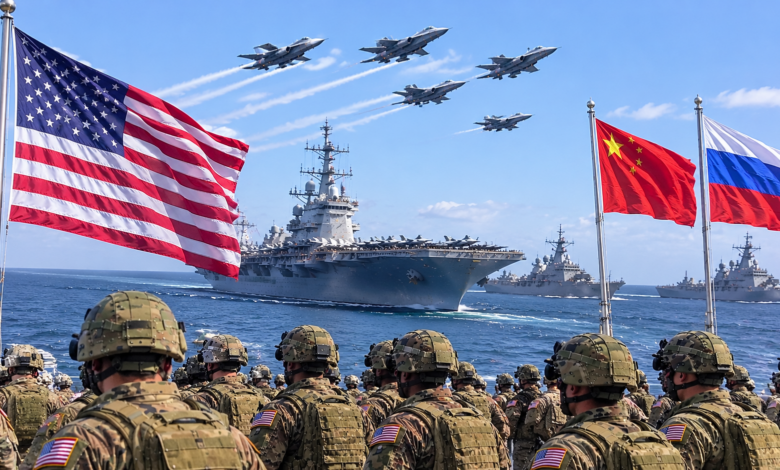
A US military source at the Pentagon said that the United States had begun preparing new military measures in coordination with Japan and South Korea to strengthen monitoring of Russian and Chinese aerial activity across East Asia.
The source explained that the Pentagon’s ongoing review focuses primarily on Russian military aircraft movements over the past two weeks, comparing them with joint patrols conducted by the Russian and Chinese air forces throughout the year.
These developments follow the approach of Russian military aircraft toward South Korean airspace, amid growing concerns over closer coordination between Moscow and Beijing and the use of aerial patrols to test the readiness of US forces and their allies.
Washington is examining several areas of cooperation with its two allies, including enhanced air surveillance data sharing, expanded joint military exercises, and improved coordination between their air commands.
Reviewing Russian military activity
The review follows the November 24 incident, when approximately five Russian military aircraft approached South Korea’s sovereign airspace near Ulleung Island, prompting the authorities to issue an air alert and scramble fighter jets before confirming that no violation of sovereign airspace had occurred.
Seoul summoned Russia’s military attaché to protest, while Moscow announced that Tu-160 strategic bombers, escorted by Su-35 and Su-30 fighter jets, had conducted a scheduled flight lasting approximately ten hours over international waters.
The US review examines the circumstances surrounding the incident, the nature of Russian military activity, the South Korean military’s response, and the civilian alert that confused the island.
Washington is also considering proposing joint exercises focused on managing incidents that require simultaneous military and civilian responses.
Russian-Chinese military coordination
Regarding Beijing, the source said the Pentagon was assessing possible links between independently conducted Russian patrols and Chinese aerial activity in the region to determine the extent of coordination between the two powers.
One of the most significant publicly disclosed incidents occurred on June 27, when Russia and China conducted a joint strategic patrol involving Russian Tu-95 and Chinese H-6 bombers, alongside fighter jets and reconnaissance aircraft. The operation prompted Japan and South Korea to scramble fighter jets and raise the matter with Moscow and Beijing through diplomatic channels.
The source emphasized that the ongoing review had reached no definitive conclusion regarding direct Chinese involvement in the Ulleung incident. However, it seeks to determine whether Moscow and Beijing are increasing simultaneous pressure on allied air defense systems.
Growing operational complexity
The options under consideration include strengthening surveillance and airborne early warning capabilities during trilateral exercises, as well as improving the interoperability of air defense systems while accounting for differences in national procedures.
The consultations also emphasize accelerating information sharing between military commands to enhance their shared situational awareness across the Sea of Japan, the East China Sea, and the western Pacific.
US geopolitical analyst Brandon Weichert argued that Moscow was using these aerial movements to demonstrate its ability to draw US defense resources into a theater far removed from Europe. Cooperation with Beijing, he added, provides Russia with an opportunity to further complicate US military planning.
Weichert expects the proposed US military measures to undergo further consultations with Tokyo and Seoul before the scope of upcoming exercises is determined. Russian and Chinese military activities will continue to be monitored to assess the nature of aerial threats across the region.
Diverging strategic calculations
Tae Rae Kim, a researcher specializing in Asian affairs, said that Washington’s principal challenge lies in the differing security priorities of Japan and South Korea, despite their growing military cooperation.
He emphasized the importance of developing joint response mechanisms while avoiding an increased risk of aerial confrontations.
These initiatives form part of the broader trilateral defense cooperation framework, which includes the “Freedom Edge” exercises designed to strengthen coordination among US, Japanese, and South Korean forces in air and missile defense, as well as multidomain operations.