Hezbollah disarmament even at the risk of confrontation: Israel’s offer and Washington’s firm messages to Beirut
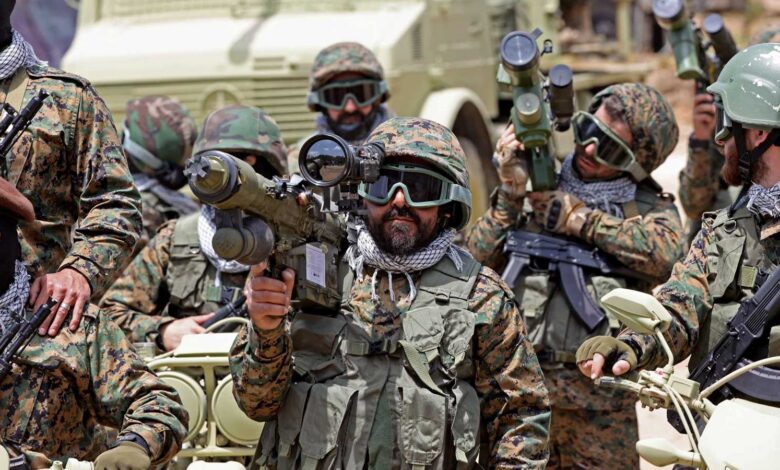
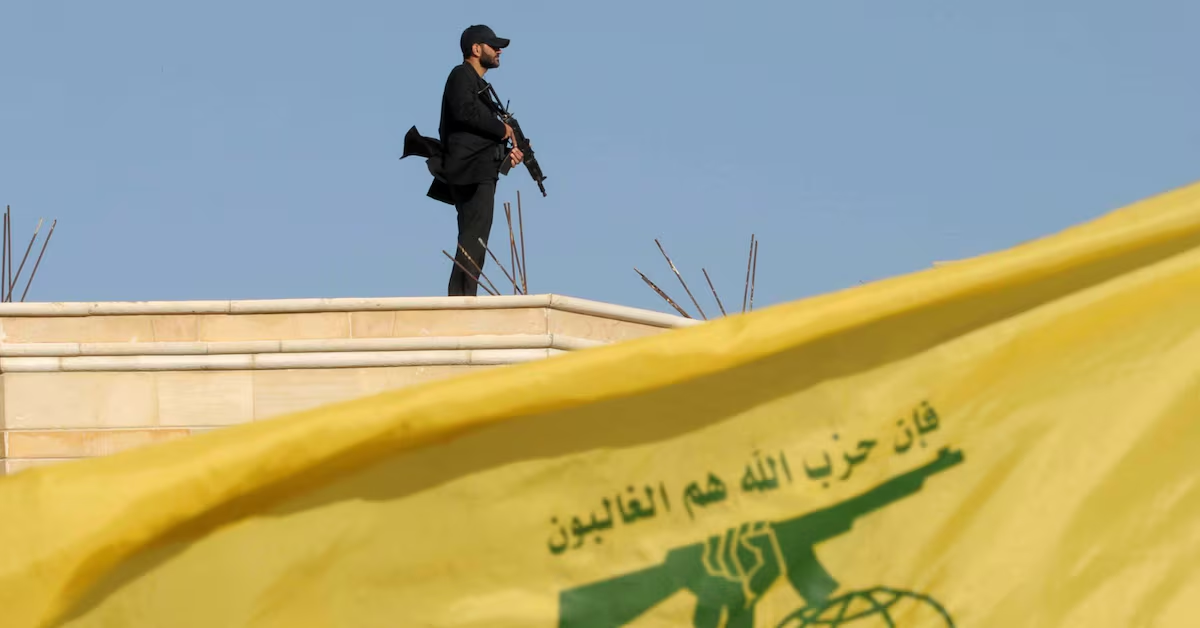
Lebanese political sources said that the United States had intensified pressure on Beirut over Hezbollah’s disarmament. According to the sources, Washington has expressed its dissatisfaction to senior Lebanese officials over the state’s performance and its failure to fulfill commitments concerning the state’s exclusive control of weapons. US officials have urged them to make decisive choices and avoid backing down for fear of a confrontation between the Lebanese army and Hezbollah.
In a notable development, sources close to decision-making circles in Beirut revealed that Washington had conveyed an Israeli message to the Lebanese authorities expressing Tel Aviv’s willingness to provide military assistance to the Lebanese army in dismantling Hezbollah’s military apparatus.
The sources explained that the Israeli offer centered on intelligence assistance and operational support under US mediation, without involving the direct provision of weapons or funding to the Lebanese military.
According to the sources, Washington no longer considers fears of domestic confrontation an acceptable justification for delaying the implementation of disarmament decisions. The US administration believes continued hesitation could expose Lebanon to the risk of a large-scale Israeli military escalation.
Messages to Lebanon’s three top leaders
The sources said the US messages had reached Beirut through several channels, particularly during the November 16 visit of US Ambassador to the United Nations Mike Waltz, through communications conveyed by Secretary of State Marco Rubio, and during diplomatic discussions in Washington and Beirut.
The messages were directed specifically at Lebanese President Joseph Aoun, Prime Minister Nawaf Salam, and Parliament Speaker Nabih Berri, alongside diplomatic and military contacts with the Lebanese army’s leadership.
The sources described a discrepancy between Washington’s public rhetoric, which calls on Hezbollah to surrender its weapons voluntarily, and the messages conveyed behind closed doors. These emphasize the need for concrete action on the ground without making its implementation contingent on Hezbollah’s consent.
They added that Washington was demanding verifiable progress in areas covered by pilot security arrangements, including the removal of visible armed activity, as a preliminary step toward expanding the implementation of Lebanon’s commitments.
A sensitive Israeli offer
The Israeli proposal conveyed by Washington carries particularly sensitive political and security implications, given the nature of relations between Lebanon and Israel and the continuing disputes over Israel’s withdrawal and military operations on Lebanese territory.
The sources did not disclose any Lebanese acceptance of the offer or detailed discussions concerning its implementation. They indicated, however, that the US-Israeli approach links any further Israeli withdrawal to documented progress in dismantling Hezbollah’s military apparatus.
These proposals confront Lebanese authorities with a dilemma extending beyond the military capabilities of the army. They raise questions about the political and social repercussions of potential cooperation with Israel and the domestic tensions that Hezbollah could exploit to justify retaining its arsenal.
Washington’s instruments of pressure
According to the sources, US pressure extends beyond political demands. Washington is reportedly making the continuation and expansion of military assistance conditional on tangible progress in implementing commitments concerning the state’s exclusive control of weapons.
The US messages also expressed reservations about reconstruction funding channels, including the Council for the South, amid concerns that networks affiliated with Hezbollah could benefit from international funds allocated to Lebanon.
The future of the international military presence in southern Lebanon constitutes an additional source of leverage, as no definitive agreement has been reached on the force that will assume monitoring responsibilities after the mandate of the United Nations Interim Force in Lebanon (UNIFIL) ends.
According to the sources, Washington is seeking to push Lebanese authorities toward clear political decisions that go beyond renewed pledges concerning the state’s monopoly on arms, particularly amid growing concerns that existing security arrangements could collapse.
Lebanon’s domestic political considerations
In response to US demands, President Joseph Aoun remains committed to the principle of exclusive state control over weapons while seeking to preserve civil peace and avert domestic confrontation.
Prime Minister Nawaf Salam, meanwhile, emphasizes the need to maintain an international presence in southern Lebanon under a UN mandate that supports the Lebanese army’s responsibilities.
Parliament Speaker Nabih Berri advocates addressing the weapons issue through domestic dialogue and the development of a national defense strategy. He opposes burdening the military with the consequences of an internal confrontation and insists that Israel must be compelled to withdraw and cease its military operations.
These positions illustrate the difficulty of reconciling mounting international demands with Lebanon’s domestic political considerations. Any confrontation between the army and Hezbollah could extend beyond the military sphere and trigger an open-ended political and security crisis.
A recipe for civil war
Strategic affairs expert Mohammad Youssef al-Nour believes operational cooperation between the Lebanese and Israeli armies against Hezbollah would be extremely difficult to implement, even under US mediation, given the national and political considerations governing the Lebanese military.
Al-Nour warned that involving the Lebanese army in an internal confrontation with Hezbollah under the umbrella of Israeli support could constitute a recipe for civil war.
It could also provide Hezbollah with an opportunity to regain some of its political and popular legitimacy by portraying the confrontation as an extension of its conflict with Israel.
In al-Nour’s view, strengthening the Lebanese army through appropriate military assistance and providing it with the resources necessary to enforce state authority would be more consistent with the institution’s nature and responsibilities.
Al-Nour stressed that avoiding domestic confrontation remains compatible to establish exclusive state control over weapons. Achieving that objective, however, requires broad political and national backing, alongside efforts to resolve the issue of Israel’s withdrawal.
Such an approach would help prevent Hezbollah from exploiting domestic tensions while preserving the army’s cohesion, independent decision-making, and ability to fulfill its assigned responsibilities.