From Bazoum’s ouster to the expulsion of the Mahamid: Are Arabs in the African Sahel facing an existential threat?
Concerns are mounting among Arab communities in the African Sahel over their future in the region after Niger’s military authorities decided to expel members of the Mahamid Arab tribe to Chad by the end of December.
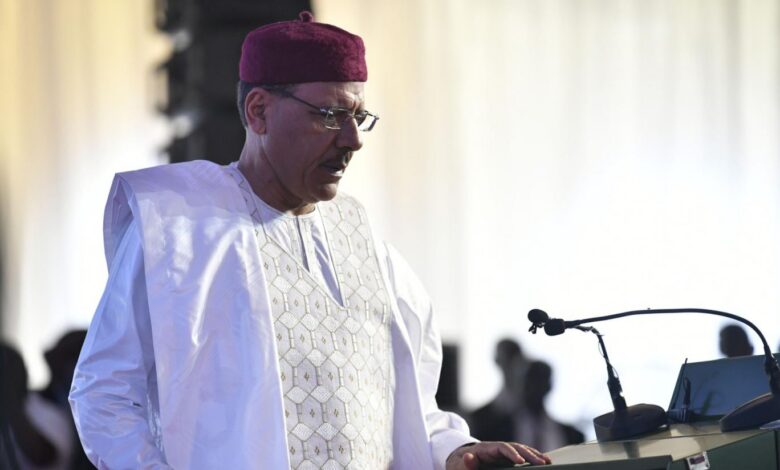
The crisis comes amid broader political and military developments affecting Arab communities, including the overthrow of Niger’s Arab president, Mohamed Bazoum, in a military coup in 2023, as well as the rebellion in Mali led by the Azawad Liberation Front, comprising Arab and Tuareg groups.
Collective restrictions
The decision to expel the Mahamid has sparked widespread anger among Niger’s Arab communities, while the Union of Arab Tribes in the Sahel is mobilizing in response to the development.
Ali Fawzi, a political analyst specializing in African affairs, said that “the crisis facing Arab tribes, particularly the Mahamid tribe in Niger, reveals the complex interplay of security, political, and identity-related challenges across the African Sahel.”
He warned that “security measures could become an instrument of collective restrictions against communities with deep historical roots in the region.”
Fawzi explained that “recent developments, including reports that Mahamid representatives have been given until the end of December to leave Nigerien territory, raise serious questions about the future of these tribes and their legal and human rights, particularly given the lack of sufficient clarity regarding the legal basis for these measures.”
He added that the gravity of the situation extends beyond allegations of illegally obtaining civil documentation or providing logistical support to armed groups in the Lake Chad Basin. Such allegations, he stressed, require independent investigation and verification to ensure that entire tribal communities are not held responsible for the actions of individuals or groups.
Fawzi also noted that “the interconnected borders and cross-border tribal ties linking Niger, Chad, Sudan, and Libya place this issue within a broader regional security framework.”
He emphasized that addressing the situation requires “distinguishing between genuine security threats and citizens’ rights to citizenship and legal protection.”
According to Fawzi, “stability in the African Sahel depends on enforcing the law, ensuring individual accountability, and strengthening regional cooperation to prevent armed conflicts from spreading across borders, rather than pursuing policies of exclusion and collective deportation.”
Limited options
In Mali, the authorities had also terminated the Algiers Agreement concluded with Tuareg and Arab groups, paving the way for renewed hostilities between the parties in the north of the country.
Kassem Keita, a political analyst specializing in African affairs, believes that “the situation facing Arab communities in the African Sahel is closely linked to the political and military upheavals that have swept the region, including a series of military coups that have prompted increasingly confrontational policies toward several actors.”
He added that “this new political and military reality leaves Arabs, who constitute a minority in the Sahel, facing limited options and several possible scenarios. Many are already threatened with expulsion, while the downfall of administrations such as that of President Bazoum has diminished their influence within decision-making circles.”
Keita warned that “these developments could give rise to new rebel movements.” He consequently urged transitional authorities to adopt a more flexible approach toward Arab communities and other minorities, including the Fulani.