Iran Bets on Time as Washington Fears the Cost of Backing Down
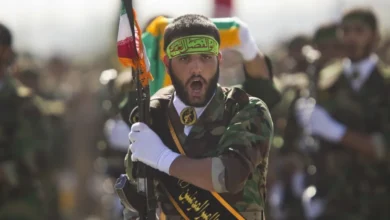
Iran’s position cannot be understood without recognising that the stakes extend beyond oil and maritime routes: the regime’s core leadership has derived a significant part of its political legitimacy from a narrative of resistance to external pressure.
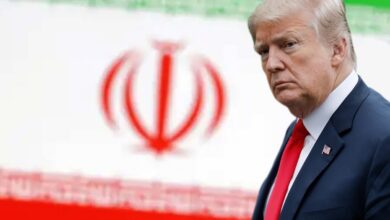
Tehran is betting that prolonging the confrontation and absorbing economic pressure may eventually force Washington to reassess its calculations. Donald Trump’s administration, meanwhile, fears that any retreat from the blockade would be interpreted as a failure of US pressure policy.
Between Iran’s wager on endurance and Washington’s concern over losing credibility, both sides’ room for manoeuvre is narrowing. Renewed hostilities remain possible despite their shared desire to avoid an open war.
The current situation and its broader context suggest that the question facing Washington and Tehran is no longer simply whether US President Donald Trump will decide to resume military operations against Iran. It is increasingly whether the two sides can contain the confrontation and prevent another shift from economic pressure to armed conflict.
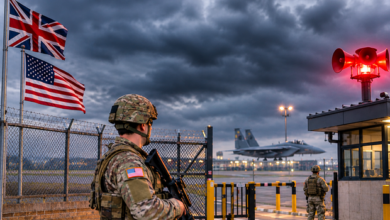
The naval blockade, on which the US administration is relying to weaken Iran’s economy and extract political and strategic concessions, presents the region with a highly complex equation. A reduced likelihood of a US strike does not mean the danger of war has passed. Nor does Tehran’s avoidance of direct confrontation mean it accepts the continued stranglehold imposed upon it.
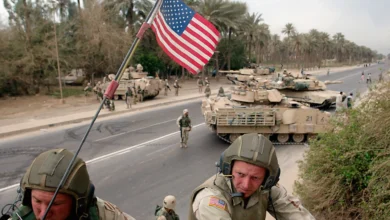
Recent developments show that the decision to renew the conflict does not rest with Trump alone. Washington can determine the scale of its military escalation, but Tehran retains tools capable of changing the confrontation’s trajectory, whether by threatening shipping or targeting interests linked to energy and regional security.
The US administration, for its part, appears to be betting that tightening restrictions on Iranian oil exports will gradually reduce the financial resources available to a regime that remains cohesive despite reports of factional struggles within the leadership. The aim is to raise the cost of maintaining its regional and nuclear policies until it makes concessions it would have rejected under less pressure.
This approach rests on the belief that economic strangulation, combined with political isolation and military threats, can leave Iran’s leadership with few options.
Such calculations, however, overlook the opposite possibility: mounting pressure could strengthen the regime’s most hard-line factions rather than push it towards compromise. Tehran may view the continued blockade as an attempt to force it to accept conditions undermining its freedom of action and influence, rather than as a purely economic measure whose effects can be absorbed over time.
When leaders judge the cost of retreat to be greater than the cost of confrontation, escalation can become a means of forcing the other side to reconsider its calculations.
The experience of 2019 offers an indication of this possibility, when Iran countered the US “maximum pressure” policy with a series of moves and attacks affecting oil tankers and vital Gulf infrastructure, culminating in the attacks on Saudi Arabia’s Abqaiq and Khurais facilities.
Regardless of the dispute over direct responsibility for those operations, their strategic significance lies in Tehran’s ability to extend the confrontation beyond its territory, turning pressure on Iran into a threat to other actors’ interests.
Iran’s position is not confined to calculations involving oil and maritime routes. The regime’s legitimacy rests partly on a narrative of resistance to external pressure. Accepting US terms under blockade could therefore be seen as a retreat that undermines the political narrative it has cultivated for decades, rather than merely a tactical concession.
This explains the difficulty of Washington’s wager that economic pressure will change Tehran’s behaviour. Iran’s leadership may tolerate further losses out of concern that backing down would invite additional demands. Yet its endurance is not unlimited: past experience has shown a willingness to accept painful compromises when the cost of confrontation threatens its survival.
Israel remains a major source of uncertainty. Its security calculations concerning Iran’s nuclear programme and military capabilities may not align with Washington’s priorities. It may conclude that economic pressure alone cannot neutralise the threat, or that any settlement failing to address issues it regards as essential would allow Iran to rebuild its capabilities.
An Iranian response to Israeli action could also widen the fighting and draw the United States back into the centre of the conflict, even if Washington did not initiate it.
The consequences extend beyond Washington and Tehran. Continued disruption to shipping and energy facilities threatens Gulf states’ interests, encouraging them to seek de-escalation to protect their economies. Iran is betting that these concerns will prompt Gulf capitals to press Washington to ease the blockade. Continued threats, however, could also lead them to strengthen their security arrangements.
China, meanwhile, possesses tools to influence the course of the crisis, but its actions will remain governed by its own interests rather than a willingness to enter an open confrontation with the United States in defence of Tehran.
The central paradox is that both sides want to end the conflict, but neither wants to appear to have been forced to back down. Washington needs to demonstrate that its pressure policy has delivered results. Tehran needs to show that the blockade has neither broken its resolve nor extracted strategic concessions under duress. This contradiction makes an immediate, comprehensive agreement extremely difficult, although it does not rule out phased understandings.
A return to war is not inevitable, but neither can it be dismissed. The blockade may weaken Iran’s economy without guaranteeing political compliance in Tehran. Equally, Iran’s ability to retaliate does not mean it can sustain an open war indefinitely.