Amputees in Gaza: a symbol of unfulfilled promises
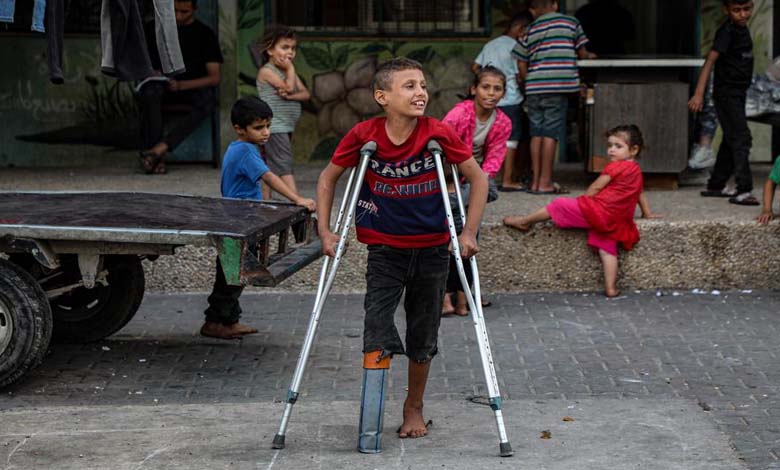
The shortage of prosthetic limbs severely disrupts recovery and prolongs the trauma experienced by amputees.
Fourteen-year-old Palestinian Fadl Al-Naji, once passionate about football, is now largely confined to his home in the city of Gaza after both his legs were amputated following injuries caused by an Israeli drone strike in September.
-
Closed since the start of the war with Iran, Israel reopens the Zikim crossing to allow aid into Gaza
-
Palestinian Analyst: Gaza Welcomes Eid Amid an Unprecedented Humanitarian Disaster
Sitting on a sofa, sadness visible on his face, one leg of his trousers hangs hollow while the other is folded at the waist. Beside him sits his 11-year-old brother, who lost an eye in the same attack.
His mother, Najwa Al-Naji, while showing old videos of him playing football on her phone, says: “He has withdrawn into himself, doesn’t want to see anyone, doesn’t talk to his friends, and stays alone all the time. It is as if he is slowly dying. I only wish they could fit Fadl with prosthetic legs and give Amir a cosmetic artificial eye.”
However, according to seven medical and humanitarian sources cited by Reuters, such possibilities are rare for nearly five thousand amputees in Gaza — a quarter of them children like Fadl — due to Israeli restrictions on materials such as plaster.
-
Israel announces the killing of 20 militants in Gaza and the destruction of a rocket manufacturing site and a tunnel
-
Demographics in the West Bank and Gaza: UN Warning over Israeli Plans
Israel, which has waged a two-year military campaign in Gaza against fighters from Hamas, attributes these restrictions to security concerns.
The NGO Humanity & Inclusion states that when pre-war amputation figures are considered, Gaza’s per-capita amputation rate now exceeds that of Cambodia, once considered the worst-affected country due to landmines.
The demand for prosthetics has become so acute that two medical centers have attempted to reuse old prosthetic limbs recovered from war victims. Doctors report that others are improvising temporary prosthetics using plastic pipes or wooden boards, exposing stumps to injury and infection.
-
Israeli soldier killed in Gaza Strip by friendly fire
-
An American security company seeks a new role in Gaza despite criticism
Gaza’s amputees have thus become a symbol of unfulfilled commitments under the ceasefire announced in October and the 20-point plan of U.S. President Donald Trump, which aimed to ensure the full entry of aid “without interference.”
The plan also envisioned reopening the Rafah crossing, the only exit route from Gaza to Egypt. Yet medical evacuations, including those of amputees, remain irregular.
The International Committee of the Red Cross, which supports Gaza’s main prosthetics center, reports that plaster imports have been almost entirely blocked for over four months, with remaining supplies expected to last only until June or July.
-
A Box for Bones: In Gaza, a Palestinian Man Gathers His Family’s Remains Piece by Piece
-
Israel kills four Palestinian militants in Gaza
The Qatar-funded Sheikh Hamad Rehabilitation and Prosthetics Hospital has received no supplies since the war began and has exhausted its stock, now limited to maintaining existing prosthetics.
Both the UNICEF and the ICRC note that some restrictions, such as on wheelchairs, have eased since the ceasefire, but aid workers say moving through Gaza’s debris-filled streets remains extremely difficult.
According to the World Health Organization, there are only eight prosthetics specialists in Gaza, making follow-up care for children particularly challenging, as they require regular adjustments as they grow.
Hiba Bashir, technical officer for prosthetics and orthotics at Humanity & Inclusion, summarizes the situation: “Amputation is not merely the loss of a limb; it is the loss of hope and independence… and for children, it is the loss of their future.”
-
Gaza between shelling and rubble: death renewed beneath the debris
-
Unprecedented Israeli Acknowledgment of a Heavy Death Toll in Gaza