Trump keeps Iran under pressure and anticipates an imminent end to the war
The Pakistani army chief arrived in Tehran as part of Islamabad’s efforts to bridge the gap between Iran and the United States ahead of a second round of negotiations.
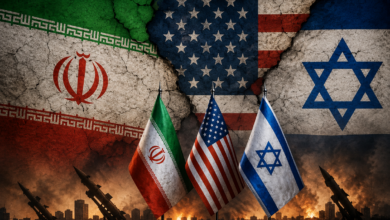
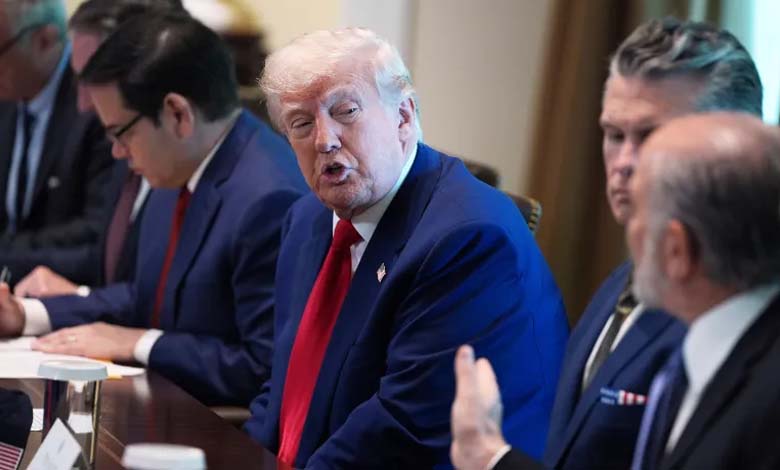
U.S. President Donald Trump suggested that the war with Iran could end within the next two days, indicating that there may be no need to extend the two-week ceasefire set to expire on April 21. At the same time, Pakistan’s army chief, Asim Munir, whose country is leading mediation efforts, arrived in Tehran amid talk of a second round of talks between the Islamic Republic and the United States.
-
Trump and Iran: three military paths on the decision table
-
Trump and Iran: 4 Possible Scenarios, Including “Shock and Awe”
Attention is already focused on the rapidly evolving trajectory of the conflict, which has pushed the region to the brink of a wider explosion with serious economic and social repercussions both regionally and internationally.
Trump said the war is “truly nearing its end,” urging the world to prepare for what he described as “two amazing days,” hinting at the possibility of a sudden political breakthrough. These remarks come while the temporary two-week ceasefire, expiring on April 21, remains in effect, with expectations of a possible extension, according to Israeli sources.
-
Trump keeps Iran under pressure and anticipates an imminent end to the war
-
The last-hour call between Donald Trump and Benjamin Netanyahu: behind the scenes before the Iran truce
Meanwhile, Asim Munir’s visit to Tehran represents a key step in mediation efforts, with Islamabad seeking to “narrow the gap” between the two sides after previous talks failed to produce tangible progress. Diplomatic sources suggest that negotiations could resume in Pakistan in the coming days, supported by relative progress achieved through backchannels since the beginning of the week.
Despite this diplomatic momentum, challenges remain, particularly regarding Iran’s nuclear program. The United States has proposed suspending Iran’s nuclear activities for up to 20 years, while Tehran has offered a shorter period ranging from three to five years, insisting on the lifting of international sanctions as a condition. Washington is also pressing for enriched nuclear materials to be transferred outside Iranian territory, adding another point of contention that complicates prospects for a final agreement.
-
Trump’s deadline enters its decisive hours… Iran under bombardment and warning about trains
-
U.S. President Donald Trump threatened to destroy bridges and power stations in Iran
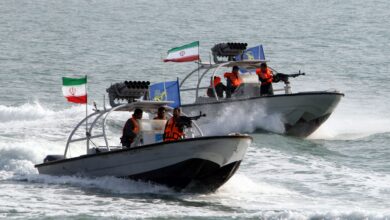
The United States announced that the blockade imposed on Iranian ports had led to an almost complete disruption of maritime trade, with no vessel able to bypass the restrictions during the first 48 hours. Nine ships reportedly complied with instructions and returned to Iranian shores. However, Iranian reports indicated that a supertanker managed to cross the Strait of Hormuz despite the blockade, underscoring the ongoing mutual defiance between the two sides.
New risks of escalation loom on the horizon. Tehran warned that it could disrupt navigation in the Gulf, the Gulf of Oman, and the Red Sea if the blockade continues, potentially expanding the crisis and threatening one of the world’s most critical trade arteries. Trump did not rule out military escalation, noting his country’s ability to target Iranian infrastructure “within an hour,” while emphasizing that this option remains undesirable at this stage.
-
Trump mobilizes for a Hormuz alliance and broader international involvement in the war against Iran
-
Trump, CNN and the speech of Iran’s new Supreme Leader: four minutes that reignite the war
Cautious optimism about a possible agreement was reflected in global markets, with record stock gains and oil prices stabilizing near $95 per barrel after sharp fluctuations. This reaction highlights market sensitivity to any signs of de-escalation amid concerns over the war’s impact on global supplies, particularly with reduced shipments through the Gulf.
A group of finance ministers from around a dozen countries, led by the United Kingdom, called for a permanent ceasefire, warning that continued conflict would leave deep scars on the global economy even if a settlement is reached soon.
-
Trump studies Iran’s future after the war and keeps an eye on Khamenei’s successor
-
Iran protests put Trump to the test between escalation and dialogue
Despite these positive signals, the situation remains complex due to overlapping fronts. Israel continues its military operations against Hezbollah in Lebanon, which Tehran views as a violation of the ceasefire, while Tel Aviv and Washington consider these operations outside the scope of the agreement.
The Israeli security cabinet is expected to discuss the possibility of de-escalation on the Lebanese front following rare talks between Israeli and Lebanese officials in Washington.
The convergence of optimistic statements and diplomatic movements, particularly Pakistani mediation, outlines a decisive phase in the crisis. However, deep gaps—chiefly over the nuclear file—alongside ongoing field tensions make any potential agreement fragile and dependent on strong guarantees. Between Trump’s optimistic tone and behind-the-scenes mediation efforts, the region remains suspended between an imminent settlement and a possible return to escalation.
-
After Trump’s threats, Iran affirms readiness for war and dialogue
-
Iran Warns Trump Against Intervention and Draws the Red Line
-
Behind Trump’s Deal: How Iran and Israel Agreed to End the War
-
Energy Investments: Iran’s New Card to Woo Trump and End Sanctions