An Iraqi Faction’s Rejection of State Control over Weapons Threatens Confrontation with the Government
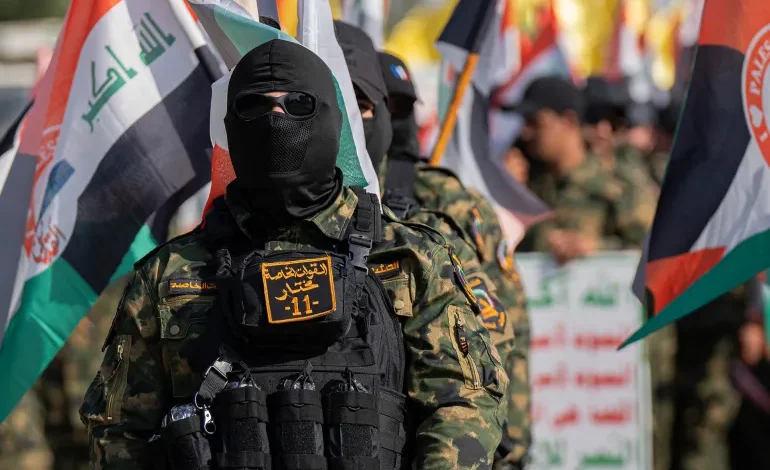
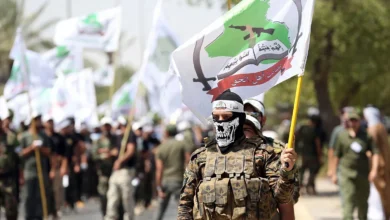
Harakat al-Nujaba has reaffirmed its commitment to retaining its weapons and rejected any process that could lead to their surrender, despite the commencement of work by the government committee tasked with implementing the project of restricting weapons to state control.
There are growing indications that the Iraqi government’s efforts to advance the policy of placing all weapons exclusively under state authority are entering a more sensitive phase. The emergence of opposition from certain armed factions places these groups before a difficult choice: either integrate into the new state arrangements or confront a political will increasingly determined to reorganize the security and military landscape under the authority of official institutions.
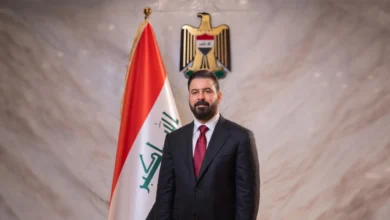
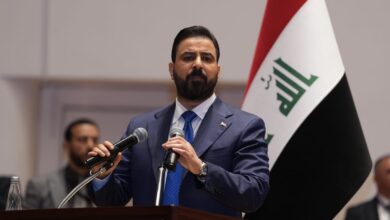
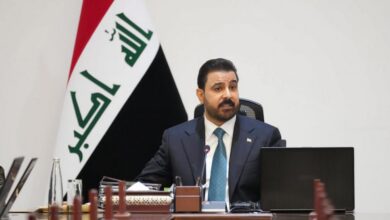
The latest position adopted by Harakat al-Nujaba reflects the scale of the challenges facing the plan of Prime Minister Ali Al-Zaidi. The movement has reiterated its determination to retain its weapons and its rejection of any initiative that could lead to disarmament, despite the fact that the relevant government committee has already begun implementing the project of restricting weapons to state institutions.
In a statement, the movement declared: “The position of the Islamic Resistance – Harakat al-Nujaba is firm and will not change regarding the sacred and disciplined weapon that exists to defend Iraq, its holy sites, and its people.”
This position suggests that a current within certain factions continues to view weapons as part of an ideological and political project that exists independently of state institutions. Such a perspective conflicts with the approach adopted by the current government and the political forces supporting it, which seek to reorganize the security sector and end the duality of military decision-making.
The significance of this issue has increased amid the regional and international pressures facing Baghdad, particularly continuing American demands to regulate weapons outside state authority and prevent Iraqi territory from being used as an arena for regional and international rivalries. Observers argue that some statements issued by armed factions reveal ongoing connections to agendas that extend beyond Iraq’s national interests, especially when regional alliance priorities are placed above Iraq’s political and economic requirements.
The movement’s Secretary-General, Akram al-Kaabi, previously called on armed factions to reject any discussion concerning the future of their weapons, stressing that they would not relinquish them. This rhetoric reflects a commitment to political confrontation with the government’s new direction at a time when Baghdad is seeking to build national consensus around the principle that armed force should be monopolized by official state institutions.
Meanwhile, the government appears to enjoy growing political backing for continuing this course. The Coordination Framework has granted the Prime Minister authority to take measures deemed necessary to protect the country’s higher interests while supporting the policy of restricting weapons to state institutions and reorganizing relations between the Popular Mobilization Forces and political actors.
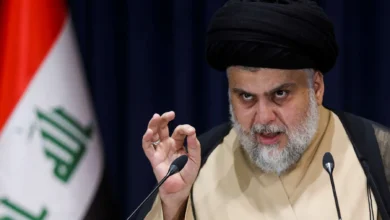
At the same time, steps taken by other groups and factions have provided additional momentum to the government’s initiative. Muqtada al-Sadr announced the separation of Saraya al-Salam from the Shiite National Current and their integration into state structures, urging other factions to take similar measures.
Likewise, Asaib Ahl al-Haq and Kataib Imam Ali announced the launch of organizational procedures related to inventorying weapons and personnel and restructuring their relationship with the Commander-in-Chief of the Armed Forces.
These developments indicate that the Shiite political landscape is no longer unified regarding the future of weapons. While some groups appear increasingly willing to engage with the state-building project, others continue to adhere to their previous approaches.
Reports suggesting the allocation of tens of thousands of employment opportunities to members of factions willing to regularize their status and join official institutions indicate that the government is seeking to combine political and economic incentives with a legal framework to ensure the success of its plan.
Should some factions continue to reject this approach, they may find themselves in direct confrontation with an official policy enjoying increasingly broad political support. In that case, the issue of weapons could evolve from a matter of negotiation into a genuine test of the Iraqi state’s ability to assert its sovereignty and maintain its legitimate monopoly on the use of force.