Iranian Attacks on the Gulf States and Jordan: Strong Defense Against a Failed Aggression
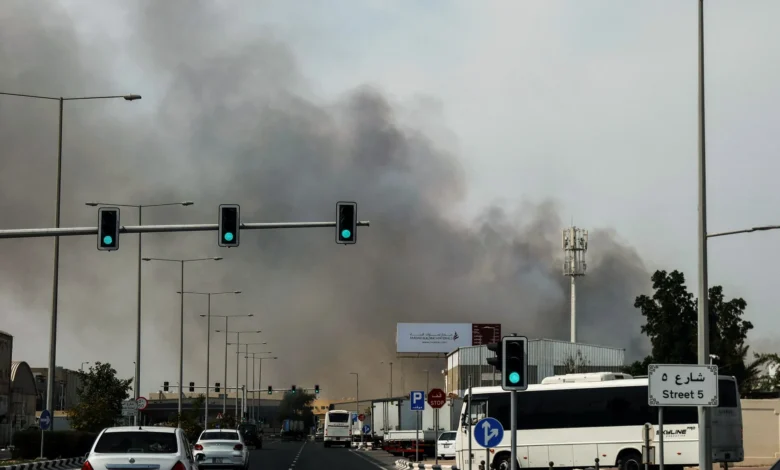
Despite the remarkable success achieved by the Gulf states and Jordan in repelling Iran’s attacks, the assaults launched by Tehran over the past few days have nevertheless resulted in casualties and damage to civilian and critical infrastructure.
-
Gulf states intercept dozens of Iranian missiles and drones
-
Washington doubts the seriousness of forming a naval alliance comprising Iran and Gulf states
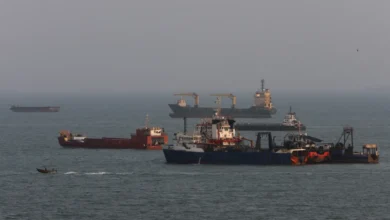
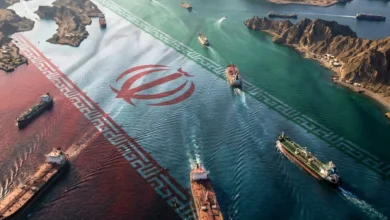
Over the course of a week of attacks, Kuwait, Bahrain, and Jordan were subjected to a series of sustained assaults, while Qatar and the Sultanate of Oman also experienced isolated strikes. In addition, Iran targeted two Emirati oil tankers in the Strait of Hormuz, a move widely viewed as a dangerous escalation against international maritime security.
These attacks followed the collapse of the ceasefire between Washington and Tehran. However, the readiness of regional air defense systems and the close security coordination among these countries enabled them to thwart most of the attacks and prevent Iran from achieving its objectives.
-
Leaked Report Shakes Iran: Public Anger Continues to Haunt the Regime
-
Tehran Increases Pressure on Washington by Calling for the Closure of the Bab el-Mandeb Strait
Renewed attacks
The conflict with Iran began when the United States and Israel launched attacks against Iran on February 28. Iran responded by striking Israel and carrying out attacks against the Gulf states, Iraq, and Jordan over a period of forty days.
Iranian attacks against Gulf countries resumed intermittently after the U.S.-Iran ceasefire came into effect on April 8.
On June 17, Iran and the United States signed a memorandum of understanding that included several key provisions, notably the cessation of hostilities on all fronts, the reopening of the Strait of Hormuz, and negotiations aimed at reaching a final agreement within a renewable sixty-day period.
-
Washington Launches a New Wave of Strikes as Iran Closes the Strait of Hormuz
-
Hormuz Guarantees and Nuclear Dust: Washington Tightens the Conditions for an Agreement with Iran
However, following Iranian attacks on three commercial vessels in the Strait of Hormuz, U.S. President Donald Trump announced on July 8 the end of the ceasefire agreement. The United States subsequently launched strikes against Iran on July 8 and 9, to which Tehran responded by targeting Kuwait, Bahrain, and Jordan.
The attacks then paused on July 10 and 11 after President Trump announced that Washington had agreed to Iran’s request to continue negotiations. Nevertheless, hostilities resumed continuously throughout the following week after another Iranian attack on a commercial vessel in the Strait of Hormuz.
Since July 12, Iran has continued launching attacks against the Gulf states and Jordan, in what has been described as a determined attempt to draw Gulf countries into a conflict in which they are not parties, thereby further escalating regional tensions.
-
Attacks on Iran Push Oil Prices Up by More Than 4%
-
Hotline Diplomacy: Efforts Underway to Preserve De-escalation Between Washington and Tehran
Over the past seven days, the attacks targeted Kuwait, Bahrain, and Jordan. Qatar was also attacked on July 12 and 17, while the Sultanate of Oman was targeted on July 12.
On July 14, the United Arab Emirates announced that two of its national oil tankers had been attacked by Iran in the Strait of Hormuz, prompting widespread condemnation from Gulf and Arab countries.
The Gulf states and Jordan successfully repelled these Iranian attacks with efficiency and professionalism.
-
Israel Warns the United States of an Alleged Iranian Plot to Assassinate Trump
-
Developments Concerning Iran Prompt the U.S. Secretary of Defense to Cancel a Planned Visit to Israel
Kuwait: More than 125 attacks
Kuwait experienced the largest number of attacks during this period, beginning on July 8 and 9, followed by continuous assaults from July 12 through July 18.
In separate statements, Kuwaiti authorities announced that they had intercepted 12 cruise missiles, four ballistic missiles, and 109 drones between July 8 and July 16. Additional attacks occurred on July 17 and 18, although no updated interception figures were released.
The Kuwaiti Armed Forces affirmed that they continue to carry out their duties with the highest level of readiness, in coordination with the relevant authorities, to safeguard the country’s sovereignty, security, and stability.
-
Trump Announces the End of the Memorandum of Understanding with Iran
-
Iran Unveils a Joint Mechanism with Oman to Manage the Strait of Hormuz
-
US-Iran Talks: Reports of Progress as the Most Sensitive Issues Are Deferred
The Iranian attacks resulted in:
- Drone strikes against several military installations and camps, injuring several members of the Kuwaiti Land Forces on July 17.
- Attacks on key civilian infrastructure, including a power generation and desalination plant, causing a fire and damage to electricity generation facilities on July 17.
- An attack on a Kuwaiti naval vessel, injuring four military personnel on July 14.
- An attack on three northern land border posts, causing material damage on July 12.
- A hostile drone strike against an offshore drilling platform operated by Kuwait Oil Company in Kuwaiti territorial waters, causing material damage and injuring one worker on July 12.
- Repeated attacks against strategic national infrastructure.
- Debris falling in several residential areas following interception operations.
- Another Iranian attack on a power generation and desalination facility on July 18, resulting in a fire.
- Injuries to several firefighters and one employee while extinguishing fires caused by the attacks.
-
Axios: Washington and Tehran Agree to Halt Attacks and Resume Talks
-
Intelligence Report: Iran’s Support for Its Regional Proxies Will Not Be Affected by Understandings with Washington
Bahrain: Repeated attacks and successful interception
Bahrain also faced attacks similar to those experienced by Kuwait. The Bahrain Defence Force announced that its air defense systems successfully intercepted and destroyed several Iranian aerial attacks during the same period, although no detailed figures were disclosed.
The authorities stated that Iran continues its systematic hostile policy targeting civilians in the Kingdom of Bahrain and affirmed that all military units remain on the highest level of operational readiness.
Qatar: Children injured
Qatar was attacked on July 12 and July 17. The Qatari Ministry of Defence announced that it had successfully intercepted several attacks.
The Ministry of Interior reported that one child was injured by debris from interception operations on July 17. Three people, including one child, had previously been injured under similar circumstances on July 12.
-
Trump sends a deterrent message to Iran despite progress in negotiations
-
Swiss Negotiations Test the Prospects for De-escalation Between Washington and Tehran
Oman: Official protest
In the Sultanate of Oman, a security source reported that several sites in Musandam Governorate were targeted by drones on July 12.
Oman strongly condemned the attack and stated that it would take all necessary measures to protect the country and its residents.
The Omani Ministry of Foreign Affairs summoned the Iranian ambassador in Muscat to deliver an official protest note regarding drone attacks targeting locations in Musandam and Al Wusta governorates.
Oman expressed deep concern over what it described as irresponsible actions and called for respect for state sovereignty, good-neighborly relations, non-interference in internal affairs, and the values binding the two neighboring countries.
-
Iran’s Revolutionary Guards relied on Iraqi shadow cells in attacks against Gulf states
-
Reuters: Iran’s Revolutionary Guards formed secret cells in Iraq to attack Gulf states
United Arab Emirates: Two tankers targeted
The United Arab Emirates was not directly attacked on its territory during this period. However, on the early morning of July 14, the UAE Ministry of Defence announced that the national oil tankers Mombasa and Al Bahiyah had been struck by two Iranian cruise missiles in the southern shipping lane of the Strait of Hormuz within Omani territorial waters.
The attack killed one Indian crew member aboard the Mombasa and injured eight others, including four who sustained serious injuries (six Indian nationals and two Ukrainian nationals).
Both vessels also suffered significant material damage after fires broke out on board, although the fires were eventually brought under control.
The United Arab Emirates strongly condemned the Iranian attacks.
The UAE Ministry of Foreign Affairs stated that the attack constituted a flagrant violation of United Nations Security Council Resolution 2817, which emphasizes freedom of navigation and rejects attacks against commercial vessels or disruption of international maritime routes.
-
Iranian compensation demands are being transformed into a massive privately funded investment vehicle
-
No U.S. Withdrawal from the Region During Negotiations with Iran
The ministry further stated that targeting commercial shipping and using the Strait of Hormuz as a tool of pressure or economic coercion amounts to piracy and poses a direct threat to regional stability and global energy security.
The UAE called on Iran to immediately cease these attacks, fully comply with the cessation of hostilities, and reopen the Strait of Hormuz without conditions.
In a separate statement, the Ministry of Defence affirmed that the UAE reserves its full right to respond to this escalation and to take all necessary measures to protect its territory, its people, its residents, its sovereignty, and its national interests.
The ministry also confirmed that the armed forces remain fully prepared to confront any threats.
Following the attack, Bahrain, Kuwait, Qatar, the Gulf Cooperation Council Secretariat General, and Egypt issued strong official condemnations.
-
Memorandum of Understanding with Washington Sparks Internal Disputes in Iran
-
Trump Signals Iran Could Remain Under Fire Until an Agreement Is Reached
The Gulf Cooperation Council member states reaffirmed their full solidarity with the United Arab Emirates and expressed support for all measures taken to protect its security, sovereignty, strategic infrastructure, and national interests.
They also called on the United Nations Security Council to adopt a firm deterrent stance against these repeated Iranian attacks and to safeguard freedom of navigation through the Strait of Hormuz.
Jordan: Interception of 43 missiles
Jordan successfully intercepted and shot down 43 Iranian missiles between July 9 and July 18.
The General Command of the Jordanian Armed Forces stated that all interception operations were conducted in accordance with established operational procedures and defensive measures to protect the Kingdom’s sovereignty, secure its airspace, and ensure the safety of its citizens.
The authorities confirmed that no casualties or material damage resulted from the interceptions.
The Jordanian Armed Forces also emphasized that they continue to monitor the Kingdom’s airspace closely while maintaining the highest level of operational readiness to respond to any threat in accordance with the applicable rules of engagement.
-
New Escalation in the Gulf Threatens Prospects for an Agreement Between Tehran and Washington
-
The U.S. Blockade of Iran: 122 Vessels Disabled or Redirected