Al-Zaidi’s Anti-Corruption Campaign Closes in on High-Profile Political Figures
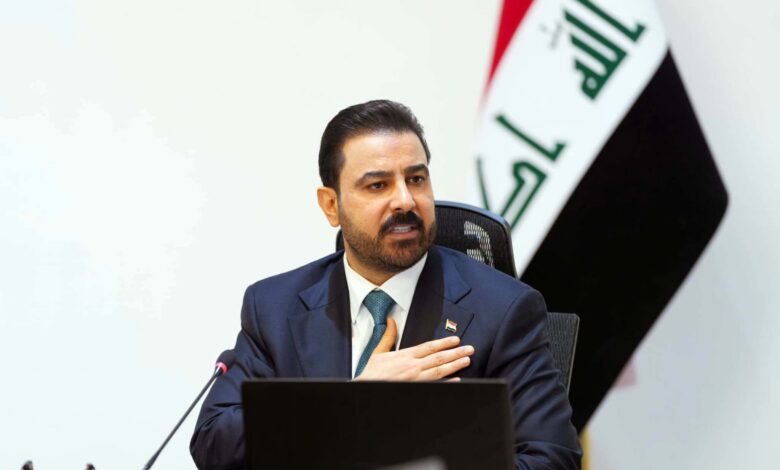
A meeting between the prime minister and leaders of the Coordination Framework is focused on establishing a clear mechanism to lift political protection from individuals implicated in or suspected of corruption-related cases.
-
Al-Zaidi Seeks a Strategic Partnership with the United States Ahead of Meeting Trump
-
Al-Zaidi Reorders Public Spending Priorities by Cancelling Major Projects
Iraqi Prime Minister Ali Faleh Al-Zaidi and the forces of the Coordination Framework are expected to hold a meeting to discuss the course of the government’s newly announced anti-corruption campaign, amid growing reports that influential political figures are among those accused in cases involving the misuse and squandering of public funds.
The government has reaffirmed its determination to pursue and reopen corruption cases, while observers are questioning whether the campaign will be able to overcome the political and legal obstacles that have hindered similar efforts in previous years.
-
Al-Zaidi pledges to confront uncontrolled weapons in Iraq
-
Iraq Faces a Security Test Following the Withdrawal of Coalition Forces
The local Shafaq News Agency, citing informed sources, reported that the meeting would focus on establishing a clear mechanism to « lift political protection from individuals involved in or suspected of corruption cases, regardless of their positions, political status, or party affiliation ». It noted that « the meeting had been scheduled to take place this evening, but is likely to be postponed until after the prime minister’s visit to Tehran ».
According to the same sources, « the meeting will examine files involving 12 prominent political and party figures who are facing suspicions and accusations of illicit enrichment and the squandering of public funds, with the aim of formally referring the cases to the judiciary. The sources also noted that « the previous meeting of the Coordination Framework was marked by differences of opinion, particularly following reports of financial suspicions involving leaders and figures with significant political influence on the national scene ».
-
Handing Over Factional Weapons: Iraq Faces a Decisive Turning Point Before the September Deadline
-
An Iraqi Faction’s Rejection of State Control over Weapons Threatens Confrontation with the Government
The campaign is particularly significant because it comes at a time when the government is facing domestic pressure to improve public services and address the economic crisis, amid widespread public belief that corruption is one of the main reasons behind the declining performance of state institutions and the depletion of financial resources.
One of the main challenges facing the government is that some individuals accused in corruption cases belong to political parties and forces that wield influence within Parliament and state institutions. This could expose any judicial or executive measures to political pressure or attempts to obstruct their implementation.
-
Asaib Ahl al-Haq Joins the Call to Place Weapons Exclusively Under the Authority of the Iraqi State
-
The Decision to Establish Iraq’s Supreme Sovereign Council for Integrity Sparks Constitutional Debate
However, the sources pointed to assurances behind the scenes regarding the need to lift political protection from anyone whose guilt is established by conclusive evidence and to recover the funds through all available legal means, including the activation of international arrest warrants through the International Criminal Police Organization, Interpol.
Al-Zaidi stressed the importance of taking concrete and practical steps in this matter and moving beyond verbal political support. The sources confirmed that the anti-corruption campaign would involve strict measures targeting all levels, without exception, in line with efforts to recover state funds.
-
To restrict weapons to state control, Muqtada al-Sadr separates Saraya al-Salam from the Shiite movement
-
Washington launches crackdown on Iraqi militia leaders on terrorism charges
Iraqi law does not grant absolute immunity in corruption cases. However, party influence and networks of political connections have often served as a protective shield, preventing the completion of investigations or the execution of arrest warrants against certain suspects.
Consequently, any political consensus to remove the protection afforded to wanted individuals could prove decisive to the success of the campaign. Conversely, the absence of such consensus could allow the prevailing climate of impunity to continue.
-
Iraqi Hezbollah sets conditions to halt attacks on the U.S. embassy.
-
Iraqi factions threaten to target European interests in support of Iran
The Coordination Framework is aware of the campaign’s popularity, as well as the U.S. support enjoyed by Prime Minister Al-Zaidi. It has therefore adopted a positive stance toward the campaign. On Tuesday, it expressed its support for the outcome of the prime minister’s recent visit to the United States, while affirming that it would not provide political cover to anyone whom judicial authorities establish to be involved in corruption cases.
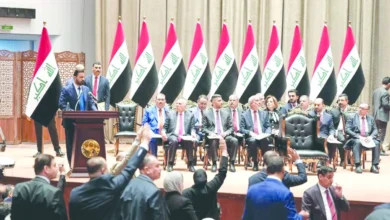
The media department of the Coordination Framework said in a statement that « the Coordination Framework held its 284th regular meeting at the office of Nouri Al-Maliki, head of the State of Law Coalition, in the presence of Prime Minister Ali Al-Zaidi and the leaders of the Coordination Framework. During the meeting, participants listened to a detailed briefing delivered by the prime minister on the outcome of his recent official visit to the United States, the meetings he held with U.S. officials, and the understandings and agreements reached during the visit in several sectors serving Iraq’s highest national interests ».
-
Accusations against Iran of using Iraqi militias to suppress protests
-
Iran Trains al-Assad Loyalists in Iraqi Camps to Destabilize Syria
It added that « the Coordination Framework expressed its support for the outcome of the visit and its backing for the government in implementing the agreements and understandings reached, in a manner that strengthens Iraq’s international standing, preserves its sovereignty and independence in national decision-making, contributes to the development of its economic and security capabilities, attracts investment, promotes sustainable development, and creates employment opportunities for citizens ».
The media department continued: « The Coordination Framework also discussed the government measures taken in the fight against corruption, reaffirming its full support for the government, the judiciary, and the Integrity Commission in pursuing corruption, protecting public funds, recovering embezzled money, and holding those involved accountable in accordance with the law. It stressed that the Framework would not provide political cover to anyone whose involvement in corruption cases is established by the competent judicial authorities. »
-
U.S. Report: Iran Supplies Long-Range Missiles to Iraqi Factions for the First Time
-
Growing Calls to Turn Halabja into an Iraqi Governorate and Justice for the Victims
The Coordination Framework also emphasized the importance of adhering to legal and judicial procedures and ensuring that all individuals involved are held accountable, regardless of their affiliations, in order to safeguard the integrity of the anti-corruption campaign.
On June 28, the Iraqi government launched an anti-corruption campaign that it described as the « first phase » of efforts to recover public funds. The campaign included the arrest of political officials, lawmakers, and businessmen as part of an operation known as « Dawn Assault ».
-
Iran Authorizes Al-Sudani to Decide the Fate of Iraqi Factions Loyal to It
-
Tehran Begins Renovation of the “House of Resistance” by Expanding Armament for Iraqi Popular Mobilization Forces
Government sources later revealed that the legal procedures for the second phase had been completed. This phase targets corruption cases within the Ministries of Health, Oil, and Electricity. It also involves tracing funds and real estate assets inside and outside Iraq, preparing new lists of suspects, and continuing investigations while implementing strict measures to ensure their confidentiality.
The government also said it was studying a draft law known as « Where Did You Get This From? », while the Integrity Commission confirmed that arrest warrants were being carried out under judicial supervision as part of efforts to pursue those involved and recover public funds.
-
Iraqi Militias Threaten Devastating Response if Israel Assassinates al-Sistani
-
Iraqi Factions Shell Israel: A New Offensive after the Golani “Breach”
-
Iraqi Move to Release Frozen Iranian Funds in Baghdad