Buk-M3 and HIMARS: Russians intensify the missile race in Ukraine
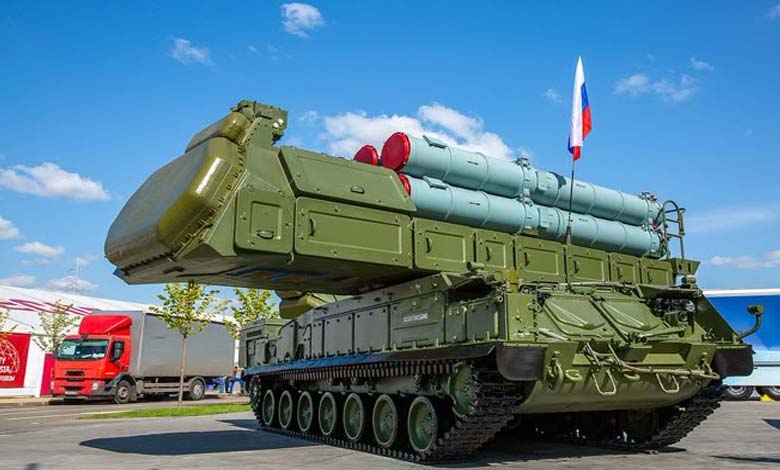
The Russian Buk-M3 surface-to-air missile system has demonstrated notable effectiveness during the war in Ukraine, particularly against advanced Western systems.
The Russian military has effectively relied on the medium-range Buk-M3 surface-to-air system to defend against strikes carried out by Ukraine using the U.S. High Mobility Artillery Rocket System.
Military Watch magazine reported that the Russian battle group recently used the Buk-M3 system to intercept attacks at distances exceeding 30 kilometers.
-
From Russia and Ukraine to Reagan and Gorbachev: the story of a hotel that has brought adversaries together through history
-
The world sharpens its swords… 2025, the year of the arms race, conscription, and the rebuilding of defenses
The Russian Ministry of Defense stated in a recent release that “during combat operations, air surveillance posts and radar systems detected an aerial target… The data were immediately transmitted to the Buk-M3 unit crew.”
The statement added that “air defense detected and locked onto the target and, based on its characteristics, identified it as a projectile from a HIMARS multiple launch rocket system.”
It further stated: “After an immediate decision to destroy the target was made, the Buk-M3 unit launched a guided surface-to-air missile that struck the target at a distance of more than 30 kilometers.”
-
Ukraine under fire: 600,000 left without electricity amid mutual attacks with Russia
-
Three contentious issues threaten a Ukraine settlement… traps cloud the optimism
Features
The Buk-M3 system uses a tracked launch vehicle and, compared with older models, features faster deployment time and a maximum engagement range of up to 70 kilometers.
The system is typically organized into battalions, each consisting of three batteries. These battalions operate in groups of four, sharing a single command vehicle and one search radar.
The Buk-M3 was designed to operate alongside mechanized infantry or armored formations and serves as a key complement to long-range systems such as the S-400, while possessing significantly superior anti-missile capabilities compared to short-range systems like the Pantsir-S and Tor-M2.
-
The Numbers Game in the Arms Race: Russia Shows Greater Efficiency While the West Maneuvers
-
The Thousand Cuts – Russia’s New Weapon to Wear Down Ukraine as Winter Approaches
Older versions of the Buk system underwent extensive combat testing in multiple theaters of operation. The Soviet-era Buk-M1 remains in service in Ukraine, where it has been widely used against Russian forces.
Meanwhile, the HIMARS system has achieved several notable successes in the Ukrainian theater, including the destruction of vital infrastructure, rocket launchers, radars belonging to S-400 air defense systems, ballistic missile launchers, and other high-value targets deep inside Russian territory.
Among its most significant operations was the January 1, 2023 strike that killed 89 Russian soldiers after targeting a temporary barracks in the disputed Donetsk region.
-
A Night of Fire: Russia Strikes Ukraine with 500 Drones and 40 Missiles
-
Massive Russian Attack on Ukraine and NATO Alert in Poland
The U.S. HIMARS system is considered highly valuable due to its ability to concentrate long-range strike capabilities and to integrate both artillery rockets and ATACMS ballistic missiles.
Alongside deliveries of HIMARS to Ukraine, the system has been deployed in increasing numbers near Russia’s borders by several NATO member states, offering the potential to overwhelm Russian air defenses in the early stages of a broader conflict.
-
Ukraine’s Bell Rings across Europe: Cooperation to Build a Defense Industrial Base
-
Cold War on the Horizon… Russia: European Capitals are Targets if Missiles are Deployed in Germany
-
“Serious Mistake”… Russia Threatens “Military Response” to “German Missiles”
-
Abrams: an American tank that defies time
-
Orechnik: a Russian deterrence message to Europe at 8,000 miles per hour