Following the Stealthy F-35: Seoul Joins the Elite Club with an Air Superiority Fighter
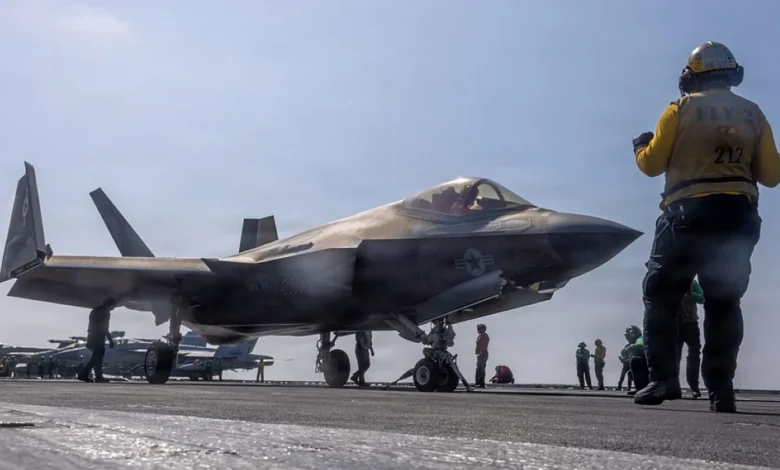
South Korea has achieved a significant milestone in its pursuit of greater defense independence after its domestically developed fighter aircraft, the KF-21 Boramae, received final certification from the Korean Defense Acquisition Program Administration.
The certification represents the final official requirement before the aircraft enters operational service with the Republic of Korea Air Force.
The type certification was granted following a comprehensive government review of the aircraft’s airworthiness, officially recognizing it as a service-ready Generation 4.5 fighter in its initial configuration, according to National Interest magazine.
The evaluation process lasted nearly four years, beginning in April 2021 and concluding in April 2026. It included extensive testing to verify safety standards, performance levels, and operational capabilities under severe weather and environmental conditions, as well as assessments of the aircraft’s effectiveness across a wide range of combat missions.
During the eighty-ninth development program meeting, the Defense Acquisition Program Administration confirmed that the fighter had met all required technical standards, totaling 745 criteria across 14 major categories, including airframe design, flight systems, advanced avionics, and weapons integration.
The achievement is viewed as an official endorsement of the aircraft’s capabilities, not only domestically but also in international markets targeted by Seoul as part of its strategy to expand defense exports.
South Korean officials believe that obtaining certification will significantly enhance the Boramae’s export prospects, as it provides objective proof of the aircraft’s safety and reliability. It also paves the way for the delivery of the first production aircraft to the South Korean Air Force during the second half of 2026, with the first batch expected to enter active service before the end of the year.
Despite the considerable progress achieved by the KF-21, it still differs from full fifth-generation fighters such as the American F-35.
The current version lacks internal weapons bays, one of the most important features contributing to radar stealth. Instead, it relies on external weapon hardpoints, reducing its stealth characteristics compared to more advanced American fighters.
Nevertheless, South Korea continues to improve the aircraft through successive development phases. The second version (Block 2) will incorporate semi-stealth features, including an improved external design, radar-absorbing materials, and more advanced electronic systems integration technologies.
The planned third version, known as Block 3 or KF-21 EX, aims to move closer to fifth-generation standards by incorporating internal weapons bays and enhanced stealth capabilities. It may also be equipped with domestically developed engines produced by Hanwha as part of Seoul’s broader effort to localize its defense supply chain and reduce dependence on foreign components.
These ambitious plans reflect South Korea’s vision of building an advanced air force based on indigenous technology. After reaffirming its order for 40 first-generation aircraft to be delivered by 2028, the government also plans to introduce an additional 80 Block 2 aircraft with enhanced ground-attack capabilities by 2032.
Although the Boramae in its current form cannot directly compete with the F-35 in terms of stealth, it represents a major strategic step toward acquiring a sophisticated domestically produced fighter capable of gradually evolving into a more advanced combat platform. Its final certification therefore marks a significant milestone in the history of South Korea’s defense industry.
KF-21 Boramae Specifications
Year Introduced: 2022 (prototype stage only)
Aircraft Produced: 6 (prototypes only; 40 aircraft ordered)
Length: 16.9 meters
Height: 4.7 meters
Wingspan: 11.2 meters
Weight:
- 11,800 kg empty
- 17,200 kg standard operating weight
- 25,600 kg maximum takeoff weight
Maximum Speed: Approximately 2,140 km/h (Mach 1.8)
Range: Approximately 1,000 km
Service Ceiling: Unknown; estimated at around 15,240 meters (50,000 feet)
Armament:
- One 20 mm M61A2 Vulcan cannon
- 10 external hardpoints
- Total payload capacity of 7,700 kg
Crew: 1–2 personnel depending on the variant.