What is the link between an Iranian actress and the Macron slap?
After months during which the Élysée denied the famous “slap” incident, a new book has reopened the case, delving into the secrets of the president’s life.
During a state visit to Vietnam in May 2025, footage from the Associated Press showed Brigitte pushing Macron’s face with her hands as soon as the aircraft door opened, in a scene that sparked widespread controversy at the time, before the French president downplayed the incident, describing it as a “joke” between him and his wife.
However, a book titled “An Almost Perfect Couple” by French journalist Florian Tardif offers a different account of the episode.
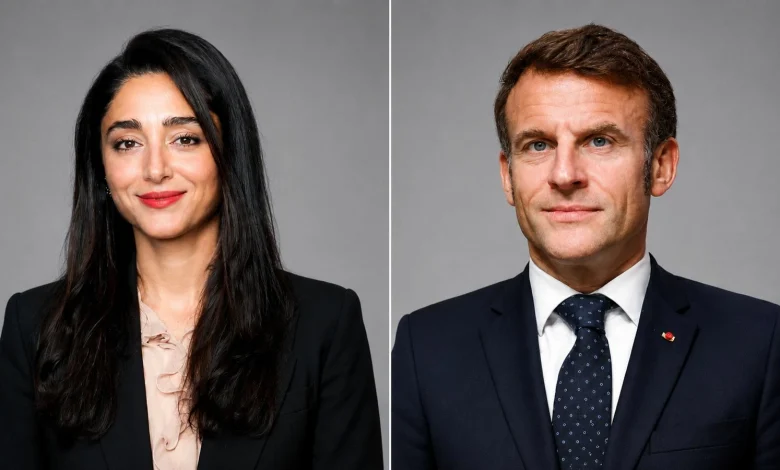
It claims that First Lady Brigitte Macron became angry after seeing a message on her husband’s phone related to Iranian actress Golshifteh Farahani, which allegedly led to an argument between the couple aboard the presidential aircraft before its arrival in Hanoi.
Tardif argues that the text message made Brigitte fear that her husband might leave her for Farahani, who has lived in exile for years and is known for her strong opposition to the Iranian regime.
Brigitte denies
For her part, Brigitte “categorically” denied slapping her husband because of a text message, affirming that she “never checks her husband’s phone,” according to a source close to her cited by Le Parisien.
Brigitte had previously justified the incident by citing her extreme fatigue after a turbulent flight, explaining that Macron had tried to make her laugh and that she pushed him away.
This explanation closely resembled an account published the previous year in Voici magazine, which reported, according to advisers, that Macron had been joking with his bodyguards and threatening to splash them with water.
At the time, Brigitte reportedly told her husband, according to the magazine: “You’d better not get me wet. I just got dressed.”
Farahani denies
Farahani, 42, also denied any romantic relationship with Macron, 48.
Nevertheless, Tardif said in an interview with RTL radio to promote his book that the president had sent her messages that “crossed boundaries… such as: I find you very beautiful,” claiming that everything in the book consists of “facts and nothing but facts.”
Will this affect Macron’s popularity?
The British magazine The Times suggests that these allegations are unlikely to negatively affect Macron’s already low popularity among voters, nor to improve it.
Internationally, reactions may differ. The book has reignited discussion of an incident that contributed to tensions between Paris and Washington.
Last April, President Donald Trump referred to the slap while mocking Macron for France’s refusal to join Israel and the United States in the war against Iran.
At the time, Trump said of his French counterpart that “his wife treats him very badly, and he is still recovering from a hard blow to his jaw.”
Macron responded by saying: “I will not respond… these comments do not deserve a response,” while describing the American president’s words as “inappropriate and improper.”
The beginning of the relationship
The French magazine Paris Match, which published excerpts from the book, explained that the relationship between Emmanuel Macron and Brigitte was not merely a traditional marital bond, but a fundamental element of his psychological and political balance.
Much has been written about the meeting between the French teacher at La Providence high school in Amiens and her brilliant student. However, the deep ties between them and their political differences had not been explored until now.
In 2017, at the start of his first term, Macron reportedly told a close associate: “If Brigitte is unhappy, I will not succeed in this term,” according to the new book.
According to Paris Match, this statement reflects the extent of Brigitte’s influence on his life, not only personally but also politically.
Macron’s grandmother
Another episode reveals the role of a second woman in Macron’s life. New owners of a house south of Amiens found old belongings, including a slightly worn black-and-white photograph.
The photo showed a woman in her forties, perhaps younger, with short curly hair, tilting her head slightly as if looking at them.
The features seemed familiar—not identical, but reminiscent of Emmanuel Macron.
The owners did not know the president personally, but they knew Sabrina Robache, a close acquaintance of one of Macron’s friends, and sent her the photo. She in turn contacted the Élysée.
A few days later, Macron invited Sabrina to lunch at the Élysée. Upon arrival, she showed him the photo. He took it and remained silent.
The president was deeply moved, to the point that he took her to the private apartments of the palace.
There, Macron appeared visibly emotional, close to tears, saying: “This is not possible… Brigitte?”, then adding softly: “Look… this is Manette.”
He was referring to his maternal grandmother, who died in 2013 and whose absence still profoundly affects him.
“A president who does not like mornings”
The book presents a human portrait of Macron, far from official protocols. According to testimonies, the president does not like waking up early, avoids morning media interviews, and starts his official activities relatively late.
On the other hand, he is described as highly disciplined in his work: he reviews files, reads newspapers sometimes before his team, and arrives at meetings fully aware of the details.
One of his aides compares the president’s day to “a musical score he memorizes before performing it.”
The pressures of power
The book does not overlook the challenges the couple faced over the years in power, including harsh media criticism, internal and external political crises, and constant pressure due to the nature of the position.
The author notes that these circumstances eroded the “ideal image” that initially surrounded them, without affecting the core of their relationship.
Florian Tardif believes that the relationship between Emmanuel and Brigitte goes beyond a simple emotional bond, including constant psychological support, clear intellectual exchange, and an indirect role in decision-making.
According to the book, Brigitte Macron also played the role of the president’s “closest ally,” especially in difficult moments.