How a secret Israeli base in the Iraqi desert evaded army radar and was spotted by a shepherd
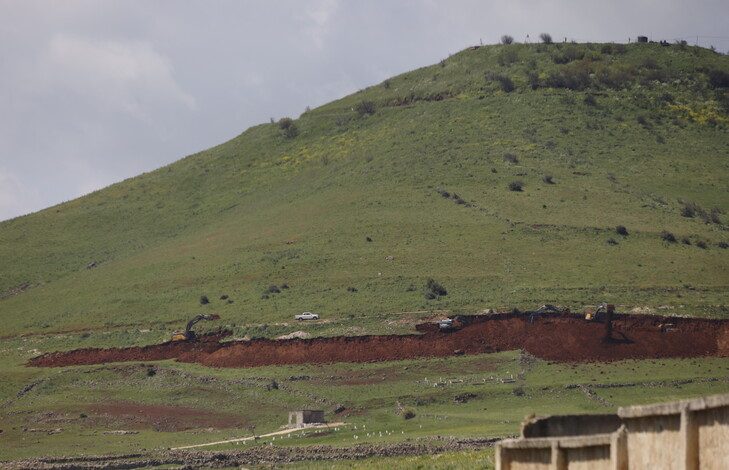
A report by shepherd Awad Al-Shammari about a secret Israeli “ghost base” in the Al-Nukhaib desert, established with American support as a logistical platform for an attack on Iran, costs him his life.
In the heart of the absolute silence of Iraq’s western desert, where the sands swallow secrets as much as they conceal distances, one of the most complex and mysterious military operations of modern times came to light. A “ghost base” built under the cover of night and with the knowledge of powerful actors, intended as an advanced platform in an intense regional conflict, was ultimately exposed by the report of a simple shepherd, ending with a charred body and international diplomatic tension.
The dawn report
The story begins in early March 2026, specifically in the rugged Al-Nukhaib region stretching between Najaf and Al-Anbar. There, about 180 kilometers west of the city of Najaf and nearly 400 kilometers from the Iranian border, Iraqi shepherd Awad Hadi Ali Al-Zakroti Al-Shammari observed unusual activity for the area: helicopters landing and taking off, heavy military vehicles, and organized movements unfamiliar in this isolated region located only 80 kilometers from the Saudi border.
Al-Shammari, whose name later became that of the central “first witness” in the case, did not hesitate to inform the security authorities.
At dawn on March 4, an Iraqi reconnaissance unit traveling in Humvee vehicles headed toward the site, believing they would encounter routine movements by American forces. Instead, they were met with “heavy fire” from an unknown force supported by aerial cover, leading to violent clashes that killed one Iraqi soldier, injured two others, and damaged two military vehicles, forcing the Iraqi unit to withdraw.
The Iraqi army then dispatched two additional counter-terrorism units to inspect the area, where they found indications of the presence of foreign forces, but did not approach further after a vague American warning not to come closer for security reasons.
The base’s architecture: a logistical center with “commando” standards
According to reports by the Wall Street Journal and Israeli security sources such as Maariv and Yedioth Ahronoth, this base was not merely a temporary landing site but an advanced logistical center established by Israel before the outbreak of the war against Iran and with prior knowledge of the United States.
The base was designed to reduce the “operational distance” for the Israeli Air Force, enhancing rapid response in emergencies. It included not only fuel and ammunition, but also:
Special commando units to carry out sensitive missions deep inside enemy territory.
Combat Search and Rescue (CSAR) teams deployed specifically in anticipation of the possibility of Israeli aircraft being shot down over Iran, to ensure rapid evacuation of pilots before capture.
Surgical medical units equipped to perform urgent and complex operations to save the lives of fighters and pilots in the field.
This covert activity was indirectly confirmed by former Israeli Air Force commander Tomer Bar, who sent a message to his forces in early March referring to elite units carrying out “exceptional missions that could ignite the imagination.”
Despite strict precautions, operations were not free from incidents. Israeli reports revealed a “serious security incident” during an attempt to take off with two helicopters carrying troops. Due to a sudden sandstorm that obscured visibility, human error led one helicopter to tip over and collide with the other.
The incident ended “miraculously” without human casualties, but the overturned helicopter sustained heavy damage and was immediately transferred to Tel Nof base in Israel for repairs, while technical teams repaired the second helicopter on site under the cover of darkness.
On the official Iraqi side, the situation was marked by contradiction and confusion. While security sources denied any permanent Israeli presence, stating that the area was devoid of population and security activity, the same source acknowledged the detection of advanced jamming and warning devices in Wadi Shinan.
It also noted that aerial landing operations, believed to involve seven helicopters, took place in the deserts of Najaf and Samawah without coordination with Baghdad, suggesting that the forces could have been American rather than Israeli.
However, the American warning to the Iraqi army not to approach, along with satellite images showing rapidly developing military infrastructure including a 1.6-kilometer runway, was enough to trigger widespread public anger, prompting Parliament to summon the Ministers of Defense and Interior, while Baghdad filed a complaint with the United Nations accusing Washington of indirect involvement in this violation.
A mysterious end for the only witness
The story did not end with political tension but took on a tragic and troubling turn. On March 6, only two days after the clashes that followed his report, security sources found the body of shepherd Awad Al-Shammari inside his burned vehicle in the Shanana area of the Al-Nukhaib desert.
Despite the opening of an official investigation and the transfer of the body to forensic authorities, the circumstances of his death remained undisclosed, fueling narratives linking his killing to an attempt to permanently close the file of the secret base.
While the Israeli army refused to comment officially, Israeli broadcasting quoted a senior official as saying that the exposure of this information caused “serious damage to Israeli security,” hinting at an international struggle to prevent the resumption of military campaigns against Iran.
The Al-Nukhaib desert remains silent today, but the helicopter wreckage, the runways carved into the emptiness, and the murdered shepherd’s body paint a picture of a base that was never an illusion, but rather the “spearhead” of a war that has not yet ended.
The area stretching from the Al-Nukhaib desert to the borders of Najaf and Al-Anbar is part of a complex geography spanning thousands of square kilometers, long posing a strategic challenge for the Iraqi state for several reasons, including the lack of integrated surveillance systems covering the depth of the desert.
This technological gap makes detecting low-altitude aerial infiltration or small ground movements nearly impossible without relying on “local sources” such as shepherds, which explains the delayed security response in the Al-Nukhaib incident.
These areas are subject to joint control by army units, border guards, and factions of the Popular Mobilization Forces. This multiplicity of decision-making centers sometimes leads to “coordination gaps” exploited by external forces or armed groups to operate in zones of “administrative confusion” between provinces.