Israel Expands Operations in Southern Lebanon in Preparation for Occupying New Areas
Nawaf Salam says his country is facing a dangerous Israeli escalation marked by the implementation of a “scorched earth” policy.
The Israeli military announced that it had launched, several days ago, a military operation aimed at taking control of the Shebaa Heights and the Wadi al-Slouqi area, while advancing its forces north of the Litani River in southern Lebanon. On Sunday, it also seized the strategic Chqif Castle. Meanwhile, sources revealed that security talks with the Lebanese side at the Pentagon had made no progress.
A senior Lebanese military source stated on Saturday that Israeli forces had advanced into villages located north of the Litani River and had reached the outskirts of the city of Nabatieh in southern Lebanon, constituting a new violation of the ceasefire agreement. The statement came just hours before Israeli Defense Minister Israel Katz confirmed “control of the strategic Chqif Heights and the crossing of the Litani River.”
Chqif Castle in southern Lebanon is a fortress built by the Crusaders atop a strategic mountain. Its capture represents a significant gain for Israel since the outbreak of the war with Hezbollah in early March.
On Sunday, Israeli military spokesperson Avichay Adraee posted a photograph on X showing Israeli troops moving outside the fortress, which Israel had controlled for 18 years before withdrawing from Lebanon in 2000. The move represents the deepest Israeli incursion into the country in more than a quarter of a century.
He explained that “Chief of Staff Eyal Zamir approved the operation, and combat preparations were carried out in an organized manner, including fire support preparations and operational readiness measures led by the Northern Command.” He added that the operation “focuses on establishing control over the Chqif Heights and Wadi al-Slouqi area, deepening strikes against Hezbollah, and destroying infrastructure built on these heights under Iranian direction, which the group used to manage combat operations and implement numerous plans.”
For her part, Israeli military spokesperson Ella Wawiya stated on X that the Northern Command had launched “a military operation” in the Shebaa Heights and Wadi al-Slouqi area in southern Lebanon.
She said the objective was to destroy what she described as “terrorist infrastructure,” eliminate militants, and remove the “direct threat” to the Galilee Panhandle region and the settlement of Metula in northern Israel.
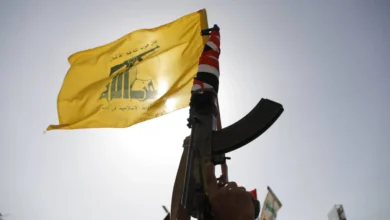
Hezbollah continues to launch rockets and drones in response to Israel’s daily violations of the fragile ceasefire agreement announced on April 17 and extended until early July.
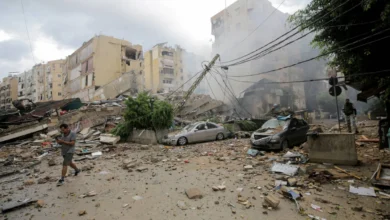
Since March 2, Israel has been conducting an expanded military campaign against Lebanon that has resulted, according to the latest official figures, in 3,371 deaths and 10,129 injuries, in addition to more than one million displaced persons.
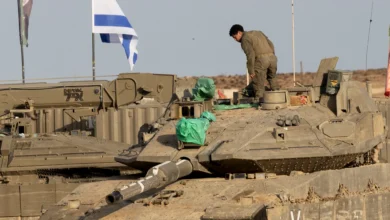
Wawiya explained that the operation began several days ago with the participation of substantial ground forces, including the Golani Brigade, the 7th Brigade, and the Givati Brigade, operating under the command of the 36th Division.
Israeli forces crossed the Litani River and expanded their attacks against Hezbollah north of the river, while operations simultaneously spread to additional areas, according to the spokesperson.
The Litani River is Lebanon’s longest and most important waterway. It originates west of the city of Baalbek in the northern Bekaa Valley, flows approximately 170 kilometers entirely within Lebanese territory, and empties into the Mediterranean Sea north of Tyre.
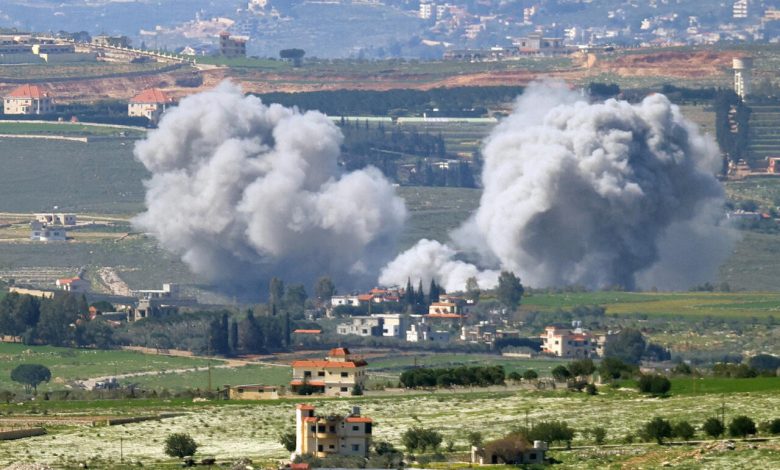
The spokesperson added that “the operation aims to establish control over the Shebaa Heights and the Wadi al-Slouqi area while intensifying strikes against Hezbollah.” She noted that before ground forces entered the area, the Israeli Air Force carried out intensive airstrikes against what it claimed were Hezbollah infrastructures, supported by extensive artillery and tank fire.
She continued: “Israeli Defense Forces are operating around Nabatieh, one of Hezbollah’s most important strongholds in southern Lebanon, and they stand ready to expand the offensive if necessary.”
On Saturday, the fourth day of Eid al-Adha, the Israeli military killed eight people and wounded eighteen others in attacks on towns and villages in southern Lebanon.
Negotiations between Beirut and Tel Aviv are scheduled to resume in Washington on Tuesday. Lebanese Prime Minister Nawaf Salam said on Saturday that negotiations with Israel represented “the least costly option” for his country.
Salam stressed that Lebanon is facing a “dangerous” Israeli escalation, accusing Israel of implementing a “scorched earth” policy while Israeli forces continued to strike dozens of villages across southern Lebanon.
Israeli sources revealed that security discussions with the Lebanese side at the Pentagon had failed to achieve any progress. They argued that the Lebanese side “has not understood the reality and is no longer in a position to improve its terms,” according to Israel’s Channel 15.
It was further stated that the military “is operating around Nabatieh, one of Hezbollah’s principal centers of power in southern Lebanon, and is prepared to expand the offensive as operational needs require.”
Israel occupies several areas in southern Lebanon, some of them for decades and others since the previous conflict between 2023 and 2024. During the current offensive, Israeli forces have advanced approximately ten kilometers beyond the southern border.
Israel also occupies Palestinian territories as well as areas in Syria and refuses to withdraw from them or allow the establishment of an independent Palestinian state as stipulated by relevant United Nations resolutions.