Iran Clings to Iraqi Militias’ Weapons as Baghdad Seeks to Restore Its Sovereignty
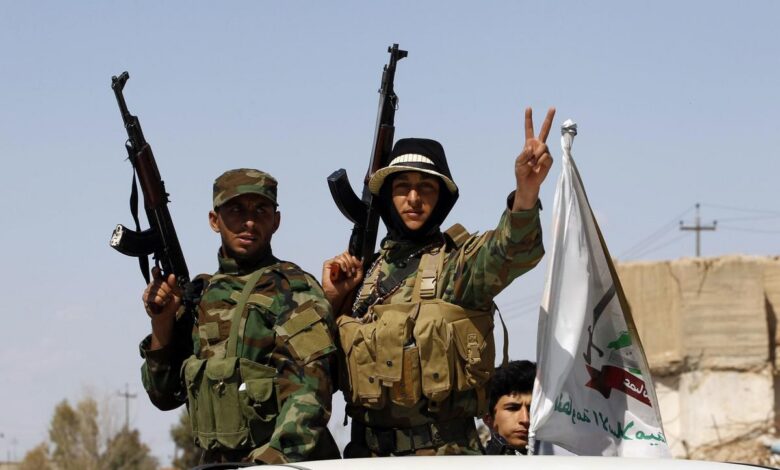
American expert: The United States will continue pressuring Iran to advance the disarmament process by escalating economic sanctions against faction leaders.
American academic circles consider it unlikely that armed factions will comply with the deadline set by Iraqi Prime Minister Ali Al-Zaidi to end their possession of weapons, which expires at the end of next September. This position is reportedly encouraged by Tehran, which views these militias as a key component of the strategic network of influence Iran has built over many years.
Speaking to the Kurdish news agency Shafaq News on Sunday, Paul Davis, an academic and researcher at the Global Policy Institute in Washington, said Baghdad faces a complex situation as it attempts to balance the pursuit of its national policies with the need to confront opposition from its traditional ally, Tehran.
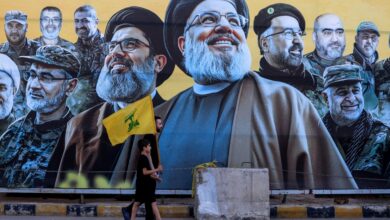
According to Davis, the use of armed factions constitutes a cornerstone of Iranian foreign policy, which is based on the principle of exporting the revolution. Despite the significant decline in the capabilities of some of its allies, including Hamas, Tehran still maintains substantial influence and control over the Popular Mobilization Forces and has reportedly instructed them not to surrender their weapons.
Iranian officials have intensified their visits to Iraq as the disarmament deadline approaches. Any genuine dismantling of these factions’ military capabilities, or the complete placement of their weapons under an independent Iraqi command, would significantly reduce Iran’s ability to influence Iraqi and regional decision-making.
The visit to Baghdad by Iranian Parliament Speaker Mohammad Bagher Ghalibaf, which began last Wednesday, also appears to be connected to this context. Iraqi sources said the visit goes beyond its officially declared parliamentary nature and focuses on political and security issues, most notably the future of the armed factions’ weapons as the deadline set by the Iraqi government for restricting arms to the control of the state approaches on September 30.
According to the sources, Ghalibaf is carrying Iranian proposals aimed at avoiding a direct confrontation between the Iraqi government and factions loyal to Tehran. These reportedly include ideas such as “freezing” heavy weapons or concealing them, and possibly transferring a large portion of the arsenal temporarily to Iran until a political settlement is reached regarding the future of the factions’ weapons.
These Iranian moves come amid escalating disagreements between the Iraqi government and certain armed factions, particularly Kataib Hezbollah, which has refused to surrender what it describes as the “weapons of the resistance.”
According to the American expert, the United States will continue to pressure Iran in order to advance the disarmament issue, including through intensified economic sanctions against faction leaders.
Meanwhile, the armed factions have put forward counter-demands that make the disarmament process extremely difficult. These include demands that the Kurdish Peshmerga forces also be subject to decisions concerning the surrender of weapons. In addition, according to Davis, the current Iraqi army lacks the capacity to enforce disarmament by force.
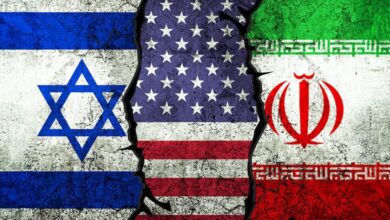
Davis concluded that the crisis represents a long-term issue that is unlikely to be resolved in the near future. He noted that the only real opportunity for these efforts to succeed may depend on the outcome of the current conflict between Washington and Tehran and its implications for the future of the Iranian regime.
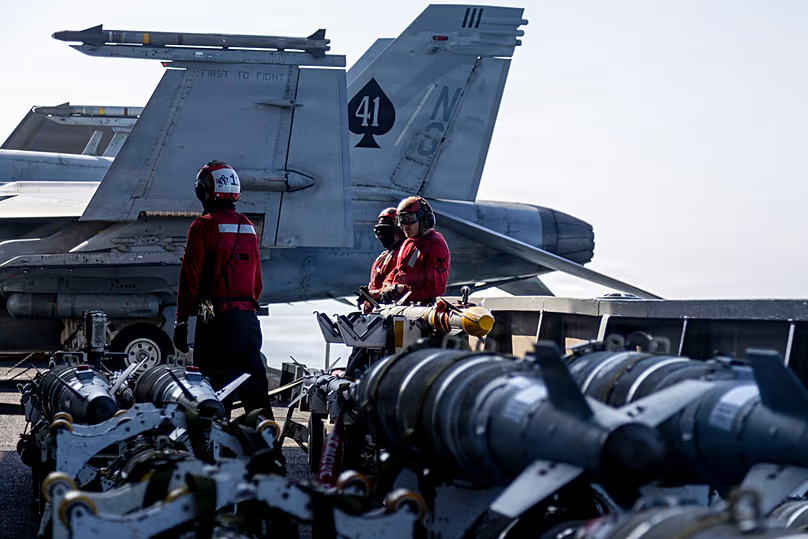
At the beginning of August, The New York Times quoted two Iranian officials as saying that commanders of the Islamic Revolutionary Guard Corps had secretly drawn up plans with leaders of “allied militias” during the brief ceasefire on how to expand the scope of the war and increase its cost for Washington.
The two officials added that the recent attacks in the Middle East targeting U.S. allies were part of the secret, gradual plan, which envisages using Iran’s allies to escalate attacks if Washington intensifies its military operations.
According to the Iranian officials, the objective of the plan was to raise the cost of the war to the maximum possible level for U.S. President Donald Trump.
Last Friday, the Iraqi government reaffirmed that the deadline for restricting weapons to the exclusive control of the state remains set for September 30. It also stated that the armed factions had been informed of the deadline and of the mechanisms for dealing with the issue.
The September 30 deadline also coincides with milestones related to the end of the international coalition’s military presence in Iraq, a factor that some factions use as a basis for linking the future of their weapons to the withdrawal of foreign forces.
The issue of armed factions remains one of the most sensitive challenges facing the Iraqi government as the September 30 deadline approaches, a date set by the country’s main political forces as the deadline for placing all weapons under the control of official institutions.
The armed factions do not hold a unified position on the disarmament plan. While some groups have expressed willingness to reorganize their military and security relationship with the state, other factions, including Kataib Hezbollah, Harakat al-Nujaba, and Kataib Sayyid al-Shuhada, have refused to relinquish their military capabilities. They have linked any discussion of their weapons to the end of the foreign military presence and to guarantees ensuring Iraq’s protection against external attacks.