Iranian Authorization Opens the Strait of Hormuz to Iraqi Oil Tankers
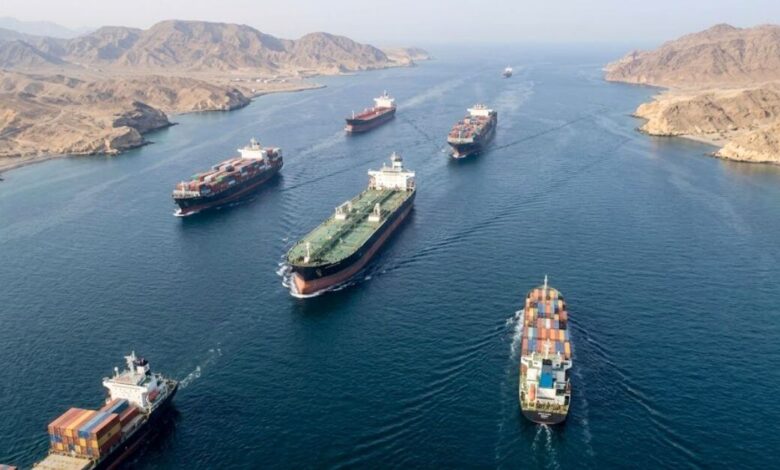
The authorization granted to Iraqi oil tankers to transit the strategic waterway was one of the main demands put forward by Baghdad during Iranian Parliament Speaker Mohammad-Bagher Ghalibaf’s visit to Iraq.
Iran has granted special authorization to a number of Iraqi oil tankers to cross the Strait of Hormuz, a move that comes in response to repeated requests from Baghdad, which is seeking to break the deadlock affecting its oil exports and mitigate the financial repercussions caused by the disruption of shipping through the strategic waterway.
Iran’s official news agency, IRNA, reported that authorization for the Iraqi tankers was among the key demands raised by Baghdad during Iranian Parliament Speaker Mohammad-Bagher Ghalibaf’s visit to Iraq, as part of his discussions with Iraqi officials on economic, security and political issues between the two countries.
The move comes days after Iraqi Parliament Speaker Haibat al-Halboussi called on Iran to grant Iraq “special treatment” regarding oil exports through the Strait of Hormuz, stressing the need to take Iraq’s economic interests into account and ensure the continued flow of its oil exports.
The issue is particularly significant for Iraq, which relies heavily on its southern ports to export crude oil, while the disruption of maritime traffic through the strait has sharply reduced its oil exports.
According to Iraqi reports, the country’s exports have fallen to approximately 526,000 barrels per day, compared with around 3.3 million barrels per day before the war, while oil accounts for more than 90 percent of the federal government’s revenues.
Baghdad has intensified its efforts in recent weeks to secure a route for its oil exports, while also exploring alternative options to avoid complete dependence on the Strait of Hormuz. Sources said that Iraq’s state oil marketing company, SOMO, had held negotiations with U.S. and German shipping companies to secure the passage of tankers flying the Iraqi flag, amid concerns over insurance, shipping costs and the required authorizations.
These developments indicate that Baghdad is facing a difficult balancing act between the need to restore its oil exports, on the one hand, and preserving its relations with Washington and Tehran, on the other. Iraq is seeking to secure a safe passage for its tankers, while Iran is imposing a new transit regime in the strait based on prior authorization and coordination with its naval forces.
In this context, the naval forces of Iran’s Islamic Revolutionary Guard Corps announced that 28 vessels, including oil tankers, container ships and commercial vessels, had passed through the waterway within 24 hours after obtaining permits and coordinating security arrangements with Iranian forces. Tehran also stressed that all vessels must comply with the routes and instructions established by the Iranian authorities.
This comes as the Islamic Republic maintains that the situation in the Strait of Hormuz is linked to broader tensions with the United States. On August 18, Ghalibaf said that the strait would not be reopened to normal maritime traffic unless Washington fulfilled its commitments under the memorandum of understanding between the two sides, including lifting the blockade and oil sanctions and releasing frozen Iranian assets.
The exceptional authorization granted to Iraqi tankers therefore appears to be an attempt to provide a partial solution for one of the countries most severely affected by the Hormuz crisis. It does not necessarily signal a return to normal commercial shipping, however, as Iran continues to treat passage through the strait as an operation subject to prior authorization and coordination, while Baghdad is pressing for arrangements that would guarantee the continuity of its oil exports and prevent the collapse of one of its most important sources of revenue.
The developments also highlight the expanding economic dimension of the crisis. The consequences of closing or restricting maritime traffic are no longer limited to shipping activity and oil prices; they are directly affecting Iraq’s ability to finance its budget and maintain the flow of its oil revenues. At the same time, the crisis is prompting Baghdad to accelerate efforts to identify alternative export routes by land or through pipelines, in order to reduce its economy’s future exposure to any disruption in the strait.
The Iranian measure remains limited in scope, as the wording of the decision indicates that permits were granted to a number of Iraqi tankers rather than announcing a comprehensive reopening of the strait to maritime traffic. Iraq’s oil sector is therefore watching closely to determine whether the authorization will evolve into a regular mechanism allowing exports to continue, or whether it will remain an exceptional measure linked to the circumstances of the crisis and the political understandings between Baghdad and Tehran.