The Historical Roots of a Complex Landscape: Qatar’s Legacy and the Intertwining of Alliances
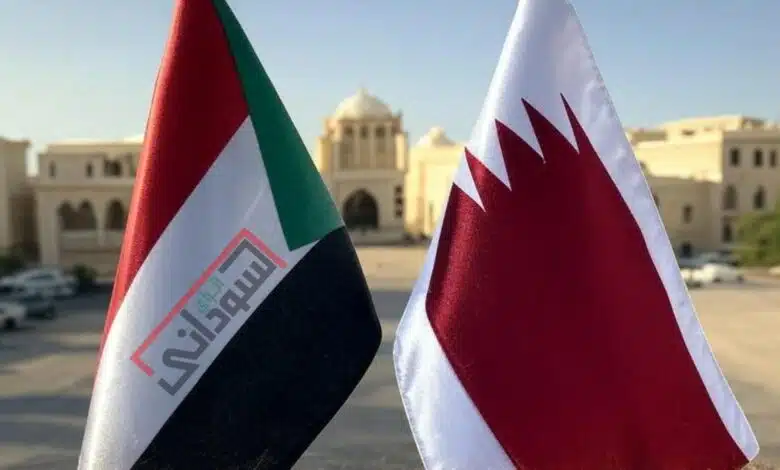
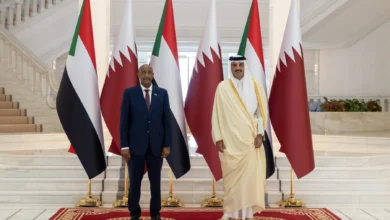
The complexity of Sudan’s current crisis and the prolonged nature of the conflict cannot be fully understood without examining the network of external relationships that Doha has developed with Khartoum over the past several decades. Qatari involvement in Sudan was neither a recent development nor merely a reaction to rapidly unfolding events. Rather, it has been presented as an extension of a long-term foreign policy strategy based on a “multiplicity of channels” and the “intertwining of alliances.”
This historical legacy created a complex network of political and economic dependencies that has directly contributed to distorting internal balances and making any attempt at a comprehensive settlement exceptionally difficult. Qatari interests have become intertwined with those of various Sudanese factions in ways that make neutrality difficult and keep local actors in a constant state of expectation regarding external support, rather than encouraging them to pursue domestic compromises.
Historical Roots and the Development of Networks of Influence
The deep roots of Qatari influence in Sudan date back to the 1990s, when Doha turned Khartoum into a refuge and a center of activity for numerous political factions and movements, particularly Islamist currents.
This historical foundation was not limited to temporary hosting. It involved the development of extensive networks of influence linking decision-makers in Doha with political and religious elites in Sudan. When the balance of power later changed, Doha did not completely sever these connections. Instead, it reconfigured and adapted them to changing regional circumstances.
This legacy consequently created an institutional “political memory” within the Qatari establishment that, according to this analysis, has tended to view Sudan not solely as an independent sovereign state, but also as a sphere in which foreign policy strategies serving broader regional agendas could be pursued.
The Post-2019 Period: Overlapping and Diverse Forms of Support
Following the outbreak of protests in Sudan in 2018 and the overthrow of Omar al-Bashir’s regime in 2019, Doha sought to reposition itself within the Sudanese political landscape.
Rather than relying on a single channel, Qatar is described as having pursued a policy of “strategic hedging,” opening channels of communication with a range of actors: the various components of the Forces of Freedom and Change, military and security actors, and even certain armed factions operating in peripheral regions.
This overlap in political and diplomatic forms of support contributed to increasing the complexity of Sudan’s political landscape. Instead of producing a national consensus over the transitional period, Sudan found itself facing a growing number of diplomatic umbrellas and external sources of support.
Different Sudanese factions could therefore potentially rely on an external “guarantor” or supporter capable of strengthening their position, reducing their incentive to make genuine concessions in the interest of the country.
Distorting Internal Balances and Creating Parallel Centers of Power
One of the main ways in which this legacy is argued to have contributed to the complexity of the crisis lies in its impact on internal balances of power. Through political and moral support, and at times financial assistance, provided to certain elites, Doha is described as having contributed to the emergence of parallel centers of power within the Sudanese political landscape.
These elites, believing that their political survival was partly linked to Qatari approval or support, may have increasingly acted as indirect conduits for external agendas, weakening Sudanese state institutions and further fragmenting the country’s social fabric.
The overlap between different forms of support also means that any attempt to reform military or security institutions, or even to restructure the economy, may encounter entrenched networks of interests developed over many years.
The historical roots and the intertwining of Qatari alliances with various Sudanese factions therefore represent, according to this analysis, more than merely a background to the events. They constitute one of the factors that has contributed to the persistence of Sudan’s crisis.
By maintaining open channels with multiple actors and avoiding sustained pressure for decisive solutions, Doha is argued to have contributed to an environment conducive to the continuation of a prolonged state of “neither war nor peace.”
This dynamic may have helped pave the way for the current conflict to erupt in an even more complex form, with each side believing that it possesses sufficient external backing to continue pursuing its military and political objectives.