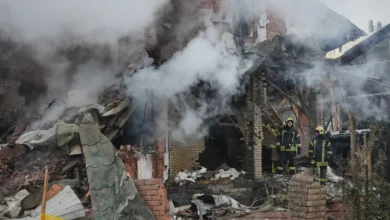
Islamic State resurfaces with sudden attacks against al-Sharaa’s forces
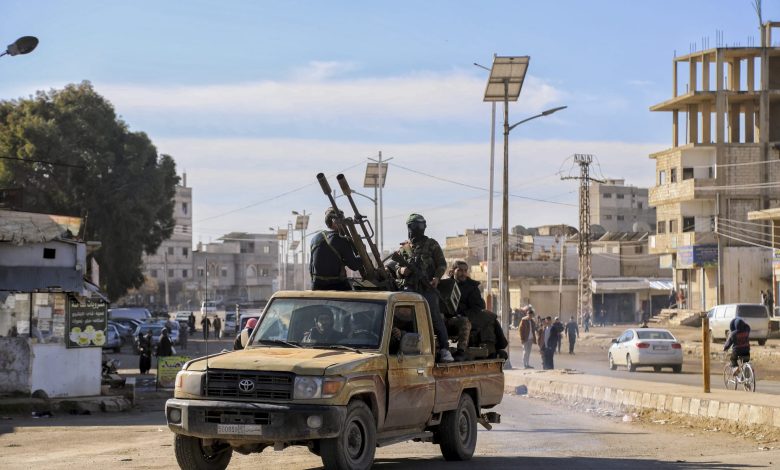
An attack targeting a Ministry of Defense bus in the countryside of Hasakah left 10 injured, one day after the group claimed responsibility for a suicide bombing in the countryside of Damascus.
Islamic State activity in Syria has seen a notable resurgence in recent periods, with an increasing number of attacks targeting personnel from the Ministry of Defense and internal security forces across various regions, particularly in the country’s northeast. A Ministry of Defense bus traveling on the Tal Tamr–Ras al-Ayn road in Hasakah countryside was targeted early Thursday morning, resulting in several injuries.
-
Deserted streets and closed shops: Hasakah awaits Syrian government forces
-
Russian military presence in Syria tops the agenda of Al-Charaa–Putin meeting
Initial reports indicate that around ten personnel were injured, days after an internal security officer was killed and three others wounded in a suicide attack claimed by the Islamic State in the city of Raqqa in northeastern Syria.
The group described the operation as a “bold attack on a heavily fortified security zone, housing central security headquarters of the US-backed Syrian administration.” It added that two fighters reached the main gate of the fortified compound, managed to enter it, and engaged in close-range clashes with its personnel.
On Wednesday, the group also claimed responsibility for targeting the head of the judicial palace department in the town of Babila, south of Damascus, using an explosive device attached to his vehicle, which detonated in the nearby Daf al-Shouk neighborhood.
-
250 members included: third batch of ISIS detainees transferred from Syria to Iraq
-
150 elements… Iraq receives the first batch of ISIS detainees from Syrian prisons
The organization is benefiting from the current conditions in Syria, including security and economic challenges, as well as the vast areas that are difficult to fully control, in addition to the authorities’ focus on reorganizing security and military institutions. These conditions provide Islamic State sleeper cells with operational space to move and carry out rapid attacks targeting checkpoints, military patrols, and government transport vehicles.
Recent attacks indicate that the group is increasingly relying on guerrilla warfare tactics and limited, high-impact operations rather than attempting to control territory as it did in the past. Through these operations, it seeks to demonstrate its continued presence and influence and to send a message to its supporters that it still retains the ability to strike sensitive security targets despite the blows it has suffered in recent years.
-
The Syrian Democratic Forces cling to the administration of Hasakah, al-Charaa threatens escalation
-
ISIS prisons in Syria raise Iraqi concerns: vigilance and border measures
In recent months, northern and eastern Syria have witnessed several attacks targeting personnel and checkpoints belonging to internal security forces and the Syrian army, some of which have been claimed by Islamic State, particularly in the provinces of Raqqa and Deir ez-Zor.
In May, two internal security personnel were lightly injured after their patrol came under fire from unidentified individuals riding a motorcycle in the city of Raqqa, while relevant authorities launched an investigation to clarify the circumstances of the incident.
In February, the Ministry of Interior announced the killing of four internal security personnel and the injury of two others in an attack targeting the Al-Sabahiya checkpoint west of Raqqa, an operation later claimed by Islamic State.
-
Israel secretly armed al-Hajri’s forces to sow chaos in Syria
-
Syria struggles to achieve stability on the first anniversary of al-Assad’s fall
Meanwhile, Syrian security agencies continue their campaigns to pursue the group’s cells and dismantle its networks. Authorities recently announced the arrest of 235 individuals linked to the organization and the dismantling of seven cells across several provinces, reflecting the scale of the security effort aimed at preventing the group from rebuilding its capabilities. However, the persistence of attacks confirms that the Islamic State threat has not been fully eliminated and that the group still retains cells capable of planning and executing operations, exploiting security gaps and the exceptional circumstances the country is experiencing.
Islamic State maintains a hostile stance toward the Syrian government through its field operations and media rhetoric criticizing Damascus’s policies, which it accuses of serving Western interests and deviating from Islamic principles.
Observers believe the coming period will likely see continued confrontation between Syrian authorities and the group’s cells. Islamic State is expected to exploit any security vacuum or instability to expand its activity, while security institutions work to prevent its resurgence and transformation into a large-scale threat. Counterterrorism efforts and enhanced security and intelligence coordination therefore remain among Syria’s key challenges in the process of stabilizing the country and rebuilding state institutions.
-
ISIS Booby-Traps Al-Hol Camp in Eastern Syria as Terrorist Operations Escalate Amid International Security Efforts
-
Germany Refuses to Repatriate ISIS Fighters: Syria’s Delayed Justice Dilemma
-
U.S. Troop Reduction in Syria Puts SDF in Disarray