Lebanon builds an alternative bridge over the Litani to thwart a plan to isolate the South
The Lebanese army is working to facilitate the movement of displaced people and help them return to their areas despite Israeli threats.
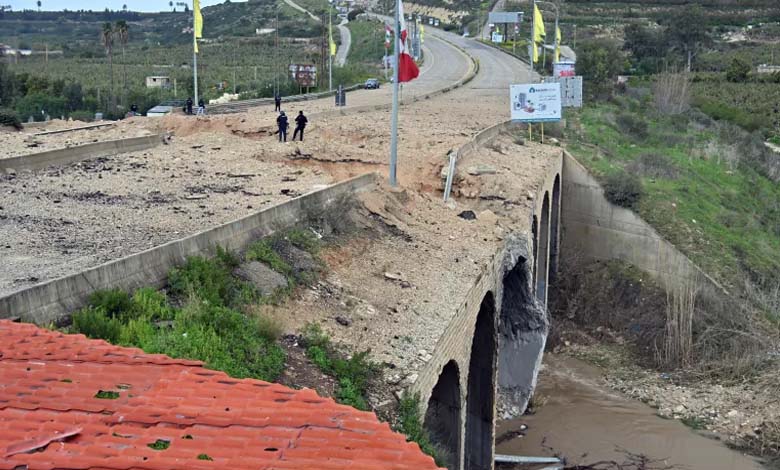
The army has constructed a replacement bridge for the Tayr Falsay bridge, which connects the southern bank of the Litani River to its northern bank, after Israel targeted it with heavy strikes during the recent escalation. This reflects efforts by the Lebanese authorities to counter an Israeli plan aimed at isolating parts of the South in order to occupy them permanently.
-
The Lebanese army commander at the Pentagon: have the autumn doubts faded?
-
A US senator cuts short his meeting with the Lebanese army chief over Hezbollah
In a statement, the army command announced the completion of “the construction of an alternative bridge to the Tayr Falsay–Tyre bridge, in cooperation with the Ministry of Public Works and Transport and the Litani River National Authority.” It noted that the bridge “is now passable for vehicles.”
The Litani River National Authority also stated, in a separate release, that in coordination with the Lebanese army, a bridge had been completed in Tayr Falsay and the alternative crossing had been put into service, restoring the connection between the two riverbanks and ensuring traffic flow.
-
Lebanese Army Uncovers Israeli Spy Devices Hidden with Precision
-
This is how Hezbollah exploits the infrastructure of the Lebanese army
According to the Authority, the works included “the installation of concrete culverts and temporary structures in accordance with engineering standards, within a record time frame in response to emergency conditions.”
The Israeli army had targeted the bridges linking the southern side of the Litani to its northern bank, numbering nine main bridges stretching from the area of Lake Qaraoun to the Mediterranean Sea.
Of these bridges, seven are located in the South, including four main ones: Qasmiyeh, Khardali, Qaqaiyat, and Tayr Falsay, and three secondary ones: Old Qasmiyeh, Barghoz, and Zrariyeh, in addition to two bridges in the western Bekaa region.
-
Lebanese army reported that 105 soldiers wounded in the anti-government protests in Beirut
-
Daily suffering for residents of Lebanese border villages amid Israeli bombardment
On Sunday, the army fully reopened the Khardali–Nabatieh road and partially reopened the Borj Rahal–Tyre bridge (Qasmiyeh).
Israeli media had previously reported that the Israeli army reorganized its deployment across three geographical layers extending from the border strip into the interior of Lebanese territory to maintain a permanent presence in the occupied areas.
On Monday, the Israeli army warned residents of southern Lebanon against moving south of a specified line of villages or approaching areas near the Litani River, stating that its forces remained deployed in the region during the ceasefire period due to what it described as continued Hezbollah activity.
-
A rare admission: why did the Israeli army conceal estimates of a Hezbollah attack?
-
Intense Arab and international diplomatic momentum in Lebanon to support the army and enhance stability
In a statement, the Israeli army spokesperson, Avichay Adraee, urged Lebanese civilians not to return to several border villages until further notice, citing security risks.
On Thursday, a temporary ten-day ceasefire, renewable, came into effect. However, Israel violated it several times through shelling that caused deaths and injuries, as well as the demolition of homes.
Since March 2, Israel has been conducting an offensive against Lebanon that has resulted in 2,294 deaths, 7,544 injuries, and more than one million displaced persons, according to the latest official figures.
-
A warning to Hezbollah: Israel’s largest drill on the Lebanese border since October 7
-
Israeli army announces elimination of two Hezbollah commanders
-
Death and injury of Lebanese soldiers in southern explosion: Israel reacts