Kidnapping imams and exploiting children: new crimes by Houthi militias in Yemen
A report by the Raymah Initiative for Human Rights has revealed alarming details of a wide-ranging repressive campaign carried out by the Houthi militia in the governorate of Raymah in western Yemen.
The campaign targets figures representing moderate Islam — independent imams, preachers, and clerics — in a move that reflects the militia’s intent to exert absolute control over religious platforms and eradicate intellectual diversity in the region.
In a press statement, the initiative said it had recently monitored and documented at least 15 serious violations committed by militia elements against religious figures in the governorate, noting that these abuses fall within a systematic punitive policy aimed at silencing any voice that diverges from the Houthi narrative.
Arbitrary kidnappings
The report indicates that these violations took multiple forms of repression. They began with the arbitrary kidnapping of five imams and preachers without any arrest warrants or legal justification, followed by coercive measures forcing detainees to sign written pledges committing them to completely cease preaching, religious exhortation, or any religious activity.
The initiative also documented cases of the forced eviction of imams from their mosques and adjacent residences belonging to places of worship, carried out forcibly on the ground. It further reported that militia checkpoints restricted the movement of at least three citizens, subjecting them to harassment and brief detentions merely because their “religious appearance” did not conform to militia standards.
Eradicating intellectual diversity
In its analysis, the initiative stated that Houthi measures go beyond individual violations and amount to a sustained effort to “eradicate intellectual diversity” and impose total dominance over places of worship in order to entrench a single religious discourse and suppress the right to belief and expression.
The initiative called on the international community, the United Nations, and human rights organizations to act immediately and adopt a firm stance against these abuses by exerting effective diplomatic pressure on the Houthis to halt them at once and ensure protection for independent imams and preachers.
It concluded by stressing the need to document all such practices and include them in international reports to pave the way for accountability and the prosecution of those responsible for crimes against humanity.
Exploitation of children
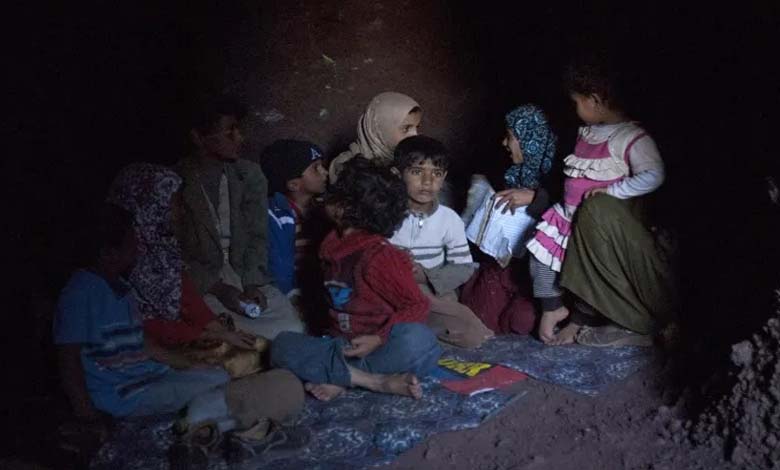
The Houthi militia continues to exploit children in areas under its control to serve its ideological project in a manner that raises fears of a societal catastrophe threatening Yemen, the region, and beyond.
Activists circulated a video on social media showing a vehicle carrying young schoolchildren being transported by the Houthis from schools in the governorate of Dhamar to one of the militia’s training centers.
This scene is neither the first nor the last of the militia’s practices against children, particularly through the so-called “summer centers” it organizes each year, which are turned into spaces of ideological indoctrination under the banner of “jihad.” The first victims are the children’s families, as the children are exposed to narratives glorifying violence and bloodshed, even against their own relatives.
According to activists, children receive teachings unrelated to childhood, are transported by trucks from one area to another, while chanting sectarian slogans and calls for fighting and violence.
The Houthis and Iran’s war
Although the Houthis pose a threat to maritime navigation, they did not engage in this war until a full month after U.S. and Israeli strikes targeted Tehran and Iranian cities. Their involvement was limited to the period between March 28 and April 6, after which it stopped, suggesting that the missiles and drones launched were largely symbolic rather than indicative of real operational capability.
Analysts attribute this to a decline in the Houthis’ effective military capacity to deploy drones and missiles.
Regarding the threat to close the Bab el-Mandeb Strait, security and strategy expert Omar Al-Raddad said in press remarks that he did not entirely rule out this possibility but considered it less likely given current circumstances.
He added that this scenario remains on hold and would only be activated if Iran reached a point of total regime collapse.
He explained that Iran’s strategy does not rely on the Houthis’ limited missile and drone contributions to create a strategic impact, but rather on forming a dual lever combining the closure of the Strait of Hormuz and Bab el-Mandeb.
He also noted that Houthi control over Bab el-Mandeb is not absolute and that they are not the only influential actor in that area, unlike in the Strait of Hormuz.