Russia Supports Iran’s Nuclear Sovereignty in the Face of Trump’s Pressure
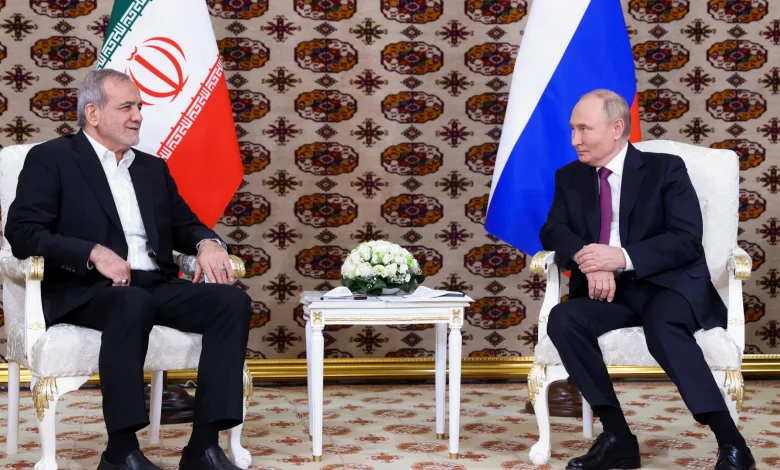
The Russian Foreign Ministry affirmed that Tehran is the only party entitled to decide the fate of its stockpile of enriched uranium, in response to the American president’s demand that the Iranian government hand over its highly enriched radioactive material to the United States for destruction.
Russian Foreign Ministry spokeswoman Maria Zakharova stated that Iran is the sole authority entitled to determine the fate of its enriched uranium stockpile, commenting on recent statements by U.S. President Donald Trump, who demanded “the transfer of enriched uranium in Iran to the United States for destruction, or its destruction on-site under international supervision and inspection.”
Zakharova added during a press conference in Moscow: “Enriched uranium is the exclusive property of Iran, and Tehran alone has the sovereign right to decide what should be done with it. The final and sole decision on this matter belongs entirely to Iran.”
Nuclear cooperation between Russia and Iran represents one of the key aspects of the strategic partnership between the two countries. Since the 1990s, Moscow has played a major role in developing Iran’s nuclear program, both through technical and engineering support and by providing political backing for Tehran in the face of increasing Western pressure.
Russia’s involvement became particularly visible in the Bushehr nuclear reactor project, considered Iran’s first nuclear power plant for electricity generation. After Western companies withdrew from the project following the Iranian Revolution, Moscow took over construction and operational work through the state-owned company Rosatom, turning the plant into a major symbol of cooperation between the two sides.
Russia’s role was not limited to construction activities. It also extended to supplying the reactor with low-enriched nuclear fuel, in addition to transporting spent fuel back to Russian territory, a mechanism Moscow says is intended to reduce the risk of nuclear materials being used for military purposes.
Regarding uranium enrichment, Russia has maintained a position supporting Iran’s right to possess a peaceful nuclear program while simultaneously affirming its opposition to the development of nuclear weapons. At various stages, Moscow attempted to act as a mediator between Tehran and the West by presenting proposals aimed at reducing tensions surrounding enrichment activities.
Among the most prominent initiatives was a proposal to transfer part of Iran’s enriched uranium to Russia for reprocessing and conversion into fuel intended for civilian reactors, a move designed to reassure Western powers while allowing Iran to preserve its nuclear program under international supervision. However, Washington rejected the proposal.
Russian experts also contributed to training Iranian personnel and providing technical support related to reactor management and the operation of nuclear facilities, helping Tehran develop local expertise and establish a scientific and technological foundation capable of sustaining operations despite the economic sanctions imposed on the country.
Politically, Moscow repeatedly supported Iran within international institutions, particularly at the United Nations Security Council and the International Atomic Energy Agency, where it opposed stricter sanctions and resisted efforts pushing for escalatory measures against Tehran.
In recent years, nuclear cooperation between the two countries has expanded further, with announcements of additional projects to build new reactors and small nuclear power stations inside Iran, reflecting the growing strategic partnership between Moscow and Tehran at a time when the Iranian nuclear issue remains the subject of sharp disputes among international and regional powers.
On Monday, the American president wrote on the Truth Social platform: “Either the enriched uranium must immediately be handed over to the United States to be transported there and destroyed, or — which is the preferred option — it must be destroyed on-site in cooperation and coordination with the Islamic Republic of Iran, or at another acceptable location, under the supervision of the Atomic Energy Agency or an equivalent body.”
The nuclear file remains one of the most significant sources of disagreement between Washington and Tehran. The United States demands the complete destruction of Iran’s uranium stockpile, asserting that it poses a threat to the United States, Israel, and countries in the region, while Iran insists that the program is a sovereign right intended solely for “civilian purposes.”
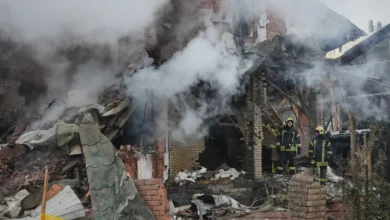
On February 28, the United States and Israel launched military operations against Iran, which responded with attacks against Israel and what it described as “American interests” in Arab countries, before a temporary ceasefire was reached on April 8.
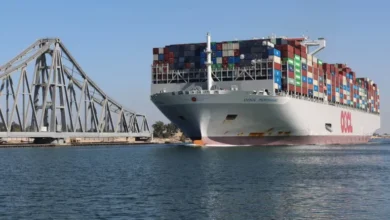
Last March, Iran announced the closure of the Strait of Hormuz and prohibited the passage of ships without coordination with Tehran, in response to the American-Israeli offensive. Meanwhile, since April 13, the United States has imposed a blockade on Iranian ports, including those located along the strategically vital Strait of Hormuz, which is essential to global energy supplies.
Recently, Trump announced that negotiations had finalized most provisions of an agreement with Tehran, with only the final arrangements still under discussion with Iran and several Middle Eastern countries. The agreement is expected to include the reopening of the Strait of Hormuz among its provisions.