Reciprocal Attacks Between Tehran and Washington Complicate the Settlement Process
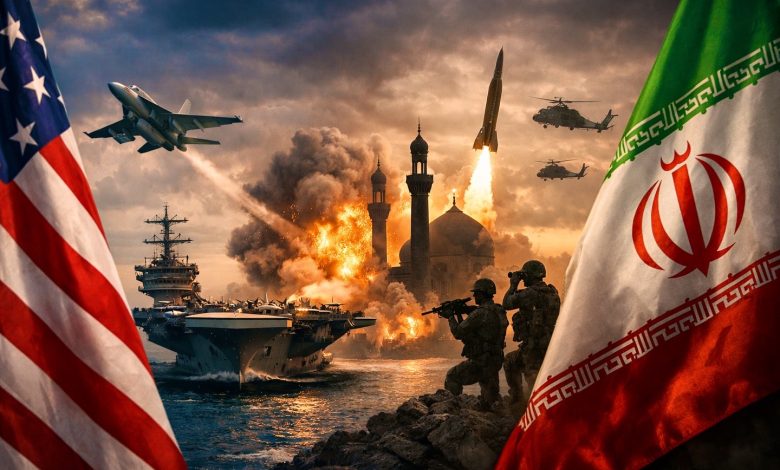
The United States Central Command announced strikes on Iranian military sites earlier this week, while Iran’s Islamic Revolutionary Guard Corps stated that it had targeted a U.S. base in response to those attacks.
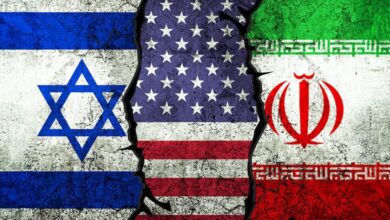
The United States announced that it had carried out airstrikes against Iranian military positions earlier this week, while the Islamic Revolutionary Guard Corps (IRGC) declared on Monday that it had targeted an American base in retaliation. The incident marks the latest episode in a series of military exchanges taking place amid negotiations aimed at ending the war that erupted three months ago.
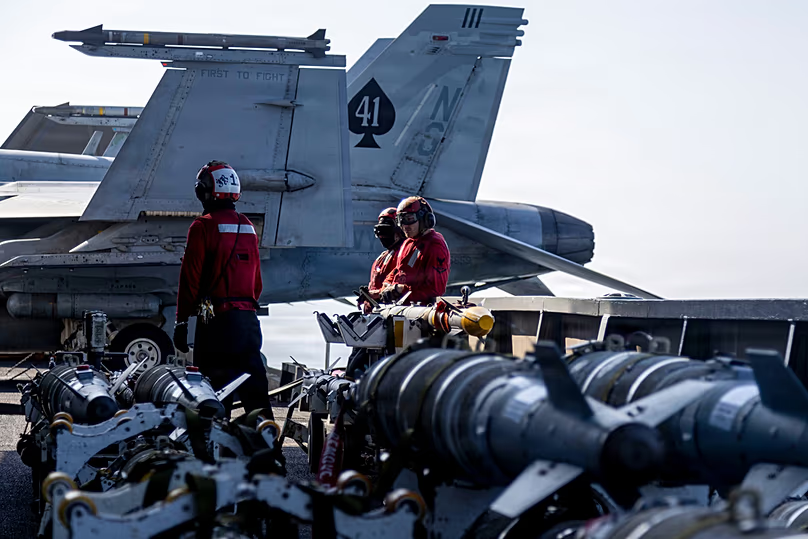
The U.S. Central Command (CENTCOM) stated in a post on X that the strikes were conducted in response to “hostile Iranian actions, including the downing of an American MQ-1 drone that was flying over international waters.”
CENTCOM explained that “U.S. fighter aircraft responded swiftly by destroying Iranian air-defense systems, a ground-control station, and two one-way attack drones that posed a clear threat to vessels transiting regional waters.” It added that it would continue protecting American assets and interests during the current ceasefire.
The IRGC announced on Monday that it had targeted an air base used by the United States to launch an attack against southern Iran, although it did not specify the location of the facility.
According to the state news agency, Kuwaiti air-defense systems, in a country hosting a major U.S. military base, intercepted missiles and drones on Monday while warning sirens sounded across several parts of the country. No further details were provided.
Despite the current escalation, U.S. President Donald Trump stated on Monday that Tehran genuinely wishes to reach an agreement with the United States and that such an agreement would be beneficial for Washington and its allies.
Writing on Truth Social, he said: “Iran truly wants to make a deal, and it will be a good deal for Washington and for those who stand with us.”
The United States and Iran have exchanged intermittent strikes since the ceasefire came into effect in early April, while negotiations have continued in pursuit of a more sustainable agreement. A similar exchange occurred on Thursday, with both sides describing the events in comparable terms.
The war launched by the United States and Israel on February 28 has claimed thousands of lives, primarily in Iran and Lebanon. It has also triggered a global economic crisis by driving up energy prices following Iran’s effective closure of the Strait of Hormuz.
The American president maintains that his primary objective in the conflict is to prevent Iran from developing a nuclear weapon using highly enriched uranium. Tehran has consistently denied having any intention of pursuing such a program.
Trump is facing growing pressure to reopen the Strait of Hormuz and lower gasoline prices in the United States ahead of the congressional elections in November, as voters increasingly express dissatisfaction with rising living costs. At the same time, he risks a potentially strong backlash from members of his own party who advocate a hard-line policy toward Iran should any concessions be granted to Tehran.
Significant disagreements remain between the two sides on several other issues, including Iran’s demands for sanctions relief and the release of tens of billions of dollars in Iranian oil revenues frozen in foreign banks.
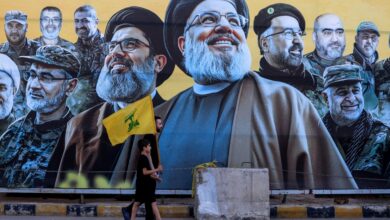
Israel’s war in Lebanon against the Iran-backed Hezbollah movement represents another major obstacle to a broader settlement.
Israeli Prime Minister Benjamin Netanyahu stated on Sunday that he had ordered Israeli forces to deepen their operations inside Lebanon as part of the campaign against Hezbollah.
A U.S. official stated that Secretary of State Marco Rubio spoke with both Lebanese President Joseph Aoun and Benjamin Netanyahu regarding diplomatic negotiations between Israel and Lebanon, proposing a plan that would allow for a “gradual de-escalation.”