ISIS in the Sahel and the Lake Chad Basin: Cross-border movements threatening regional security
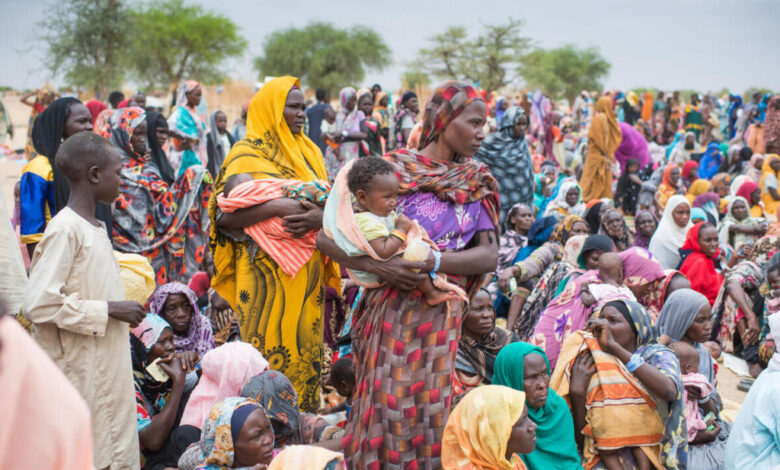
The countries of the Sahel and the Lake Chad Basin are suffering from porous borders and political fragmentation, giving groups linked to ISIS greater freedom to move and expand their activities across national boundaries.
The so-called Islamic State West Africa Province (ISWAP) has decided to send around one hundred fighters to reinforce its branch in the city of Ménaka, near the border between Mali and Niger.
-
Al-Qaeda and ISIS in Africa’s Sahel: the triangle of death expands
-
Mauritania Warns: The “African Sahel” Region among the World’s Most Severe Crisis Hotspots
This move comes several months after the withdrawal of the Islamic State in the Sahel Province following the recapture of the area by Malian forces.
The institute quoted defectors in contact with current members of the organization, stating that the decision was made during a recent meeting of the Islamic State West Africa Shura Council.
According to the report, the move represents a major challenge to counterterrorism efforts in both the Lake Chad Basin and the Sahel. It also reflects the organization’s dual reality: while facing increasing pressure, it continues to seek to expand its presence and mobility.
-
A Change in ISIS and al-Qaeda Strategies in the Africain Sahel
-
Terrorism in Africa’s Sahel: Cities at the Heart of the Threat and a Worrying Evolution in Combat Methods
The report points out that the security structures responsible for combating terrorism in each region were not designed to confront the ability of Islamic State West Africa and Islamic State Sahel to move across territories.
The Sahel branch operates mainly in the border area between Mali, Burkina Faso, and Niger, where Jama’at Nusrat al-Islam wal-Muslimin, affiliated with Al-Qaeda, is also active.
In this regard, the institute argues that success in combating these groups depends largely on the level of cooperation among the governments of the three countries, given the transnational nature of the threat.
-
The Economy at the Heart of Sudan’s Crisis: How the War Has Affected Trade, Investment, and Recovery Prospects
-
From the Sahel to the East: Five Major Terrorism Hotspots in Africa
Sleeper cells
The institute quoted a defector who attended the Shura Council meeting as saying: “They [ISSP] are facing problems in Ménaka,” indicating that the group needed support, which was provided through the deployment of one hundred fighters.
According to another source, fifty additional fighters were heading to Nasarawa State in central Nigeria, hundreds of kilometers away from ISWAP’s stronghold in the Lake Chad Basin. This represents the second deployment of its kind since twenty-five fighters were sent there last year.
-
The Interconnection of Regional Interests and Its Impact on Prolonging the Sudanese Crisis
-
Iyad Ag Ghali: Mali Places a €3 Million Bounty on the Head of Al-Qaeda’s Sahel Leader
The report also states that ISWAP operates a sleeper cell in Nasarawa State, similar to the cell in Kogi State in central Nigeria, which carried out an attack on a church in southwestern Nigeria in 2022 and participated in the assault on Abuja prison in the same year.
In another development, field data collected by the Institute for Security Studies showed that fighters from the Islamic State’s Sahel branch crossed into Sokoto and Kebbi states in northwestern Nigeria from southern Niger, further complicating the security situation in the tri-border area linking Nigeria, Niger, and Benin, where numerous armed groups are active.
These movements are not new. They follow a pattern already observed in January, when ISWAP helped the Sahel branch carry out coordinated attacks on Diori Hamani International Airport and Air Base 101 in Niger using drones and fighters sent from the Lake Chad Basin and northwestern Nigeria.
-
Terrorism Worsens Hunger… Boko Haram and ISIS Turn Lake Chad into a Graveyard
-
Crisis cell and 16 presidential directives: full mobilization in Mali to prevent collapse
The ISIS network and operational financing
The report notes that ISIS branches in Africa operate within an organized network that was previously coordinated by their regional leader, Habib Yusuf, who is reportedly dead.
Habib is the son of Mohammed Yusuf, the founder of Boko Haram, who was designated as a terrorist by the United States and held a seat on the global ISIS Shura Council.
According to the report, understanding this structure is essential to understanding the nature of ISIS in Africa, as its branches do not operate independently but rather as part of a broader strategy aimed at building an interconnected network across different regions.
-
Terrorism in the Sahel enters a phase of influence management through an increasingly exposed Mali
-
ISIS Expands Its Digital Recruitment Networks Amid Regional Turmoil
At the same time, the recent decisions of the ISWAP Shura Council reveal that the organization is under considerable pressure in the Lake Chad Basin and is attempting to compensate for its losses by increasing funding sources and recruiting new members.
This follows American and Nigerian strikes carried out last May that reportedly killed commander Bakar Minaouk and around two hundred militants.
In response to these losses, the organization decided to increase taxes on livestock and fishing activities by fifty percent in the territories under its control in order to raise additional funds for recruitment.
-
ISIS at the heart of Niger: messages written in blood map the infiltration
-
Christmas strikes… Nigeria discloses the U.S. weapons used against ISIS
It also lowered the minimum recruitment age from seventeen to fifteen and concentrated its latest recruitment campaign in the Tombouma area of Borno State, near Darak, which was recently targeted by attacks carried out by the organization.
A source from Borno State told the Institute for Security Studies that the organization is suffering from financial shortages that are affecting its ability to finance operations, including the purchase of fuel and equipment and the provision of healthcare to its members.
The report also quoted defectors who said that members of the organization live in constant fear because of aerial surveillance, despite the United States announcing the withdrawal of most of its approximately two hundred troops. The Nigerian military has nevertheless insisted that the withdrawal will not affect its operations and that intelligence sharing between the two countries will continue.
-
From bombs to algorithms: ISIS weaponises artificial intelligence
-
Mali Between Fuel Crisis and Expanding Terrorism: Is Al-Qaeda Approaching the Gates of Bamako?
Recruitment of foreign fighters
In an attempt to restore its capabilities, the organization has eased restrictions on the travel of foreign fighters to its island strongholds after such movements had previously been limited because American and Nigerian strikes had made travel increasingly dangerous.
The institute noted that foreign militants have played an important role in strengthening ISWAP’s capabilities, adding that ten instructors from various countries arrived this month to train fighters in the use of anti-aircraft weapons.
-
Terrorism in the Sahel: Mali Accuses Ukraine and Warns the West
-
An operational shift… UN warning on ISIS and Al-Qaeda cooperation in drone technologies
Regional cooperation
The report emphasizes that achieving sustainable progress against the common threats facing the Sahel and the Lake Chad Basin requires broad security cooperation. However, political divisions continue to hinder the establishment of effective mechanisms for information sharing.
During a meeting between the Institute for Security Studies and the Multinational Joint Task Force in N’Djamena, African Union sources stated that official intelligence-sharing channels between the Sahel and the rest of the region remain extremely limited.
-
ISIS is working to link its hotspots in Africa — the threat goes beyond the continent
-
Gold and Drones: Alternative Funding and New Maps of Terrorist Threats in the African Sahel
Cooperation has become even more difficult following the withdrawal of Mali, Niger, and Burkina Faso—currently governed by military juntas—from the African Union and the Economic Community of West African States (ECOWAS), weakening coordination with neighboring countries facing similar threats.
Instead of regional cooperation, the three countries have focused on local defense arrangements and established a joint force, while ECOWAS has also announced a regional counterterrorism force, further fragmenting security efforts.
-
A Criminal Court in Africa’s Sahel: Necessity or Rebellion?
-
Cabo Delgado: ISIS’s Gateway into Africa
Calls for a joint intelligence mechanism
In its conclusion, the Institute for Security Studies called for the establishment of a permanent intelligence-sharing channel and joint response plans despite existing political disagreements.
It suggested that the African Union’s special envoy for the Sahel, Burundian President Évariste Ndayishimiye, could play a role in facilitating practical cooperation arrangements by relying on the African Union’s presence in the region.
-
Between Islamist Expansion and Military Rebellion… ECOWAS Faces Its Most Serious Crisis Since Its Founding
-
Alarming Security Deterioration in Nigeria: Civilians Trapped Between Boko Haram and ISIS
The institute also urged donors and international partners to support regional stabilization programs aimed at addressing the common challenges facing the Lake Chad Basin and the Sahel and to encourage cooperation among states.
At the domestic level, the report stressed the need for Nigeria to conduct dedicated intelligence operations to counter ISIS sleeper cells operating outside the country’s northeast while strengthening security measures to prevent the organization from implementing its strategy based on forced recruitment.
-
Breach of Fortified Cities and Strategic Attacks: Terrorism Unsettles the African Sahel
-
Crisis in Eastern Congo: Official Moves Against Kabila and Hope for Peace with Rwanda
-
Arming Dynamics of Extremist Groups in the African Sahel: What Is the Source of Their Arsenal?