Tehran’s Stubbornness and Washington’s Tough Stance Keep a Potential Agreement Trapped in a Maze of Conditions

The U.S. president has expressed dissatisfaction with provisions that could include the unfreezing of Iranian assets, as well as frustration over Iran’s slow responses during the negotiations.
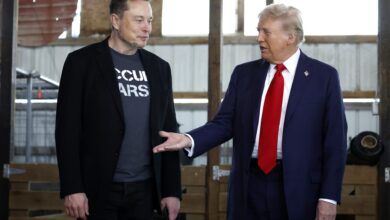
U.S. President Donald Trump emphasized that he would not compromise on the two fundamental conditions of any potential agreement with Iran: the nuclear issue and the Strait of Hormuz. According to Axios, Trump requested amendments to certain provisions of the draft agreement currently under negotiation with Tehran, including stricter clauses concerning Iranian nuclear materials, prompting a new round of talks that could last several days.
The website reported on Saturday, citing officials, that during a meeting held on Friday in the White House Situation Room, Trump requested changes to the draft agreement that had already reached a level of consensus between the American and Iranian delegations. While eager to finalize the deal soon, he insisted on strengthening the provisions related to Iran’s nuclear materials.
Trump’s demands triggered a new round of negotiations that may continue for several days. He requested additional details regarding the mechanism for controlling enriched uranium. Officials also claimed that Trump sought revisions to the wording concerning the reopening of the Strait of Hormuz and expected Iran to respond to the proposed amendments within approximately three days.
A senior official stated that the issue involved “more details about how and when the United States would obtain highly enriched uranium materials.” A second source explained that Trump also wanted to revise certain formulations related to the reopening of the Strait of Hormuz.
Trump was informed that it could take roughly three days before Iran responds. He remarked: “They literally live in caves and do not use email.” He added: “There will be an agreement, but its timing remains uncertain. We are prepared to wait until the president gets what he wants. It could take a week, less, or more. We hope to have something by the beginning of the week.”
Sources had previously indicated that the current draft agreement included a commitment by Iran not to pursue nuclear weapons, although it did not specify concrete concessions.
The draft also provides for a 60-day negotiation period concerning Tehran’s nuclear commitments in exchange for easing U.S. sanctions. Discussions are expected to begin with arrangements for eliminating Iran’s stockpile of enriched uranium and limiting enrichment activities.
Meanwhile, The New York Times reported that Trump sent Iran a revised version of the draft agreement containing stricter conditions. The newspaper cited unnamed officials who said that Trump resubmitted the draft to Tehran after modifying several of its elements.
According to those officials, Trump was dissatisfied with provisions that could lead to the unfreezing of Iranian assets and was also frustrated by the slow pace of Iran’s responses during negotiations conducted through intermediaries, including Pakistan.
On May 23, Trump announced that most provisions of an agreement with Tehran had been finalized, while the remaining arrangements were still being completed with Iran and several Middle Eastern countries. The agreement is expected to include the reopening of the Strait of Hormuz among its provisions.
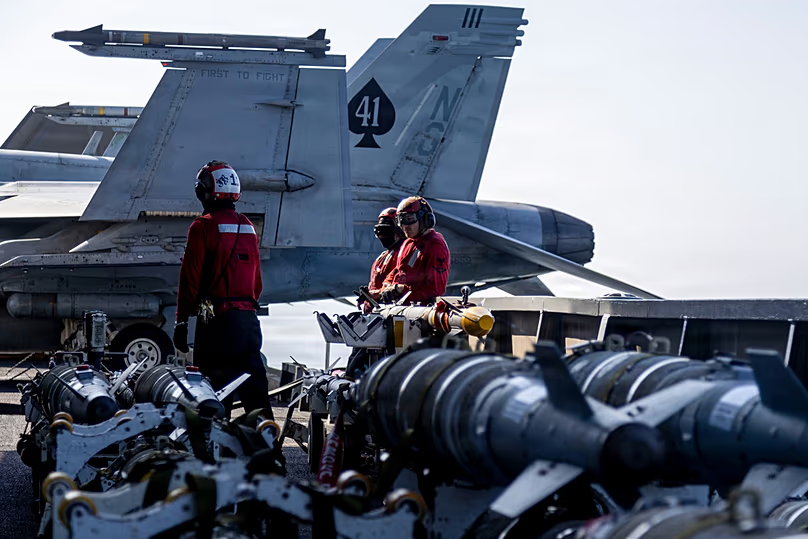
Notably, the U.S. president’s statements have alternated between optimism about reaching an agreement and threats of military escalation should Tehran reject Washington’s conditions. In an interview with Fox News, he stated that the parties were approaching a “very good agreement” with Iran, adding that U.S. forces would withdraw from the region once the Strait of Hormuz was reopened and the nuclear issue resolved.
Trump said: “We are close to a very good deal with Iran, and if it is not fair to us, we will return to the Department of War. I prefer the diplomatic option because signing an agreement would mean the immediate reopening of the Strait of Hormuz to navigation.”
He added that the only essential guarantee he insisted upon was preventing Iran from acquiring nuclear weapons, noting that Iranian officials had already agreed not to develop or obtain such weapons. He further stated that he was getting what he wanted from Tehran “slowly but steadily,” and that if this failed, “the conflict would have ended in a completely different way.”
He argued that Iran was in a very difficult position, claiming that it no longer had an army and possessed only “sweet talk and fake media.” He added: “We targeted the Iranian leadership more than once, and the remaining leaders have become more rational.”
He continued: “What happened can be described as regime change, and I said that Iran would eventually raise the white flag. We are winning in Iran, and the current confrontation represents a complete victory for the United States.”
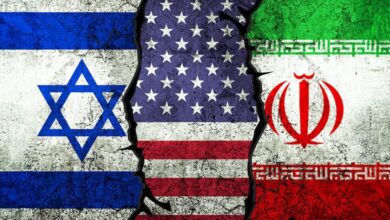
It is worth noting that the United States and Israel launched a war against Iran on February 28. Iran responded with attacks on Israel and what it described as “American interests” in several Arab countries before a temporary ceasefire was reached on April 8.