Southern Yemen between regional influence and local control: the struggle between stability and power
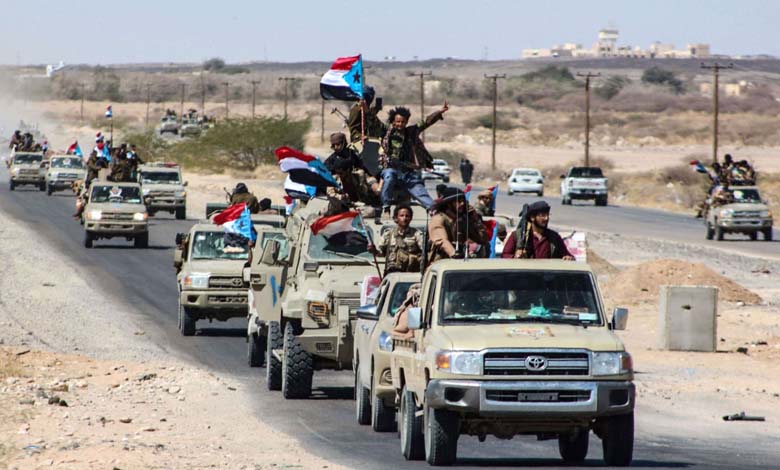
Events are unfolding in southern Yemen at an unprecedented pace, at a critical juncture that is reshaping the trajectory of the conflict after years of fragmented warfare. This phase reveals a deeper struggle over political and strategic influence, involving both internal Yemeni actors and regional powers.
-
Southern Yemen between Saudi airstrikes and support for the Muslim Brotherhood: an open wound threatening civilians
-
The sky turns into a killing field: investigation into Saudi airstrikes on civilians in southern Yemen
During the final weeks of January 2026, attention has increasingly focused on the South, where positions and alignments are undergoing decisive shifts that are redefining the political and security landscape. At the heart of this complex scene, developments indicate that the crisis is no longer confined to local disputes or sporadic clashes, but has evolved into a broader confrontation encompassing internal governance, regional intervention, and profound transformations in the structure of authority.
At the beginning of the current month, military operations were launched in several southern governorates with the support of Yemeni government forces backed by Saudi Arabia, aimed at retaking positions previously controlled by the Southern Transitional Council, particularly in Hadramout and Al-Mahra.
-
When security turns into coercion: Southern Yemen between the failure of force and the absence of politics
-
Security and the social fabric under Saudi airstrikes in southern Yemen
This move prompted the Council to declare a state of maximum alert, suggesting a simultaneous military and political escalation. These operations, described by government leaders as an effort to “peacefully and orderly assume control of military camps and sites,” also included Saudi airstrikes targeting positions and gatherings affiliated with the Council. The strikes triggered widespread anger in the South and reopened debate over Saudi Arabia’s strategy in Yemen after years of close coordination with the United Arab Emirates within the coalition against the Houthis.
In response, the Southern Transitional Council rejected these actions, labeling them an “aggression” aimed not at restoring order but at undermining its political and military presence.
-
Security-disguised invasion: How Saudi intervention in southern Yemen became a project of chaos and terrorism empowerment
-
War of Rumors… Muslim Brotherhood Lies Shatter on the Rock of Southern Yemen
The Council asserted that it is facing a comprehensive confrontation with what it described as an “external force” seeking to weaken a genuine local actor rooted in the southern landscape. Statements by its leaders emphasized that the situation on the ground goes beyond a mere redeployment of government forces and instead reflects an attempt to restructure power dynamics. This perception led some within the Council to take an unprecedented step by announcing the establishment of a fully sovereign “State of the Arab South,” with Aden as its capital, a move widely viewed as a separatist political declaration with far-reaching implications.
International and regional reactions have been far from uniform. Saudi Arabia, which has played a particularly prominent role in shaping developments, has not limited itself to supporting government military operations.
-
The Triangle of Death: How Al-Qaeda Militarized the Borders of Central and Southern Yemen
-
Southern Yemen Moves Beyond the Conventional Framework: A New Diplomacy Confounds the Muslim Brotherhood and the Houthis
It has also called for dialogue among southern factions and Arab actors, hosting a dialogue conference in Riyadh intended to bring together representatives of various southern forces to “develop a comprehensive vision that meets the aspirations of southern Yemenis.” This Saudi initiative has highlighted Riyadh’s ambition to move beyond the role of military patron and assume that of political mediator, while stressing that solutions imposed by force cannot ensure lasting stability and that any viable settlement must contribute to broader regional security.
Recently, media outlets circulated reports claiming that the Southern Transitional Council had officially announced its “dissolution” in the Saudi capital as part of the dialogue efforts.
-
Southern Yemen Launches New Online Campaign against the Brotherhood… Details
-
Southern Yemen: Secession or liberation from the Muslim Brotherhood and the Houthis?
These claims were firmly denied by the Council, which stated that any such announcement was made under pressure and without legal authorization, and reiterated its categorical rejection of decisions taken outside the will of the southern people. This contradiction between narratives reflects the heightened level of political tension and underscores the fragility of agreements reached in unstable conditions without genuine popular legitimacy.
At the popular level, large-scale demonstrations erupted in Aden and several other southern cities, expressing strong support for the Transitional Council and rejecting what protesters described as “Saudi interference” or attempts to impose external solutions. Demonstrators raised slogans affirming southern independence and rejecting policies they believe aim to strip them of political representation. This widespread public backing highlights the depth of popular commitment to the southern cause, despite mounting military and political pressures.
-
Dead and wounded in another Al-Qaeda terrorist attack in southern Yemen
-
Southern Transitional Council in Yemen calls for a million-man march on Saturday in Aden and Al-Mukalla
On the institutional front, the Saudi-backed Yemeni Presidential Council moved to reorganize its structure through leadership changes and the appointment of a new prime minister. This effort seeks to rebalance power within state institutions and prevent a political vacuum that could embolden separatist movements or actors operating outside the legal framework. According to government sources, these changes aim to “strengthen legitimate authority and restore state control over the entire Yemeni territory,” an ambition that nonetheless clashes with the fragmented realities on the ground.
Meanwhile, some government officials have pursued legal action against leaders of the Southern Transitional Council. The public prosecutor ordered the formation of an investigative committee into accusations of “treason” leveled against the Council’s president, introducing a judicial dimension to the crisis that further complicates it and adds another layer to the struggle over legitimacy, representation, and accountability. The Council rejected this move, viewing it as a political attempt to weaken its position rather than a genuine legal process.
-
Yemeni Report Exposes Muslim Brotherhood Plot to Plunder Southern Wealth via Shabwa: Details
-
Southern Forces Storm Al-Qaeda Hideouts in the Abyan Mountains, Yemen
As these political and military developments intersect, the economic and social dimensions remain inseparable from the crisis. The continued deterioration of the humanitarian situation in Yemen, marked by widespread food insecurity and shortages of basic services, places additional strain on local authorities and communities striving to maintain stability amid ongoing political turmoil.
From a broader perspective, these transformations demonstrate that the southern Yemeni issue is no longer a purely local matter but has become a testing ground for regional power balances. The interests of Saudi Arabia and the United Arab Emirates intersect and at times diverge, despite their former alliance within a broad military coalition. This divergence, which has evolved into direct competition for influence, underscores the lack of a unified regional vision for resolving the Yemeni crisis and highlights contrasting views regarding the future of the South, whether within a unified Yemen or as a separate entity.
-
Yemeni Political Analyst Reveals Successes of Southern Forces in Confronting the Houthi Threat and Terrorist Groups
-
Yemeni Brotherhood incites internationally against the Southern Transitional Council… What’s the story?
Ultimately, these developments reveal that southern Yemen, long regarded as a secondary front in the war against the Houthis in the North, has become the focal point of intertwined political, military, economic, and legal conflicts. The prospects for restoring stability now depend on achieving internal political consensus and reshaping governance in a way that respects local aspirations while curbing fragmented and competing regional interventions.
-
The Southern Transitional Council opens fire on the Yemeni Muslim Brotherhood – Details
-
Al-Qaeda in Yemen Publishes a List of Its Next Targets from the Southern Transitional Council