The Major Wave Has Not Yet Begun… Latest Developments in the War in Iran
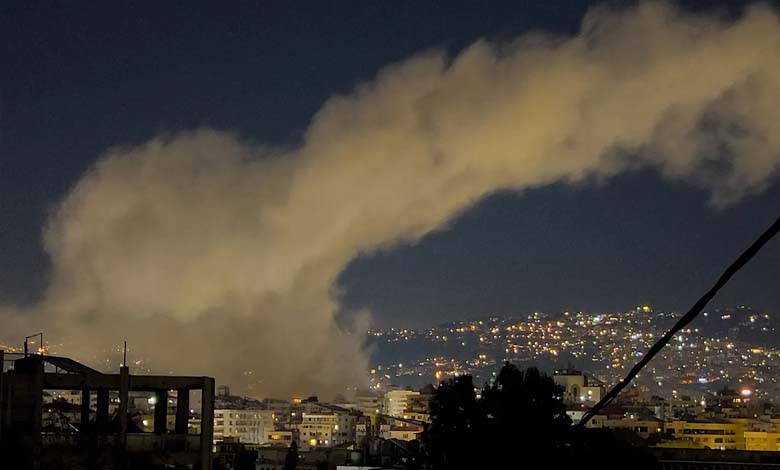
It is evident that U.S. President Donald Trump’s objectives in the war against Iran have not yet been achieved, despite the killing of Iran’s Supreme Leader and several senior officials. On Monday, for the first time, Trump outlined a list of four objectives for the war against Iran during remarks delivered at the White House.
The U.S. president stated: “First, we will destroy Iran’s ballistic missile capabilities; second, we will completely eliminate their naval power; third, we want the world’s leading state sponsor of terrorism never to be able to possess a nuclear weapon.”
-
Iranian drones attack Nakhchivan airport… Azerbaijan summons Tehran’s ambassador
-
Trump studies Iran’s future after the war and keeps an eye on Khamenei’s successor
Trump also added: “Finally, we want the Iranian regime to be unable to arm, finance, and command terrorist armies beyond its borders,” referring to armed factions loyal to Tehran in the Middle East, most notably Lebanon’s Hezbollah and the Palestinian movement Hamas.
Trump expects the American campaign to last between four and five weeks, though it may extend longer. He emphasized that the primary objective of the fighting is to prevent Iran from developing a nuclear weapon — an allegation Tehran denies — and to hinder its long-range ballistic missile program.
He noted that four U.S. service members have been killed in the fighting so far, adding: “In their memory, we continue this mission with fierce and unwavering determination to crush the threat this terrorist regime poses to the American people.”
-
Iran war: the U.S. bet on the Kurds carries significant risks
-
Unprecedented Double Missile Strike from Lebanon and Iran Hits Israel
“The Major Wave” Has Not Yet Begun
In a nine-minute phone interview with CNN on Monday, Trump stated that the U.S. military is delivering “extremely powerful blows” to Iran, while indicating that the “major wave” has not yet taken place.
He added: “We are hitting them very hard. I think things are going very well. The strikes are extremely powerful. We have the greatest military in the world and we are using it.”
He continued: “We haven’t even begun to hit them with real force yet. The major wave hasn’t happened yet. The big wave is coming soon,” noting that “the biggest surprise so far” has been Iranian attacks against Arab countries in the region.
-
NATO Defenses Intercept Ballistic Missile Launched from Iran Toward Turkey
-
Mojtaba Khamenei’s Survival of Assassination Attempt Redraws Iran’s Leadership Map
United Arab Emirates: Ready to Address Any Threats
The UAE Ministry of Defense announced on Monday that air defense systems successfully intercepted nine ballistic missiles, six cruise missiles, and 148 drones.
It stated that since the start of the Iranian attack, 174 ballistic missiles were detected heading toward the country; 161 were destroyed and 13 fell into the sea. Additionally, 689 Iranian drones were detected, of which 645 were intercepted, while 44 fell within national territory.
Eight cruise missiles were also detected and destroyed, causing some collateral damage. The attacks resulted in three fatalities and 68 minor injuries, according to the ministry.
-
War Objectives in Iran Portend Rift Between Trump and Netanyahu
-
The link between Iran and Hezbollah: A Quds Force official killed in Lebanon
The ministry confirmed that the sounds heard in various parts of the country were the result of interceptions carried out by air defense systems against ballistic missiles and by fighter jets against drones and cruise missiles, leading to minor to moderate material damage to certain civilian properties.
The ministry strongly condemned the military targeting, describing it as a blatant act of aggression and a clear violation of national sovereignty and international law. It affirmed that the state reserves its full right to respond to this escalation and to take all necessary measures to protect its territory, citizens, and residents, ensuring the preservation of its sovereignty, security, stability, and national interests.
-
Shooting Down Two Iranian Aircraft in Qatar Changes the Rules of Engagement in the Gulf
-
The Map of the Day After the War… Scenarios of Governance and Control in Iran
The Ministry of Defense stressed that it remains fully prepared and on high alert to address any threats and is taking all necessary measures to firmly counter any attempts to undermine the country’s security and stability. It added that the safety of citizens, residents, and visitors is an absolute priority.
The ministry urged the public to obtain information from official sources only and to refrain from spreading rumors or unverified information.
Joint Arab Statement Condemns Iranian Attacks in the Region
Six Arab countries, alongside the United States, condemned Iranian attacks in the region on Monday.
-
The Major Wave Has Not Yet Begun… Latest Developments in the War in Iran
-
Iran Strikes Ignite a Constitutional Battle Between Congress and the White House
The United Arab Emirates, the State of Qatar, the Kingdom of Saudi Arabia, the Kingdom of Bahrain, the Hashemite Kingdom of Jordan, the State of Kuwait, and the United States strongly condemned Iran’s indiscriminate and reckless missile and drone attacks against sovereign territories across the region.
Iran’s strikes affected the United Arab Emirates, Bahrain, Jordan, Kuwait, Oman, Qatar, Saudi Arabia, and Iraq, including the Kurdistan Region of Iraq. These unjustified attacks targeted sovereign territories, endangered civilian lives, and damaged civilian infrastructure.
The seven countries stated that Iran’s actions represent a dangerous escalation that violates the sovereignty of multiple states and threatens regional stability. They emphasized that “targeting civilians and states not engaged in hostilities is reckless and destabilizing behavior.”
-
Israel strikes the Iranian leadership complex, the regime’s most central and strategic headquarters
-
Tehran confirms while Grossi denies targeting of Iranian nuclear sites
They added: “We stand united in defense of our citizens, sovereignty, and territories. We reaffirm our right to self-defense in the face of these attacks and our commitment to regional security. We commend the effective cooperation in air and missile defense that prevented greater loss of life and destruction.”
Will Iran’s Regime Fall?
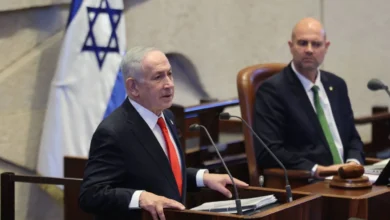
Israeli Prime Minister Benjamin Netanyahu predicted on Monday an imminent fall of the current regime in Tehran, stating that the day “is approaching” when “the brave Iranian people will rid themselves of the yoke of tyranny.”
During a visit to the site of an Iranian missile attack that killed nine people on Sunday in Beit Shemesh near Jerusalem, Netanyahu said: “We launched this campaign to thwart any attempt to revive existential threats.”
-
Iran shuts the door on negotiations with the United States
-
The black Tomahawk: a new weapon in the skies of the Iran conflict