Jibril the Blind… the Middleman in the Blood Alliance Between the Houthis and al-Shabaab
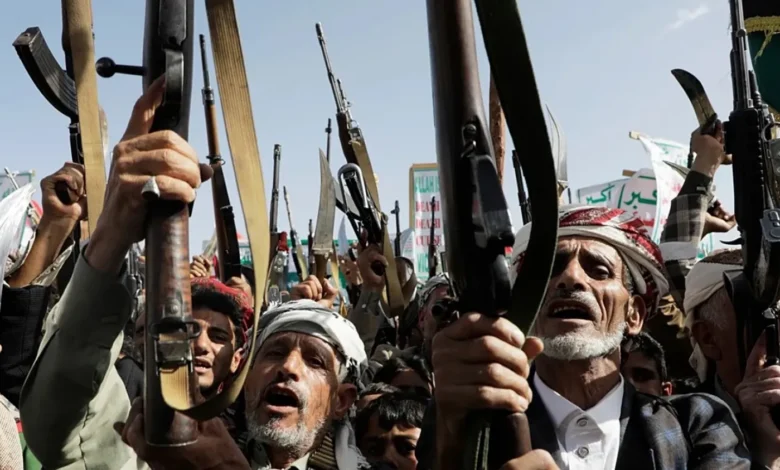
The Wall Street Journal has revealed the emergence of “secret cooperation” between Yemen’s Houthi movement and the Somali militant group al-Shabaab, which is linked to al-Qaeda.
According to the American newspaper, this security development opens up a new front for the United States and its allies in a region that contains one of the world’s most sensitive maritime corridors.
-
Houthi Militias Bleeding… 153 Killed in August, Half of Them Field Commanders
-
The Houthis in Port Sudan: Iran Extends Its Military Network into Sudan
Behind this alliance, however, is a Somali figure who played the role of intermediary between the two sides: Jibril “the Blind” Yahya Ali, who evolved from an arms trafficker and commercial broker into a key link between the Houthis and al-Shabaab.
According to the investigation, Jibril helped arrange for the Somali group to obtain sophisticated military weapons from the Houthis before transporting them across the Gulf of Aden to Somali territory.
The newspaper describes the relationship as an alliance between two parties whose cooperation would previously have been difficult to imagine because of their sectarian and political differences. However, military and financial interests drove them to overcome those divisions.
-
Yemeni Political Analyst: Houthi Violations Deepen the Humanitarian Crisis and Hinder Any Path to Peace
-
They Are Seeking to Control Bab el-Mandeb: Yemen’s Government Warns of Houthi Plans
A Reciprocal Deal… Weapons in Exchange for Money and Influence
According to the investigation, al-Shabaab needed more sophisticated weapons and advanced military expertise, while the Houthis possessed advanced military and technological capabilities but needed money and sought to expand their influence beyond Yemen.
The newspaper says that since around 2023, Jibril had served as a link between the two sides, secretly traveling between Yemen and Somalia. The Houthis reportedly provided him with accommodation in Sanaa and forged Yemeni identity documents.
In 2024, al-Shabaab sent one of its commanders to Yemen to work alongside Jibril, carrying a lengthy list of weapons the group sought to obtain, including antiaircraft missiles, Katyusha rockets, sniper rifles, attack drones, antitank missiles, and night-vision equipment.
The importance of this channel, however, extends beyond weapons transfers. Information reported by the Wall Street Journal indicates that al-Shabaab fighters also traveled to Yemen to receive training in the use of sophisticated weapons, the manufacture of more lethal explosive devices, and the operation of drones.
According to U.S. intelligence estimates cited by the newspaper, at least 100 al-Shabaab members received training from the Houthis. Some of the training reportedly involved technologies related to drones, control systems, and remote operation.
-
New Houthi escalation: Mokha port targeted with ballistic missiles
-
Renewed Houthi bombardment of Marib: attack strikes a displacement camp and government forces (exclusive)
The Middleman’s Death Does Not End the Network
In February 2026, Jibril was killed while traveling by car with his wife near the city of Al-Ghaydah in eastern Yemen. According to U.S. sources who spoke to the newspaper, he was killed in a U.S. airstrike targeting the vehicle.
The Wall Street Journal describes the scene dramatically, reporting that a U.S. missile pierced the roof of the vehicle and killed Jibril instantly, while his wife managed to escape from the car.
However, the death of the man who had played a central role in building the relationship did not lead to the collapse of the network. According to the investigation, al-Shabaab selected a replacement to continue its activities in Yemen, while weapons transfers and coordination between the two sides continued.
This is where the main problem lies for Washington: the issue is no longer tied to a single individual, but to a network of interests that can survive the disappearance of the intermediary who established it.
-
Houthis Force Washington to Divide Its Military Resources Between Two Fronts
-
The Heads of Death: The Ten Most Powerful Leaders Within the Houthi Militia Structure
From Arms Trafficking to Operational Cooperation
The most alarming aspect of the new development, according to the investigation, is the relationship’s transition from a simple commercial transaction for obtaining weapons to a more strategic level of cooperation.
In June, a Houthi delegation crossed the Gulf of Aden and reached southern Somalia before traveling to areas under al-Shabaab’s influence to meet with its leaders.
According to information cited by the newspaper, the talks addressed the possibility of coordinating activities, alongside Houthi promises to provide more sophisticated weapons and additional training.
-
The Erosion of Deterrence in Yemen: How Riyadh’s Conciliatory Strategy Strengthened the Houthis at the Expense of Its Southern Allies
-
Sen. Chris Murphy: Saudi Arabia’s Yemen Policy Strengthened the Houthis at the Expense of Its Allies
Somalia, which had previously represented a potential source of money and weapons for the Houthis, could thus become a new platform for surveillance and operations on the opposite side of the Gulf of Aden.
The repercussions of this alliance extend beyond Yemen and Somalia, as the two countries lie on opposite sides of the Gulf of Aden, one of the most important maritime routes connecting the Indian Ocean with the Red Sea and the Suez Canal.
The Wall Street Journal warns that the growing capabilities of al-Shabaab, combined with the Houthis’ experience in using missiles and drones, could give the two sides a greater ability to affect commercial shipping.
-
Fares Manaa: A Houthi Octopus Confronts the Alleged Daughter of Saddam Hussein
-
Widespread Houthi Mobilisation Signals Possible New Phase of Internal Fighting
A “Global Problem” for Washington
U.S. General Dagvin Anderson, commander of U.S. forces in Africa, sums up the seriousness of the development by saying that al-Shabaab is gaining access to more sophisticated weapons and training, while the Houthis are expanding their geographical reach and acquiring a foothold capable of destabilizing one of the world’s most important economic corridors.
Anderson said in the investigation: “This is not merely a regional problem; it has global implications.”
This is perhaps the most important point in the story: Washington is not necessarily facing a cohesive ideological alliance, but rather a pragmatic partnership between two armed groups that have discovered that shared interests can overcome their previous differences.
-
The Death of Two Officers in Houthi Attacks Sparks Fierce Battles in Taiz and Al Hudaydah
-
Piracy with Houthi Fingerprints… The Alliance of Terrorist Leaders Threatens Waterways
For the United States, the risk is not limited to al-Shabaab gaining access to more sophisticated weapons. It also involves the possibility of a cross-Red Sea and Gulf of Aden system of cooperation emerging, combining the Houthis’ expertise in missiles and drones with al-Shabaab’s financial resources and presence on the ground.
In a region where conflicts in Yemen, Somalia, and the Red Sea intersect with energy security and the Israeli-Iranian rivalry, this cooperation could mark the beginning of an even more complex phase, in which the Gulf of Aden itself becomes a new arena of confrontation.
-
Deaths in clashes between the Houthis and the army in Yemen’s Saada undermine the fragile truce
-
Yemeni political analyst: Houthis are worsening civilians’ suffering as Eid al-Adha approaches amid deteriorating humanitarian conditions